Gardening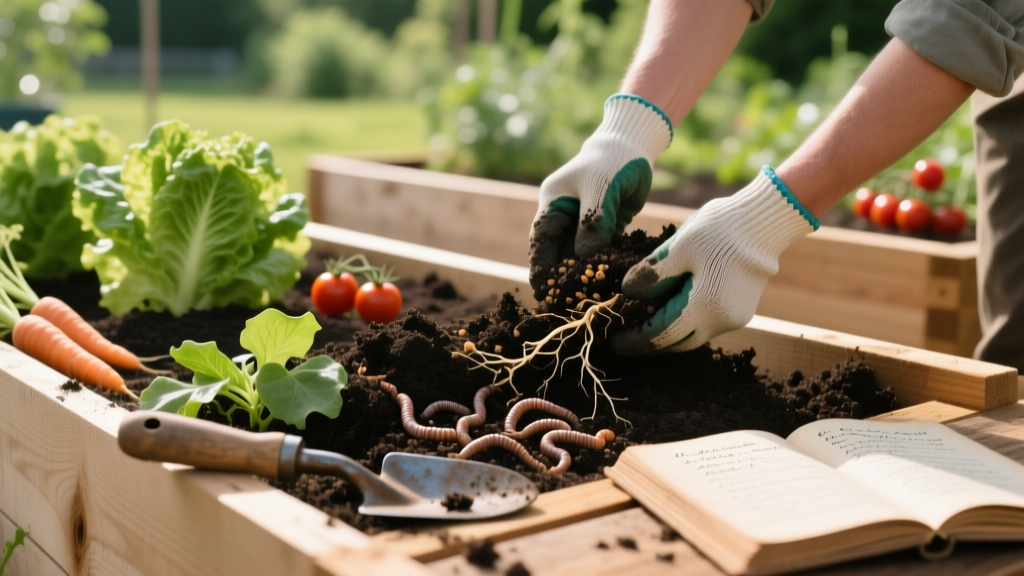
Organic Raised Bed Soil Mix Recipe for Thriving Vegetables
Robert HayesPublished
The Foundation of Organic Gardening: Why Soil Matters
When transitioning to a chemical-free garden, the most critical investment you can make is in your soil. Synthetic fertilizers provide a quick, artificial burst of nutrients that feed the plant directly but often degrade the surrounding ecosystem over time. Organic gardening takes a fundamentally different approach: we feed the soil, and the soil feeds the plant. By fostering a rich, living ecosystem beneath the surface, you create a resilient environment where vegetables can naturally resist pests, tolerate drought, and produce nutrient-dense yields.
According to the Rodale Institute, healthy soil is a living ecosystem teeming with bacteria, fungi, protozoa, and nematodes. This 'soil food web' breaks down organic matter into bioavailable nutrients, improves soil structure, and retains moisture. When you build an organic raised bed from scratch, you are essentially constructing a thriving habitat for these microscopic workers. Avoiding synthetic pesticides and herbicides is non-negotiable here, as these chemicals indiscriminately wipe out the beneficial organisms required for long-term soil fertility.
Calculating Your Soil Volume
Before purchasing materials, you must calculate the exact volume of soil required. A standard raised bed measuring 4 feet wide by 8 feet long with a depth of 12 inches holds exactly 32 cubic feet of soil. This equates to roughly 1.18 cubic yards. Buying in bulk from a local landscape supply yard is usually the most cost-effective and eco-friendly approach for large beds, while bagged ingredients are suitable for smaller container gardens or supplementary amendments.
The Ultimate Chemical-Free Raised Bed Soil Recipe
The ideal organic raised bed soil mix balances three core components: nutrition, water retention, and drainage/aeration. The University of Minnesota Extension notes that a well-draining, nutrient-rich mix prevents root rot and supports deep root penetration. We utilize a modified, eco-conscious version of the classic 'thirds' recipe.
1. One-Third High-Quality Compost (Nutrition & Biology)
Compost is the beating heart of your organic garden. It provides a slow-release spectrum of macro and micronutrients while inoculating your bed with beneficial microbes. For the best results, avoid using a single source of compost. Instead, blend at least three different types to ensure a diverse microbial profile. Excellent choices include:
- Vermicompost (Worm Castings): Exceptionally rich in humic acids and beneficial bacteria.
- Mushroom Compost: Great for calcium and organic matter, though it can be slightly alkaline.
- Leaf Mold: A fantastic fungal-dominated compost that improves soil structure.
- Homestead Compost: Your own kitchen-scrap and yard-waste compost, provided it has been hot-composted to kill weed seeds.
2. One-Third Coconut Coir (Water Retention)
Traditionally, peat moss was the go-to amendment for moisture retention. However, peat bogs are vital carbon sinks, and harvesting them is environmentally destructive. Coconut coir, a byproduct of the coconut industry, is a highly renewable alternative. It holds up to 10 times its weight in water and re-wets much easier than peat. Crucial Step: Ensure you purchase 'buffered' coconut coir. Unbuffered coir can contain high levels of sodium and potassium salts that will harm your plants. Buffering involves soaking the coir in a calcium-rich solution (like calcium nitrate or organic gypsum) to displace the sodium.
3. One-Third Coarse Aeration (Drainage & Oxygen)
Roots require oxygen just as much as they require water. Without proper aeration, heavy soils will compact, leading to anaerobic conditions and root suffocation. You have two primary organic choices for aeration:
- Coarse Perlite: Lightweight, sterile, and excellent for drainage. (Note: While perlite is a naturally occurring volcanic glass, some strict organic certifiers debate its mining impact, but it is widely accepted in home organic gardening).
- Pumice: A heavier, natural volcanic rock that provides excellent aeration and houses beneficial microbes in its porous surface. Pumice is highly recommended for long-term raised beds as it does not float to the top over time like perlite does.
Natural & Organic Soil Amendments
While the base recipe provides structure and general fertility, heavy-feeding vegetables like tomatoes, brassicas, and squash require targeted mineral amendments. Below is a guide to chemical-free additives to mix into your 32 cubic feet of soil prior to planting.
| Amendment | Primary Benefit | Application Rate (per 32 cu ft) | Nutrient Profile |
|---|---|---|---|
| Kelp Meal | Trace minerals, growth hormones, stress tolerance | 1 to 2 cups | 1-0.5-2.5 + 60+ trace minerals |
| Basalt Rock Dust | Long-term mineralization, silica, paramagnetism | 4 to 8 cups | Trace elements, Calcium, Iron |
| Alfalfa Meal | Nitrogen boost, triacontanol (growth stimulant) | 2 to 3 cups | 3-0.5-2 |
| Neem Cake | Nematode suppression, slow-release nitrogen | 1 to 2 cups | 2-1-2 + Azadirachtin |
| Oyster Shell Flour | Calcium for preventing blossom end rot | 2 to 4 cups | Calcium Carbonate |
Step-by-Step Mixing and Filling Guide
Properly blending your soil ensures that roots encounter a uniform environment as they expand. Follow these steps for a flawless fill:
- Hydrate the Coir: If using compressed coir bricks, soak them in a wheelbarrow or large tote with water 24 hours in advance. Add organic gypsum (calcium sulfate) to the water to buffer the coir and provide essential calcium.
- The Tarp Method: For smaller batches, lay a heavy-duty tarp on your lawn. Add your compost, coir, and pumice in equal volumes. Grab opposite corners of the tarp and pull them toward the center to roll the mix over itself. Repeat this from all four sides until the color and texture are entirely uniform.
- Add Dry Amendments: Sprinkle your chosen amendments (kelp meal, rock dust, etc.) over the pile and give it one final, thorough turning.
- Fill the Bed: Shovel the mix into your raised bed. Do not step on or tamp down the soil. Water it deeply with a gentle hose nozzle to let the soil settle naturally. You will likely need to add a few more inches of mix after the initial watering settles the aeration materials.
Maintaining Organic Soil Health Year-Round
Building the soil is only the first step; maintaining it without chemicals requires ongoing stewardship. The Environmental Protection Agency (EPA) highlights that continuous addition of organic matter through composting and mulching is essential for sequestering carbon and maintaining soil structure over time.
Embrace the No-Till Method
In nature, soil is never tilled. Tilling destroys the delicate mycorrhizal fungal networks that act as an extension of your plant's root system, and it brings dormant weed seeds to the surface to germinate. When a season ends, simply cut your spent crops off at the soil line with pruning shears, leaving the roots in the ground to decompose and feed the earthworms. Top-dress the bed with a half-inch layer of fresh compost and a thick layer of organic mulch.
Utilize Cover Crops
Never leave your organic soil bare and exposed to the elements. Bare soil leads to nutrient leaching and erosion. In the fall, sow a cover crop like crimson clover or winter rye. These plants act as 'green manures.' Their roots break up compacted soil layers, and if they are legumes, they pull nitrogen directly from the atmosphere and fix it into the soil. In early spring, cut the cover crop down and let it lie on the surface as a mulch, or lightly incorporate it into the top few inches of soil a month before planting your spring vegetables.
Organic Mulching Strategies
Mulch is the organic gardener's best defense against weeds and moisture loss. Use chemical-free, seed-free mulches such as:
- Straw: Excellent for vegetable beds, though ensure it is straw and not hay (which contains weed seeds).
- Shredded Autumn Leaves: A free, nutrient-dense mulch that breaks down beautifully over a single season.
- Arborist Wood Chips: Best used on the pathways between raised beds to suppress weeds and feed soil fungi, but avoid mixing them directly into your vegetable soil as they can temporarily tie up nitrogen during decomposition.
Conclusion
Creating a chemical-free, organic raised bed soil mix is a rewarding process that pays dividends for years to come. By focusing on biological diversity, physical soil structure, and natural mineral amendments, you eliminate the need for synthetic inputs entirely. Your vegetables will taste better, your garden will attract vital pollinators, and you will cultivate a sustainable ecosystem right in your own backyard.
