Lawn Care
Effective Organic Weed Control For A Chemical-Free Lawn
The Shift to Chemical-Free Lawn Management
In recent years, a growing number of homeowners have begun questioning the environmental and health impacts of synthetic lawn chemicals. The pursuit of a flawless, golf-course-style lawn has historically relied heavily on synthetic herbicides, pesticides, and fertilizers. However, these chemicals can leach into groundwater, harm beneficial soil microbes, and pose risks to pets and children playing on the grass. Transitioning to an organic, chemical-free approach is not merely about removing toxins; it is about fundamentally changing how you interact with your landscape. Organic weed control is not a single product or a quick-fix spray. Instead, it is a holistic system that focuses on cultivating a dense, vigorous turf that naturally outcompetes weeds while fostering a thriving soil ecosystem.
Understanding Weeds as Soil Indicators
Before reaching for a hoe or an organic spray, it is crucial to understand why weeds are present in the first place. In organic lawn care, weeds are viewed as nature's band-aids and soil indicators. For instance, an abundance of white clover often signals nitrogen-deficient soil, as clover fixes its own nitrogen from the atmosphere. Prostrate knotweed and broadleaf plantain thrive in heavily compacted soils where grass roots struggle to penetrate for oxygen and water. By addressing the underlying soil compaction through core aeration and amending nutrient deficiencies with organic compost, you eliminate the very conditions that allow these weeds to thrive. According to Penn State Extension, building a healthy soil food web is the foundational step in any organic lawn care program, as it naturally suppresses disease and weed pressure over time.
Pre-Emergent Organic Control: Corn Gluten Meal
One of the most effective tools in the organic weed control arsenal is Corn Gluten Meal (CGM). Originally discovered as a natural pre-emergent herbicide by researchers at Iowa State University, CGM is a byproduct of the corn milling process. It works by inhibiting the formation of roots in germinating seeds. When weed seeds sprout, the CGM prevents the root from establishing, effectively killing the seedling before it ever breaks the soil surface.
Application Rates and Timing
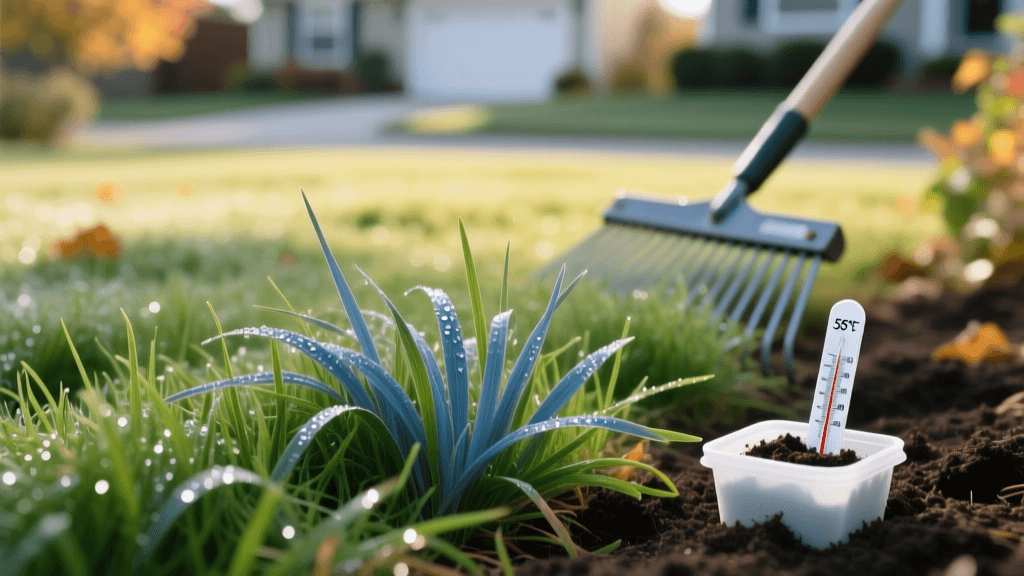
To use CGM effectively, timing and dosage are critical. The standard application rate is 20 pounds per 1,000 square feet. It must be applied before weed seeds germinate. For cool-season lawns targeting crabgrass, apply CGM in early spring when soil temperatures consistently reach 50 to 55 degrees Fahrenheit, which often coincides with the blooming of forsythia bushes. For warm-season lawns, apply it slightly later in the spring as the soil warms. A second application in late summer or early fall can help prevent winter annual weeds like henbit and chickweed.
The Fertilizer Bonus and Important Caveats
CGM contains approximately 10% nitrogen by weight, meaning it doubles as a mild, slow-release organic fertilizer. However, there is a major caveat: CGM does not discriminate between weed seeds and grass seeds. If you are planning to overseed your lawn to fill in bare patches, you must not apply CGM. Wait until the new grass seed has germinated and been mowed at least twice before applying a corn gluten pre-emergent.
Cultural Practices: The Ultimate Weed Defense
No organic pre-emergent will work if your lawn is thin and poorly maintained. Cultural practices form the backbone of chemical-free weed control.
- Mow High: Set your mower deck to 3.5 or 4 inches. Taller grass blades cast deep shade over the soil, keeping the ground cooler and depriving light-dependent weed seeds (like crabgrass and dandelions) of the sunlight they need to germinate. Furthermore, taller grass supports deeper, more drought-resistant root systems.
- Water Deeply and Infrequently: Shallow, daily watering encourages shallow grass roots and promotes shallow-rooted weeds. Instead, provide your lawn with 1 to 1.5 inches of water per week, ideally in one or two deep sessions. This forces grass roots to grow deep into the soil profile to seek moisture, making the turf resilient during dry spells.
- Leave Grass Clippings: Mulching your grass clippings returns valuable organic matter and nitrogen to the soil. As the clippings decompose, they feed soil microbes and help maintain a thick turf canopy that blocks weeds.
Post-Emergent Organic Strategies
When weeds do inevitably break through your pre-emergent and cultural defenses, organic post-emergent control requires a more hands-on approach.
Manual Extraction
For taprooted weeds like dandelions, dock, and thistles, manual removal is highly effective. Invest in a high-quality stand-up weed puller or a traditional dandelion digger. The key is to remove the entire taproot; if you snap the root off at the surface, the weed will simply regenerate. The best time to manually pull weeds is immediately after a heavy rain, when the soil is soft and the roots release easily.
Horticultural Vinegar and Natural Sprays
For weeds growing in driveway cracks, sidewalk edges, or graveled areas, horticultural vinegar (which contains 20% to 30% acetic acid, compared to the 5% found in household vinegar) can be an effective burn-down herbicide. It works by stripping the waxy cuticle off the weed's leaves, causing them to rapidly dehydrate and die. However, it is non-selective, meaning it will damage your lawn grass if sprayed carelessly. It is also a contact herbicide, so it may not kill the deep roots of mature perennial weeds. When using any natural spray, it is important to understand the EPA guidelines on minimum risk pesticides to ensure you are using products safely and effectively, as even natural acids require protective eyewear and careful handling.
Organic vs. Synthetic Weed Management: A Comparison
Transitioning to an organic lawn requires a shift in expectations. Below is a comparison of what to expect when moving away from synthetic chemicals.
| Feature | Synthetic Herbicides | Organic / Natural Methods |
|---|---|---|
| Speed of Results | Rapid (Days to a week) | Gradual (Months to years for full establishment) |
| Primary Mechanism | Chemical eradication | Ecological competition and soil building |
| Impact on Soil Life | Often harmful to microbes and earthworms | Nourishes and expands the soil food web |
| Weed Tolerance | Zero tolerance (sterile appearance) | Accepts minor weed presence as ecologically normal |
| Long-Term Cost | Recurring annual chemical purchases | Initial investment in compost/aeration, lower long-term costs |
Topdressing and Overseeding: Reclaiming Bare Spots
Weeds are opportunistic; they will colonize any bare or thin spot in your lawn. To prevent this, organic lawn care relies heavily on annual overseeding and compost topdressing. In the early fall, aerate your lawn to relieve compaction. Follow this by spreading a thin layer (about 1/4 inch) of finely sifted organic compost over the turf. This topdressing introduces beneficial microbes, improves soil moisture retention, and provides a perfect seedbed. Overseed immediately with a high-quality, region-appropriate grass seed blend. The compost will protect the seeds and provide the gentle, slow-release nutrients they need to establish before winter.
Managing Expectations: The Reality of an Organic Lawn
If you are transitioning from a chemically treated lawn to an organic one, you must adjust your definition of a 'perfect' lawn. A chemical-free lawn will almost always have a few dandelions in the spring or some clover mixed into the turf. Clover, in fact, is highly beneficial; it stays green during droughts, requires no mowing, and provides a food source for essential pollinators like bees. By embracing a slightly more natural aesthetic, you are rewarded with a lawn that is safer for your family, more resilient to extreme weather, and fundamentally alive beneath the surface. Over a period of two to three years, as your soil biology balances and your grass roots deepen, you will find that the weeds naturally diminish, leaving you with a lush, vibrant, and entirely chemical-free landscape.