Lawn Care
Organic Weed Control Strategies for Chemical-Free Lawns
The Philosophy of Organic Weed Control
The modern lawn care industry is undergoing a massive transformation as homeowners increasingly seek sustainable, pet-safe, and environmentally friendly alternatives to synthetic chemicals. When transitioning to a chemical-free lawn, it is crucial to understand that organic weed control is not about finding a natural equivalent to synthetic herbicides like glyphosate or 2,4-D. Instead, organic lawn care is an ecological approach focused on building a robust soil food web and cultivating turfgrass so thick and vigorous that weeds are naturally outcompeted. According to the University of Minnesota Extension, a healthy, organically managed lawn relies on cultural practices and soil biology to suppress weed populations over time, rather than relying on quick-fix chemical eradication.
Weeds are often symptoms of underlying soil imbalances. Compacted soil invites knotweed and plantain; low nitrogen levels encourage clover; and acidic, poorly drained soil is a haven for moss and ground ivy. By addressing these root causes through organic amendments and precise cultural habits, you can achieve a pristine, chemical-free landscape.
Building the Soil Food Web
The foundation of any successful organic lawn is its soil microbiome. Synthetic fertilizers, which are essentially soluble salts, can harm beneficial soil bacteria and mycorrhizal fungi over time. When you stop using synthetics, your soil biology needs time to recover. To accelerate this process, incorporate high-quality, screened compost into your lawn care routine.
Compost Top-Dressing
Top-dressing your lawn with a 1/4-inch layer of organic compost in the early fall introduces billions of beneficial microbes, improves soil structure, and increases water retention. These microbes break down organic matter into plant-available nutrients, creating a slow-release feeding system that synthetic fertilizers cannot replicate. Earthworms and beneficial nematodes will naturally thrive in compost-enriched soil, further aerating the earth and suppressing soil-borne pathogens.
Pre-Emergent Defense: Corn Gluten Meal
For homeowners looking to prevent annual weeds like crabgrass, goosegrass, and annual bluegrass without synthetic pre-emergents, Corn Gluten Meal (CGM) is the gold standard. Discovered by researchers at Iowa State University, CGM is a natural byproduct of the corn milling process that contains specific dipeptides which inhibit root cap formation in germinating seeds.
How and When to Apply Corn Gluten Meal
To be effective, CGM must be applied before weed seeds germinate. It does not kill existing weeds or prevent seeds from sprouting; rather, it kills the seedling immediately after germination when the tiny root attempts to establish. For optimal results, follow these guidelines:
- Application Rate: Apply 20 pounds of corn gluten meal per 1,000 square feet of lawn.
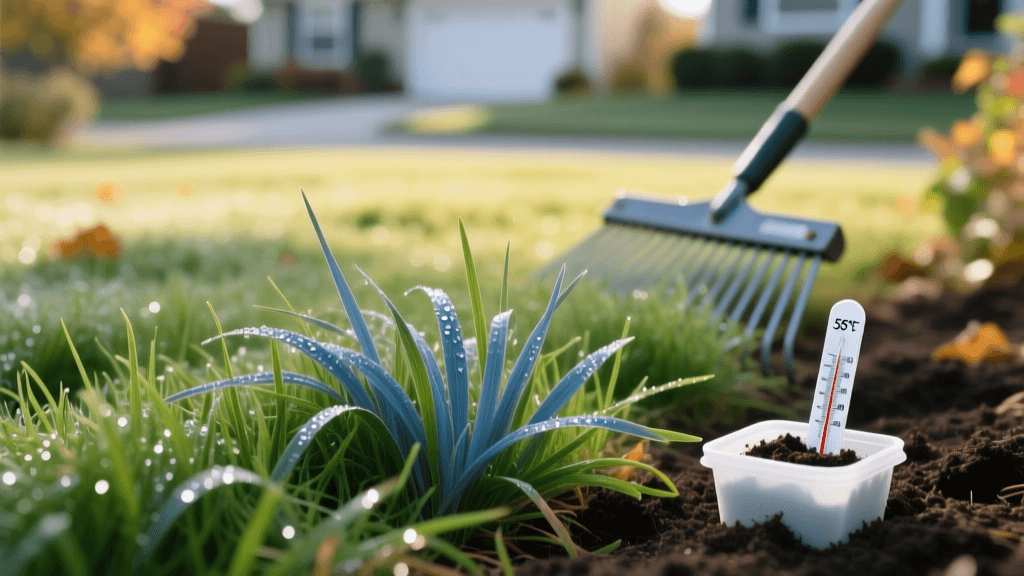
- Timing: Apply when soil temperatures consistently reach 50°F to 55°F. A traditional phenological indicator is when forsythia bushes are in full bloom or when crabgrass begins to germinate in your region.
- Watering: Water the lawn lightly immediately after application to activate the proteins, then allow the top layer of soil to dry out for a few days. The drying process is what desiccates the weed seedlings.
- Fertilizer Bonus: CGM is naturally high in nitrogen (typically around 10% N). Factor this into your annual feeding schedule to avoid over-fertilizing your turf.
It is important to note that CGM will also inhibit the germination of desirable grass seeds. Therefore, never apply it in areas where you plan to overseed your lawn.
Post-Emergent Organic Herbicides
While cultural practices and pre-emergents handle the bulk of weed prevention, established perennial weeds like dandelions, broadleaf plantain, and thistles may still appear. The Environmental Protection Agency (EPA) recognizes several minimum-risk active ingredients that are highly effective for spot-treating these invaders without leaving toxic residues in your soil.
Iron-Based Herbicides (FeHEDTA)
Chelated iron, specifically Iron HEDTA (hydroxyethylenediaminetriacetic acid), is a breakthrough in organic broadleaf weed control. Broadleaf weeds absorb iron much more readily than grasses do. When applied, the excess iron causes severe oxidative stress in the weed, leading to cellular damage, necrosis, and death within hours. The surrounding turfgrass may temporarily darken but will quickly recover. Iron HEDTA is highly selective, safe for pets once dry, and leaves behind a nutrient (iron) that benefits the soil.
Horticultural Vinegar and D-Limonene
For non-selective weed control in driveway cracks, along fence lines, or in garden beds, horticultural vinegar (20% to 30% acetic acid) and citrus oil extracts (D-Limonene) are powerful burn-down agents. These substances destroy the waxy cuticle of plant leaves, causing rapid dehydration. However, they are non-selective and will severely damage or kill your turfgrass if sprayed on the lawn. They also do not translocate to the roots, meaning established perennial weeds may require multiple applications to fully eradicate.
Cultural Practices: The Ultimate Weed Deterrent
No organic product can compensate for poor lawn maintenance. Implementing strict cultural practices is the most effective, chemical-free way to suppress weeds.
Mowing High and Often
Set your mower deck to a minimum height of 3.5 to 4 inches. Tall grass blades shade the soil surface, drastically reducing the soil temperature and blocking the ultraviolet light that weed seeds (especially crabgrass and dandelions) require to germinate. Furthermore, never remove more than one-third of the grass blade in a single mowing to prevent stressing the turf.
Deep, Infrequent Watering
Weeds like yellow nutsedge and shallow-rooted grasses thrive in damp, frequently watered soil. Train your lawn's roots to grow deep by watering heavily but infrequently. Aim for 1 to 1.5 inches of water per week, applied in one or two deep sessions. This encourages turfgrass roots to plunge deep into the soil profile, accessing moisture and nutrients that shallow-rooted weeds cannot reach.
Overseeding with Competitive Species
A bare patch of soil is an open invitation for weeds. Overseed your lawn every fall with modern, endophyte-enhanced turfgrass varieties. Tall fescues and fine fescues are particularly aggressive and drought-tolerant, forming a dense sod that leaves no physical space for weed seeds to take root.
Organic Weed Control Comparison Chart
To help you design your chemical-free lawn care program, refer to the comparison chart below detailing the most effective organic weed control methods.
| Method | Target Weeds | Application Rate / Timing | Pros | Cons |
|---|---|---|---|---|
| Corn Gluten Meal | Pre-emergent (Crabgrass, Annual Bluegrass) | 20 lbs per 1,000 sq ft in early spring | Safe, adds 10% Nitrogen to soil | Inhibits grass seed germination; requires precise timing |
| Iron HEDTA | Post-emergent Broadleaf (Dandelion, Plantain) | Ready-to-spray liquid during active growth | Selective (won't kill grass), fast-acting | Can stain concrete and stonework; requires multiple apps for deep roots |
| Horticultural Vinegar | Non-selective Spot Treatment | 20% Acetic Acid on hot, sunny days | Excellent for hardscape cracks, inexpensive | Kills grass on contact; does not kill deep taproots |
| Compost Top-Dressing | General Weed Suppression via Turf Density | 1/4 inch layer in early fall | Builds soil microbiome, improves drainage | Labor-intensive; results take 1-2 seasons to fully manifest |
| High Mowing (4 inches) | Pre-emergent (Light-blocking) | Weekly during the growing season | Free, promotes deep grass roots | Requires sharp mower blades to prevent tearing tall grass |
Transitioning Your Lawn: Setting Expectations
Transitioning from a synthetic lawn care program to an organic one requires patience. During the first year, as the soil microbes rebound and the thatch layer begins to decompose naturally, you may experience a temporary flush of weeds or a slight thinning of the turf. This is a normal part of the ecological reset. By year two, the soil structure will improve, earthworm populations will surge, and your turfgrass will begin to naturally choke out the majority of weeds. By year three, you will be rewarded with a deeply rooted, drought-resilient, and vibrant lawn that is safe for children, pets, and the local watershed.