Lawn Care
Organic Weed Control: Corn Gluten Meal & Manual Strategies
The Shift to Chemical-Free Lawn Care
For decades, the standard approach to lawn weed control relied heavily on synthetic herbicides like glyphosate and 2,4-D. While effective in the short term, these chemicals can degrade soil health, harm beneficial microorganisms, and pose environmental risks through runoff. Today, a growing movement of homeowners and turfgrass professionals are embracing chemical-free and organic approaches. By focusing on soil biology, natural pre-emergents, and targeted manual extraction, you can cultivate a dense, resilient lawn that naturally outcompetes weeds without relying on toxic synthetic compounds.
Transitioning to an organic lawn care regimen requires a shift in mindset. Instead of viewing weeds as an enemy to be eradicated with chemicals, organic lawn care treats weeds as symptoms of underlying soil imbalances. According to guidelines published by the Environmental Protection Agency (EPA), integrated pest management and organic practices significantly reduce the ecological footprint of home landscaping while maintaining beautiful, usable outdoor spaces.
Understanding Corn Gluten Meal (CGM) as a Pre-Emergent
The cornerstone of organic pre-emergent weed control is Corn Gluten Meal (CGM). Originally discovered by researchers at Iowa State University during a search for natural disease control agents, CGM is a byproduct of the corn milling process. It works by inhibiting root formation in germinating seeds. When a weed seed sprouts, the CGM prevents the initial root from establishing, causing the seedling to desiccate and die before it can emerge from the soil.
One of the greatest advantages of CGM is its dual-action nature. Alongside its herbicidal properties, it contains approximately 10% nitrogen by weight. This means that when you apply CGM to your lawn, you are simultaneously feeding your grass with a slow-release, organic nitrogen source, promoting thick, vigorous turf growth that naturally chokes out future weed invasions.
The Limitations of CGM
It is crucial to understand that CGM is strictly a pre-emergent. It will not kill existing weeds, dandelions, or mature crabgrass plants. Furthermore, because it targets all germinating seeds, you must never apply CGM if you plan to overseed your lawn with new grass seed, as it will prevent your grass seed from germinating as well.
Precise Application Rates and Timing
To achieve effective weed suppression, precision in application rate and timing is non-negotiable. Under-applying CGM will yield poor results, while over-applying can lead to excessive nitrogen loading.
- Application Rate: Apply exactly 20 pounds of CGM per 1,000 square feet of lawn area.
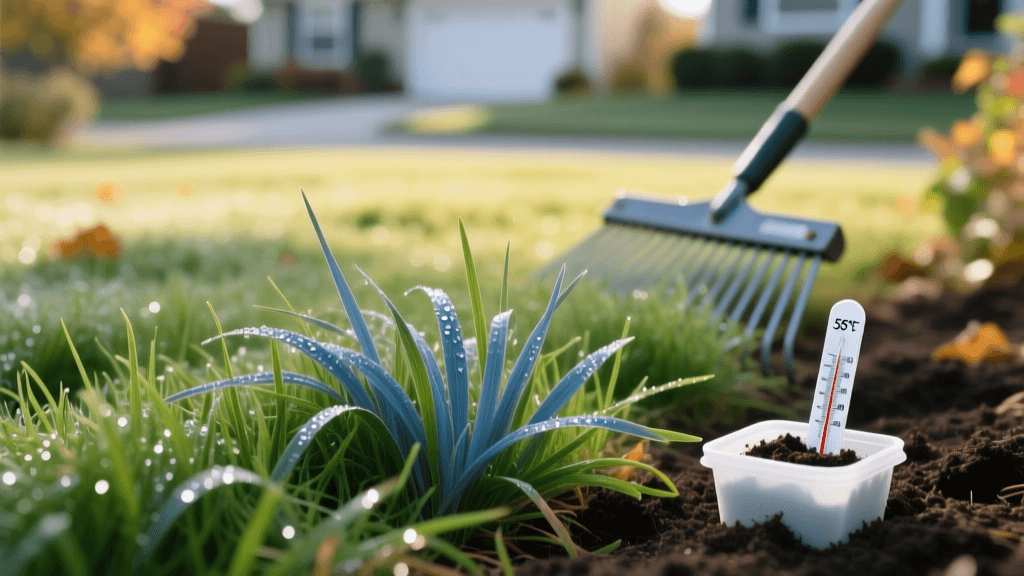
- Spring Timing: Apply when soil temperatures consistently reach 55°F at a 2-inch depth. This typically coincides with the blooming of forsythia bushes in your region, just before crabgrass seeds germinate.
- Fall Timing: Apply in late summer to early fall (late August to mid-September) to prevent the germination of winter annual weeds like henbit and chickweed.
- Watering: Lightly water the lawn immediately after application to activate the CGM, followed by a dry period of 3 to 5 days to ensure the inhibiting effect on weed seedlings.
- Cost Expectation: A 50-pound bag of high-quality CGM typically costs between $40 and $55, meaning the cost per 1,000 square feet is roughly $16 to $22. While more expensive than synthetic alternatives, the dual fertilizer benefit offsets the cost of a separate organic feeding.
Post-Emergent Organic Weed Control Tactics
Since CGM only stops seeds from sprouting, you must address existing weeds using post-emergent organic strategies. The United States Department of Agriculture (USDA) notes that organic systems rely heavily on mechanical and cultural controls to manage established pests and weeds.
Manual Extraction Tools
For deep-rooted perennial weeds like dandelions, plantains, and dock, manual extraction is the most effective organic method. The goal is to remove the entire taproot. Invest in a stand-up weed puller (such as the Fiskars Uproot or Grandpa's Weeder). These tools leverage mechanical advantage to grip the taproot deep underground, allowing you to extract the weed intact without bending over or disturbing large patches of topsoil.
Horticultural Vinegar Spot Treatments
For weeds growing in hardscape cracks, driveways, or isolated patches where grass is not a concern, horticultural vinegar (20% to 30% acetic acid) is a powerful contact herbicide. Unlike household vinegar (5% acetic acid), horticultural vinegar rapidly burns the foliage of broadleaf weeds. Warning: This is a non-selective contact burn. It will kill your grass if sprayed on the lawn, and it requires strict personal protective equipment (gloves, goggles, and long sleeves) as it can cause severe skin and eye irritation.
Cultural Practices: The Ultimate Organic Defense
No organic herbicide can replace the weed-suppressing power of a thick, healthy turf canopy. Cultural practices form the foundation of chemical-free lawn care.
- Mow High: Set your mower deck to 3.5 or 4 inches. Tall grass shades the soil surface, lowering soil temperatures and blocking the sunlight that weed seeds (especially crabgrass) require to germinate.
- Deep, Infrequent Irrigation: Water your lawn deeply (about 1 inch per week) but infrequently. This encourages deep grass root growth while depriving shallow-rooted weeds of the constant surface moisture they crave.
- Compost Top-Dressing: Apply a 1/4-inch layer of screened organic compost every fall. This introduces beneficial nematodes, fungi, and bacteria to the soil food web, improving soil structure and nutrient retention. Resources from Penn State Extension's Lawn and Garden program heavily advocate for compost top-dressing to improve turf density and natural disease resistance.
Comparison Chart: Organic vs. Synthetic Pre-Emergents
Understanding the trade-offs between organic and synthetic pre-emergents helps set realistic expectations for your lawn care program.
| Feature | Corn Gluten Meal (Organic) | Synthetic Pre-Emergent (e.g., Prodiamine) |
|---|---|---|
| Active Mechanism | Desiccates initial root of seedlings | Inhibits cell division in roots |
| Application Rate | 20 lbs / 1,000 sq ft | 1.5 - 3.0 lbs / 1,000 sq ft |
| Fertilizer Value | Yes (Approx. 10% Nitrogen) | No (unless chemically combined) |
| Toxicity Profile | Non-toxic; safe for pets and wildlife | Moderate; requires watering-in and drying |
| Cost per 1k sq ft | ~$16.00 - $22.00 | ~$2.00 - $5.00 |
| Soil Microbiome Impact | Feeds and stimulates soil microbes | Can temporarily disrupt microbial activity |
| Overseeding Restriction | Cannot seed for 60 days post-application | Cannot seed for 4-6 months post-application |
Transitioning Your Lawn: What to Expect
If you are transitioning from a synthetic chemical program to an organic one, patience is your most valuable tool. In the first year, you may notice an increase in weed pressure as the synthetic residual in your soil breaks down and the soil food web begins to recover. CGM typically achieves about 50% to 60% weed suppression in its first year of application. However, with consistent annual applications and proper mowing and watering practices, its efficacy compounds, often reaching 85% to 90% suppression by year three.
Ultimately, chemical-free weed control is not about finding a magic organic spray that mimics synthetic herbicides. It is about building an ecosystem. By utilizing corn gluten meal to halt seed germination, manually removing deep-rooted perennials, and feeding your soil with organic matter, you create a vibrant, living lawn that defends itself naturally.