Lawn Care
Organic Weed Control: Natural Lawn Care Without Chemicals
The Shift to Organic Lawn Care
For decades, the standard approach to lawn maintenance relied heavily on synthetic herbicides to achieve a pristine, weed-free turf. However, growing environmental awareness and concerns regarding chemical runoff, soil degradation, and pet safety have led many homeowners to embrace chemical-free and organic approaches. Organic weed control is not about finding a natural substitute to spray on weeds; it is about fundamentally changing the ecosystem of your lawn so that weeds cannot thrive. By focusing on soil biology, proper cultural practices, and natural pre-emergents, you can cultivate a dense, vigorous turf that naturally outcompetes invasive species.
According to the University of Minnesota Extension, organic lawn care prioritizes long-term soil health over quick chemical fixes. When your soil is rich in organic matter and microbial life, your grass develops deep root systems that choke out weeds before they can establish.
Understanding Weeds as Soil Indicators
In organic lawn care, weeds are not just nuisances; they are valuable diagnostic tools. Nature uses weeds to correct soil imbalances. Before reaching for any treatment, identify the weeds present in your lawn to understand what your soil is lacking or struggling with.
- White Clover: Indicates low soil nitrogen. Clover fixes its own nitrogen from the air, allowing it to thrive where grass starves. The organic solution is to apply compost or organic nitrogen-rich fertilizers like feather meal.
- Prostrate Knotweed and Plantain: These thrive in heavily compacted soils with poor drainage. Aerating the lawn and topdressing with compost will relieve compaction and give grass roots room to breathe.
- Dandelions: Often point to a lack of calcium or a soil pH that is too low (acidic). A soil test followed by the application of organic lime can correct this imbalance.
- Crabgrass: A classic indicator of thin turf, excessive heat, and shallow watering. It thrives in bare spots where the soil surface bakes in the sun.
Corn Gluten Meal: The Organic Pre-Emergent
The cornerstone of an organic weed prevention program is Corn Gluten Meal (CGM). Discovered by researchers at Iowa State University, CGM is a byproduct of the corn milling process. It works by inhibiting root formation in germinating seeds, effectively stopping weeds like crabgrass, dandelions, and pigweed before they emerge from the soil.
How and When to Apply CGM
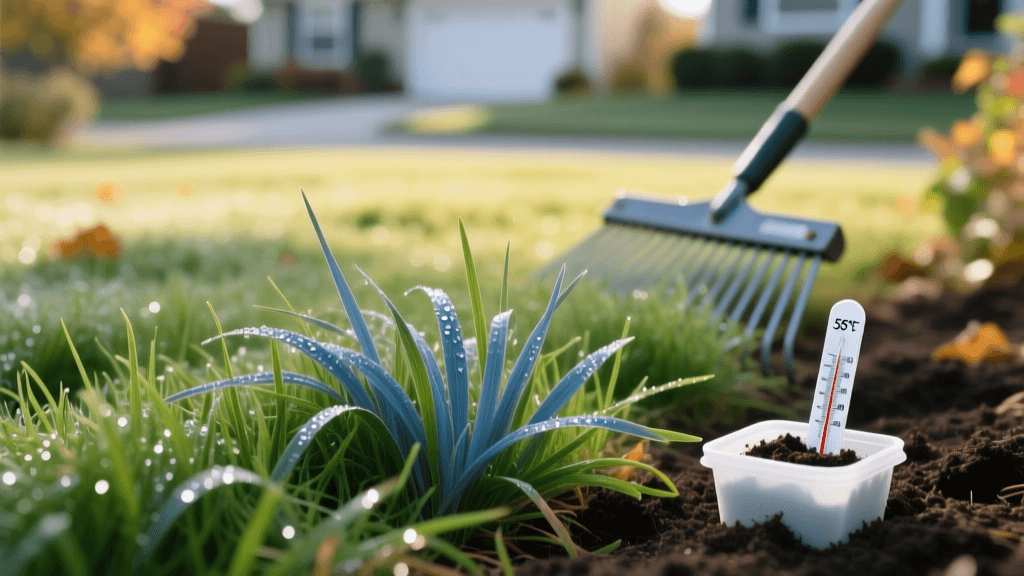
Timing is absolutely critical when using CGM. It does not kill existing weeds; it only prevents seeds from establishing. You must apply it before weed seeds germinate, which is typically when soil temperatures reach 50 to 55 degrees Fahrenheit at a two-inch depth. A common phenological indicator is the blooming of forsythia bushes in your area.
Application Rates and Details:
- Rate: Apply 20 pounds per 1,000 square feet.
- Method: Use a broadcast spreader for even distribution. Water the lawn lightly immediately after application to activate the protein barrier, then allow the soil surface to dry out so the inhibiting effect takes hold.
- Fertilizer Bonus: CGM contains approximately 10 percent nitrogen by weight. A 20-pound application provides about 2 pounds of nitrogen per 1,000 square feet, which serves as an excellent organic spring feeding for your grass. Adjust your subsequent organic fertilizer applications accordingly to avoid over-fertilizing.
Cultural Practices: Outcompeting Weeds Naturally
No organic pre-emergent will work if your cultural practices invite weeds into the lawn. The most effective chemical-free weed control is a thick, tall canopy of grass that shades the soil, preventing weed seeds from receiving the sunlight they need to germinate.
The Mowing Height Advantage
Mowing too short is the most common mistake homeowners make, and it is the primary cause of weed infestations. Scalping the lawn exposes the soil to sunlight and stresses the grass, forcing it to expend energy on regrowing blades rather than developing deep roots. The Environmental Protection Agency recommends maintaining taller grass heights to naturally suppress weeds and conserve soil moisture.
| Grass Type | Ideal Organic Mowing Height | Weed Suppression Benefit |
|---|---|---|
| Kentucky Bluegrass | 2.5 to 3.5 inches | Shades out crabgrass and spurge seeds |
| Tall Fescue | 3.0 to 4.0 inches | Deep roots outcompete taproot weeds like dandelions |
| Bermuda Grass | 1.5 to 2.5 inches | Dense canopy prevents prostrate knotweed |
| Zoysia Grass | 1.5 to 2.5 inches | Thick mat blocks light to annual bluegrass |
Deep and Infrequent Watering
Weeds like nutsedge and crabgrass have shallow root systems and thrive on frequent, light watering. To encourage your grass to outcompete them, water deeply and infrequently. Apply about one inch of water per week, ideally in one or two sessions, forcing grass roots to grow deep into the soil profile to seek moisture.
Post-Emergent Organic Solutions
Even with the best prevention, some weeds will inevitably break through. Organic post-emergent control requires a more targeted, hands-on approach compared to synthetic broadleaf herbicides.
Horticultural Vinegar
Standard kitchen vinegar (5 percent acetic acid) is largely ineffective on mature weeds. For organic post-emergent control, you need horticultural vinegar, which contains 20 to 30 percent acetic acid. This highly acidic solution burns the foliage of the weed, causing it to desiccate rapidly.
Recipe and Application: Mix one gallon of 20 percent horticultural vinegar with one ounce of liquid dish soap. The soap acts as a surfactant, breaking the surface tension of the weed leaves and allowing the acid to adhere and penetrate. Spray directly onto the weed on a hot, sunny day for maximum effectiveness.
Warning: Horticultural vinegar is non-selective. It will burn any plant tissue it touches, including your desirable turfgrass. Use a cardboard shield or a precision spray wand to target only the weeds, or apply it to weeds growing in driveway cracks and patio pavers.
Manual Extraction and Thermal Weeding
For deep-rooted perennial weeds like dandelions and thistles, manual extraction using a stand-up weeding tool or a dandelion fork is highly effective, especially when the soil is moist after a rainstorm. For weeds in hardscape areas, pouring boiling water directly onto the crown of the plant will instantly cook the plant tissue and destroy the root system without leaving any chemical residue.
Building Soil Health for Long-Term Defense
Ultimately, organic weed control is a byproduct of exceptional soil management. A biologically active soil ecosystem supports the grass and suppresses pathogens and weed seeds.
Compost Topdressing
Topdressing your lawn with a quarter-inch layer of high-quality, screened compost in the early fall introduces billions of beneficial microbes to the soil. These microbes break down thatch, improve soil structure, and make nutrients more available to the grass. Compost also helps the soil retain moisture, reducing the drought stress that often opens the door for weed invasion.
Core Aeration
If your lawn suffers from heavy foot traffic or clay-heavy soil, core aeration is essential. By physically removing small plugs of soil, you relieve compaction, allowing oxygen, water, and organic amendments to reach the root zone. Following aeration with overseeding and compost topdressing creates the ideal environment for turfgrass to dominate the landscape.
Conclusion
Transitioning to a chemical-free lawn care regimen requires patience and a shift in perspective. You may have to tolerate a few clovers or dandelions in the first year as your soil biology rebuilds and your grass thickens. However, by utilizing corn gluten meal for pre-emergent control, maintaining proper mowing heights, applying horticultural vinegar carefully, and feeding your soil with compost, you will cultivate a resilient, vibrant lawn. This organic approach not only eliminates the need for toxic herbicides but also creates a safer environment for your family, pets, and local pollinators.