Lawn Care
Organic Weed Control: Banishing Weeds Without Chemicals
The Philosophy of Organic Weed Management
Transitioning to a chemical-free lawn care routine requires a fundamental shift in how you view your landscape. In conventional lawn care, weeds are treated as enemies to be eradicated with synthetic herbicides like 2,4-D and glyphosate. However, in organic lawn management, weeds are viewed as symptoms of an underlying ecological imbalance. According to the University of Minnesota Extension, weeds thrive in compacted, nutrient-deficient, or biologically dead soils where desirable turfgrass struggles to survive.
The core philosophy of organic weed control is not merely about killing existing weeds, but about cultivating a robust, dense, and biologically active soil ecosystem that naturally outcompetes them. By focusing on soil health, proper mowing heights, and natural pre-emergent barriers, you can achieve a lush, green lawn without relying on synthetic chemicals that harm local watersheds and beneficial soil microbes.
Corn Gluten Meal: Nature's Pre-Emergent Herbicide
One of the most powerful tools in the organic lawn care arsenal is Corn Gluten Meal (CGM). Discovered in the 1980s by Dr. Nick Christians at Iowa State University, CGM is a byproduct of the corn wet-milling process. It works as a natural pre-emergent herbicide by inhibiting root formation in germinating seeds. When a weed seed germinates, the CGM prevents the initial root cap from forming, effectively killing the seedling before it can establish itself.
As a bonus, CGM contains approximately 10% nitrogen by weight, meaning it simultaneously feeds your existing turf while preventing new weeds from taking hold. The Natural Resources Defense Council (NRDC) highlights CGM as a cornerstone of non-toxic lawn maintenance, noting its dual action as both a fertilizer and a weed preventer.
How and When to Apply Corn Gluten Meal
- Application Rate: Apply 20 pounds of CGM per 1,000 square feet of lawn area.
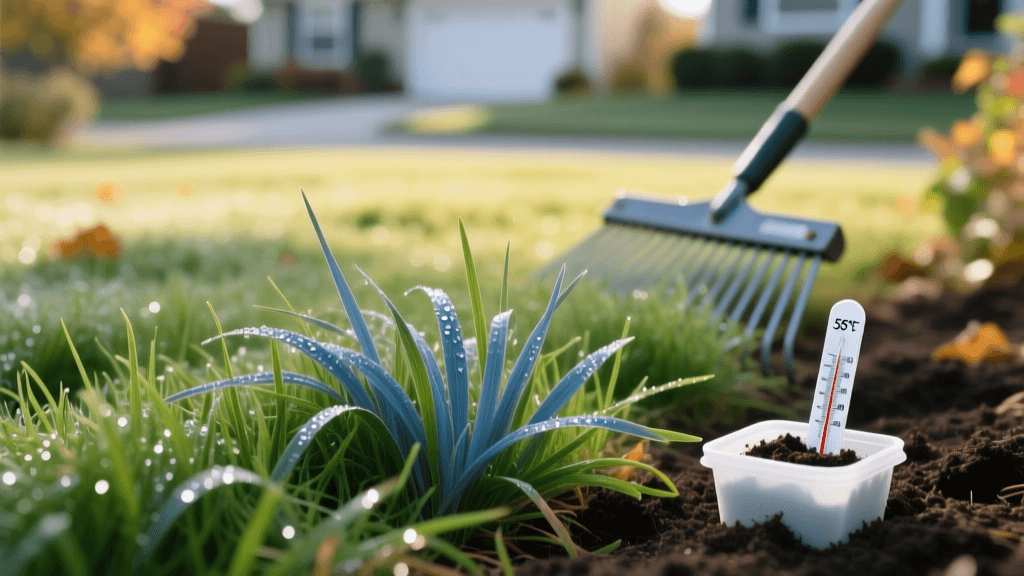
- Timing is Critical: CGM must be applied before weed seeds germinate. For cool-season grasses targeting crabgrass and dandelions, apply in early spring when soil temperatures at a 2-inch depth consistently reach 50°F to 55°F. A good phenological indicator is when forsythia bushes begin to bloom.
- Watering Instructions: After spreading, lightly water the lawn to activate the proteins in the gluten. However, this must be followed by a dry period of 3 to 5 days. If it rains heavily immediately after application, the germinating weed seeds may recover and form roots.
- Cost: Expect to pay between $40 and $60 for a 40-pound bag, translating to roughly $20 to $30 per 1,000 square feet.
Important Caveat: Because CGM inhibits the root formation of all seeds, you must not use it if you plan to overseed your lawn in the spring. Wait until the fall to overseed, and use CGM only in the spring for weed prevention.
Post-Emergent Organic Weed Control Strategies
While pre-emergents stop future generations of weeds, you still need a strategy for the mature weeds already in your lawn. Organic post-emergent control relies on mechanical removal and natural burn-down agents.
Manual Extraction Tools
For deep-rooted perennial weeds like dandelions, plantains, and dock, manual extraction is the most effective organic method. The goal is to remove the entire taproot; if you snap the root, the weed will simply regenerate. Invest in high-quality stand-up weeders such as the Fiskars Uproot Weeder or Grandpa's Weeder. These tools feature serrated steel claws that grip the taproot deep underground, allowing you to leverage the weed out without bending over or disturbing the surrounding turf. The best time to manually pull weeds is immediately after a heavy rain or a deep irrigation session, when the soil is soft and roots release easily.
Horticultural Vinegar and Natural Burn-Downs
For annual weeds or weeds growing in driveway cracks and patio pavers, horticultural vinegar (20% to 30% acetic acid) is a popular organic burn-down herbicide. Unlike household vinegar (5% acetic acid), horticultural vinegar is strong enough to strip the waxy cuticle off weed leaves, causing them to desiccate and die within hours. The Environmental Protection Agency (EPA) classifies certain acetic acid formulations as minimum-risk pesticides when used correctly.
Safety and Application: Horticultural vinegar is non-selective and will burn any plant it touches, including your desirable grass. It is also a severe eye and skin irritant. Always wear safety goggles, long sleeves, and chemical-resistant gloves. Spray directly on the weed foliage on a hot, sunny, and windless day for maximum efficacy. Note that vinegar is a contact herbicide; it will kill the top growth of perennial weeds but will not translocate to the roots, meaning mature dandelions may require multiple treatments or manual pulling.
Cultural Practices: Your Best Defense Against Weeds
No organic herbicide can compensate for poor lawn care practices. A thick, vigorous turf is the ultimate weed barrier. By optimizing your cultural habits, you create an environment where weeds simply cannot compete for sunlight, water, and nutrients.
Mowing High and Often
Mowing height is arguably the single most important factor in organic weed control. Most homeowners mow their lawns far too short, which stresses the grass, reduces its root mass, and opens the canopy to sunlight, triggering weed seed germination. For cool-season grasses (Kentucky Bluegrass, Tall Fescue, Perennial Ryegrass), set your mower deck to a minimum of 3.5 inches, and ideally 4 inches during the heat of summer. Tall grass blades shade the soil surface, keeping it cool and preventing light-dependent seeds like crabgrass from sprouting. Never remove more than one-third of the grass blade in a single mowing session.
Deep and Infrequent Watering
Weeds like nutsedge and crabgrass thrive in shallow, frequently watered soils. To encourage deep turf roots that outcompete weeds, water your lawn deeply and infrequently. Aim for 1 to 1.5 inches of water per week, applied in one or two sessions. You can measure this by placing empty tuna cans around your lawn and timing how long it takes your sprinkler to fill them to a 1-inch depth. Deep watering forces turfgrass roots to grow 6 to 8 inches into the soil profile, accessing moisture that shallow-rooted weeds cannot reach.
Core Aeration and Compost Topdressing
Compacted soil restricts oxygen and water flow, favoring weeds like annual bluegrass and knotweed. Perform core aeration every fall to relieve compaction. Immediately after aerating, topdress your lawn with a quarter-inch layer of high-quality, screened organic compost. The compost introduces beneficial mycorrhizal fungi and bacteria that break down thatch and make soil nutrients bioavailable to your grass, further thickening the turf canopy.
Comparison: Organic vs. Synthetic Weed Control Methods
Understanding the differences between organic and synthetic approaches helps set realistic expectations for your lawn care journey. Organic methods focus on long-term soil health, while synthetics offer quick, temporary fixes.
| Method | Type | Target Weeds | Estimated Cost per 1,000 Sq Ft | Environmental Impact |
|---|---|---|---|---|
| Corn Gluten Meal | Organic Pre-Emergent | Crabgrass, Dandelion seeds | $20 - $30 | Positive (Adds Nitrogen & Organic Matter) |
| Horticultural Vinegar | Organic Post-Emergent | Annual broadleaves, Driveway weeds | $5 - $10 | Neutral (Breaks down rapidly in soil) |
| Manual Extraction | Organic Post-Emergent | Perennials, Taproots | Time / Tool Cost ($30-$50 one time) | Positive (Zero chemical residue) |
| Synthetic 2,4-D / Dicamba | Chemical Post-Emergent | Broadleaf weeds | $3 - $8 | Negative (Runoff risks, harms pollinators) |
| Synthetic Pre-Emergent | Chemical Pre-Emergent | Crabgrass, Annual grasses | $5 - $12 | Negative (Soil residue, aquatic toxicity) |
Patience and the Transition Period
If you are transitioning from a synthetic lawn care program to an organic one, patience is essential. Synthetic fertilizers provide immediate, salt-based nutrient spikes that force rapid top growth, while synthetic herbicides wipe out weeds overnight. Organic systems take time to rebuild the soil food web. During the first year of transition, you may see a temporary increase in weed pressure as the soil biology rebalances and the thatch layer breaks down. Stick to your schedule of corn gluten meal applications, high mowing, and compost topdressing. By year three, your turf will be deeply rooted, naturally resilient, and dense enough to choke out weeds without a single drop of synthetic chemicals.