Pest Control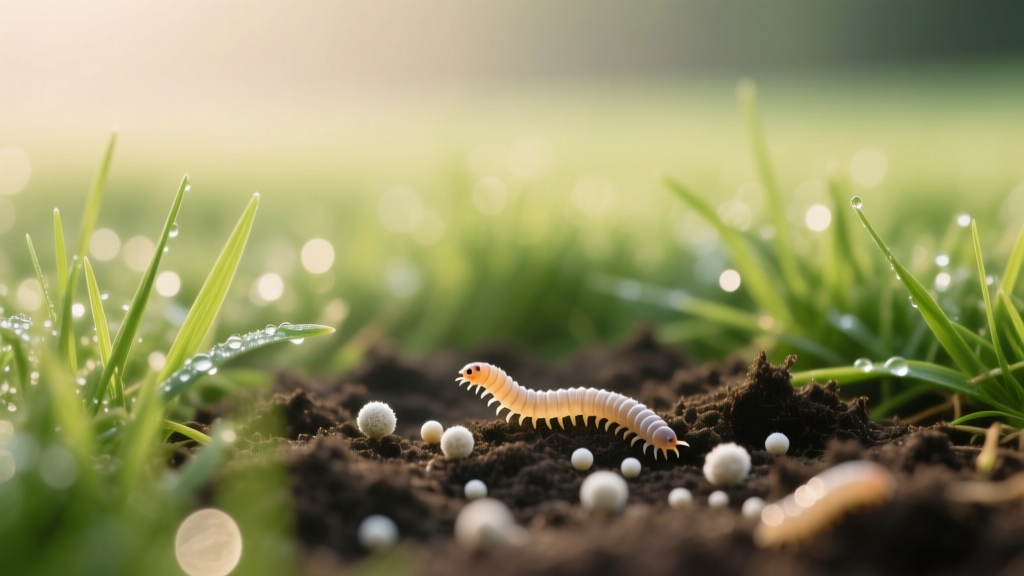
Organic Grub Control: Nematodes and Milky Spore Guide
Emily WatsonPublished
The Hidden Threat of White Grubs in Your Lawn
White grubs are the C-shaped, soil-dwelling larvae of various scarab beetles, including the infamous Japanese beetle, June bugs, and European chafers. These subterranean pests feed aggressively on the root systems of turfgrass, severing the plant's ability to absorb water and nutrients. According to the University of Minnesota Extension, white grubs cause the most severe damage in late summer and early fall, manifesting as irregular brown patches of dead grass that feel spongy underfoot. Because the roots have been consumed, the damaged turf can often be rolled back like a loose carpet. Furthermore, secondary damage frequently occurs when foraging animals like skunks, raccoons, and crows tear up the lawn to feast on the protein-rich larvae hiding beneath the soil surface.
The Case for Chemical-Free Grub Management
Historically, homeowners have relied on synthetic chemical insecticides, such as imidacloprid and trichlorfon, to eradicate grub populations. However, these broad-spectrum neurotoxins pose significant risks to the broader ecosystem. Neonicotinoids can leach into groundwater, harm aquatic invertebrates, and pose severe toxicity risks to essential pollinators like honeybees and native bumblebees. Transitioning to chemical-free and organic approaches not only protects local wildlife and waterways but also preserves the complex soil microbiome necessary for long-term turf health. The Environmental Protection Agency (EPA) highlights that biological controls, such as beneficial nematodes and bacterial spores, offer highly targeted pest management without the collateral environmental damage associated with synthetic pesticides.
Beneficial Nematodes: Nature's Microscopic Assassins
Beneficial nematodes are microscopic, unsegmented roundworms that naturally occur in soils worldwide. When applied to a lawn, specific entomopathogenic (insect-killing) strains actively hunt down soil-dwelling pests, including white grubs, cutworms, and flea beetles. Once a nematode enters a grub through natural body openings, it releases a symbiotic bacterium that rapidly multiplies, killing the host within 24 to 48 hours. The nematodes then feed on the developing bacteria and decaying host tissue, reproducing until the grub's carcass is depleted, at which point the new generation of nematodes emerges to seek out fresh prey.
Selecting the Right Nematode Strain
Not all nematodes are created equal. For white grub control, the most effective and widely recommended strain is Heterorhabditis bacteriophora (often abbreviated as Hb). Unlike other strains that wait passively for a host to bump into them, Hb is an active 'cruiser' that can migrate through the soil profile to track down deep-burrowing grubs. You can purchase live Hb nematodes from specialized biological control suppliers, typically shipped in a dormant state within a sponge or clay powder formulation. A standard application rate is approximately 1 billion nematodes per acre, which translates to roughly 25,000 to 50,000 nematodes per square foot of lawn.
Step-by-Step Nematode Application Guide
Because nematodes are living organisms, their success depends entirely on proper handling and environmental conditions. Follow these precise steps for optimal results:
- Timing: Apply in late summer or early fall when grubs are young, actively feeding, and located close to the soil surface. Soil temperatures must be consistently between 60°F and 70°F.
- Preparation: Mow the lawn short and thoroughly water the area (about 1/2 inch of water) before application. Nematodes require a moist film of water to swim through the soil pores.
- Mixing: Mix the nematode formulation with cool, distilled, or dechlorinated water in a watering can or hose-end sprayer. Avoid using chlorinated tap water, as chlorine will kill the nematodes on contact.
- Application: Apply the mixture evenly across the affected lawn area during the early morning or late evening to protect the nematodes from lethal UV radiation.
- Post-Application Watering: Water the lawn lightly immediately after application to wash the nematodes off the grass blades and down into the soil. Keep the soil consistently moist (but not waterlogged) for the next 10 to 14 days.
Milky Spore Disease: A Long-Term Biological Solution
Milky spore disease is caused by a naturally occurring soil bacterium called Paenibacillus popilliae. Unlike nematodes, which offer a broad-spectrum approach to various soil pests, milky spore is highly specific; it exclusively targets and kills the larvae of the Japanese beetle. When a Japanese beetle grub ingests milky spore spores while feeding on grass roots, the bacteria multiply inside the insect's hemolymph (blood), turning it a characteristic milky white color. The grub eventually dies and decomposes, releasing billions of new spores back into the soil to infect future generations.
How Milky Spore Works in the Soil
The primary advantage of milky spore is its incredible longevity. While synthetic chemicals degrade within weeks and nematodes must be reapplied annually or bi-annually, milky spore establishes a self-sustaining biological barrier in your soil. According to research from Penn State Extension, once milky spore is fully established in a lawn, it can provide continuous grub control for 10 to 15 years without any further applications. However, this long-term benefit comes with a trade-off: milky spore is a slow-acting solution. It typically takes one to three years for the spore count in the soil to build up to levels capable of causing a widespread epidemic among the grub population.
Applying Milky Spore Powder Effectively
Milky spore is sold as a dry powder and is applied using a specific grid method to ensure even distribution and rapid soil colonization:
- Use a measuring spoon to drop exactly one teaspoon of milky spore powder onto the lawn.
- Space these drops in a grid pattern, placing one teaspoon every four feet in all directions (creating a 4x4 foot grid across your entire lawn).
- Water the lawn gently for 15 minutes immediately after application to wash the spores off the grass blades and into the soil where the grubs reside.
- Do not aerate, dethatch, or heavily rake the lawn for at least two weeks after application, as this can disrupt the spores' integration into the topsoil.
Cost Note: A 10-ounce box of milky spore powder typically costs around $40 to $50 and is sufficient to treat approximately 2,500 square feet of lawn space.
Nematodes vs. Milky Spore: A Detailed Comparison
Choosing between beneficial nematodes and milky spore depends on your specific pest pressures, budget, and timeline. Refer to the comparison table below to determine which organic method best suits your lawn care strategy.
| Feature | Beneficial Nematodes (Hb Strain) | Milky Spore Disease |
|---|---|---|
| Target Pests | Multiple species (June bugs, chafers, Japanese beetles) | Japanese beetle grubs exclusively |
| Speed of Control | Fast (kills grubs within 2-3 days) | Slow (takes 1-3 years to establish full control) |
| Longevity in Soil | Short-term (requires annual reapplication) | Long-term (lasts 10-15 years once established) |
| Ideal Soil Temp | 60°F to 70°F | Above 60°F (applied in spring or fall) |
| Application Difficulty | Moderate (requires careful mixing and moisture control) | Easy (simple grid application of dry powder) |
| Estimated Cost | $30-$50 per 10 million (treats ~2,000 sq ft) | $40-$50 per 10 oz (treats ~2,500 sq ft) |
Cultural Practices to Support Organic Control
Biological controls are most effective when paired with robust cultural lawn care practices that make your turf naturally resilient to pest damage. Grubs thrive in shallow-rooted lawns that are watered frequently and lightly. By shifting to a deep, infrequent watering schedule (providing 1 to 1.5 inches of water per week in a single session), you force grass roots to grow deeper into the soil profile, putting them out of reach of young, shallow-feeding grubs.
Additionally, consider overseeding your lawn with endophyte-enhanced grass varieties. Endophytes are naturally occurring, beneficial fungi that live inside the tissues of certain grasses, particularly tall fescues, fine fescues, and perennial ryegrasses. These fungi produce alkaloids that are highly toxic to surface-feeding insects and deter root-feeding grubs, providing a built-in, chemical-free defense mechanism. Finally, maintaining a mowing height of 3 to 4 inches shades the soil, retains moisture, and promotes a dense root system that can easily tolerate minor grub feeding without showing visible signs of stress or browning.
Final Thoughts on Sustainable Lawn Care
Transitioning to an organic grub control regimen requires patience and a shift in mindset. Rather than seeking the instant, total eradication promised by synthetic chemicals, organic lawn care focuses on restoring ecological balance and keeping pest populations below the threshold of visible damage. By utilizing the microscopic hunting prowess of Heterorhabditis bacteriophora nematodes for immediate relief, or establishing a long-term biological shield with milky spore, you can protect your lawn from destructive white grubs while safeguarding the pollinators, pets, and local waterways that rely on a toxin-free environment.