Pest Control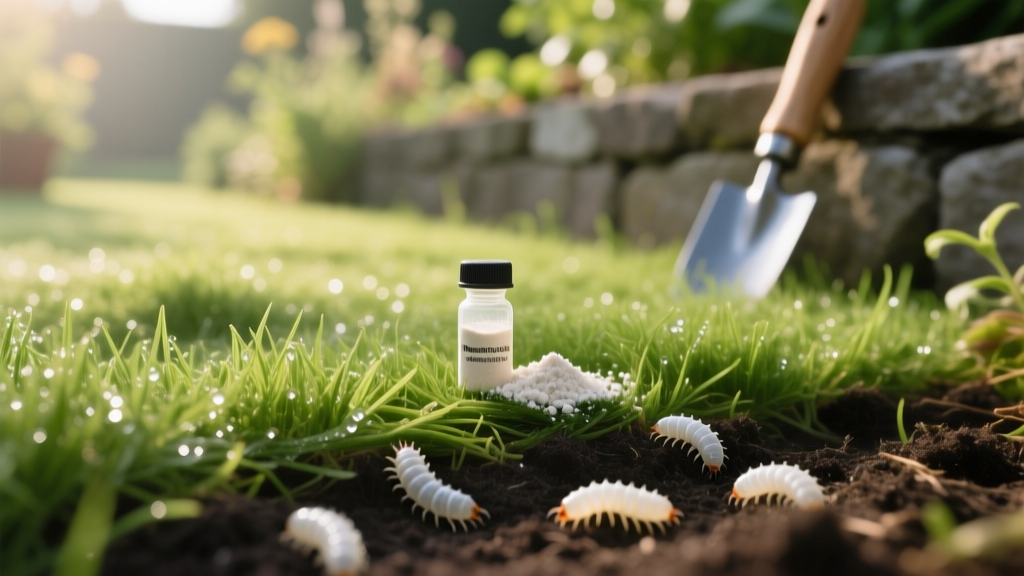
Organic White Grub Control: Nematodes & Milky Spore Guide
Robert HayesPublished
Introduction to Organic White Grub Control
When homeowners discover brown, dead patches in their lawns that peel back like loose carpet, they are usually face-to-face with a white grub infestation. White grubs, the larval stage of scarab beetles such as Japanese beetles, June bugs, and European chafers, feed voraciously on turfgrass roots. While synthetic chemicals like imidacloprid or trichlorfon have traditionally been the go-to solution, a growing movement toward Integrated Pest Management (IPM) and organic lawn care has spotlighted highly effective, chemical-free alternatives. According to Penn State Extension, biological controls can provide exceptional grub management without harming beneficial soil organisms, pets, or local watersheds. This comprehensive guide explores the two most powerful organic weapons in your arsenal: beneficial nematodes and milky spore disease.
Understanding the White Grub Lifecycle
To effectively treat grubs organically, you must understand their lifecycle. Adult beetles emerge in early summer, mate, and lay eggs in the soil. These eggs hatch in mid-to-late summer, releasing tiny, C-shaped, cream-colored larvae with distinct brown head capsules and three pairs of legs near the head. During late summer and early fall, these young grubs feed aggressively on grassroots, causing the most severe visible damage. As winter approaches, they burrow deep below the frost line to overwinter, returning to the surface in spring to feed briefly before pupating into adults.
Because organic treatments rely on biological interactions rather than broad-spectrum toxicity, timing your application to coincide with the most vulnerable grub stages—typically the young, actively feeding larvae in late summer—is critical for success.
Beneficial Nematodes: Microscopic Lawn Predators
Beneficial nematodes are unsegmented, microscopic roundworms that naturally occur in soils worldwide. For grub control, specific species act as lethal parasites. The most effective species for white grubs is Heterorhabditis bacteriophora (often abbreviated as Hb). Unlike chemical pesticides that linger in the environment, nematodes actively hunt their prey.
How Nematodes Work
When applied to the lawn, infective juvenile nematodes swim through soil moisture films seeking out grub hosts. Once they locate a grub, they enter through natural body openings and release a symbiotic bacteria (Photorhabdus luminescens). This bacteria rapidly multiplies, causing septicemia and killing the grub within 24 to 48 hours. The nematodes then reproduce inside the dead host, releasing thousands of new juveniles to hunt for more grubs.
Application Requirements and Costs
- Timing: Apply in late summer or early fall when soil temperatures are between 60°F and 85°F, and grubs are small and actively feeding near the surface.
- Preparation: Water the lawn thoroughly (about 1/4 to 1/2 inch) before application to ensure the soil is moist, allowing nematodes to move easily.
- Application: Mix nematodes with water and apply using a hose-end sprayer or watering can. Remove sprayer filters to prevent clogging.
- Post-Application: Water immediately after application to wash nematodes off grass blades and into the soil. Keep the soil moist for 10 to 14 days.
- Cost: Approximately $30 to $50 per million nematodes, which treats roughly 2,500 to 3,000 square feet.
Milky Spore Disease: The Long-Term Organic Solution
Milky spore disease is caused by the bacterium Paenibacillus popilliae (formerly Bacillus popilliae). It is highly specific to Japanese beetle grubs and will not harm other insects, earthworms, or beneficial soil microbes. As noted by University of Kentucky Extension, milky spore is a long-term investment in lawn health rather than a quick-fix eradication tool.
How Milky Spore Works
When a Japanese beetle grub ingests milky spore spores while feeding on grassroots, the spores germinate inside the insect's gut. The bacteria multiply rapidly, turning the grub's internal fluids a milky white (hence the name). The grub dies within 7 to 21 days, eventually rupturing and releasing 1 to 2 billion new spores back into the soil, creating a self-sustaining biological barrier.
Application Requirements and Costs
- Timing: Can be applied anytime the ground is not frozen, but late summer to early fall is ideal when grubs are feeding.
- Preparation: No special soil preparation is required, though moist soil helps spores integrate.
- Application: Apply using a drop spreader or a specialized milky spore dispenser tube, placing a teaspoon of powder every 12 inches in a grid pattern across the lawn.
- Post-Application: Water lightly to wash the powder into the soil. Avoid tilling or aerating the lawn for a few weeks to allow the spore network to establish.
- Cost: Roughly $50 to $70 for a 40-ounce box that treats 10,000 square feet. While the upfront cost is higher, it remains active in the soil for 10 to 15 years.
Comparison Chart: Nematodes vs. Milky Spore
Choosing between nematodes and milky spore depends on your specific pest pressures, budget, and timeline. Review the comparison table below to determine the best organic approach for your lawn.
| Feature | Beneficial Nematodes (Hb) | Milky Spore Disease |
|---|---|---|
| Target Pests | Japanese beetles, June bugs, European chafers, Asiatic garden beetles | Strictly Japanese beetle grubs |
| Speed of Control | Fast (kills grubs in 24-48 hours) | Slow (kills grubs in 1-3 weeks; takes 2-3 years to fully establish) |
| Longevity in Soil | Short-term (1 season; requires annual reapplication) | Long-term (10-15 years once established) |
| Application Method | Mixed with water; sprayed via hose-end or tank sprayer | Dry powder; applied in grid pattern via drop spreader or tube |
| Soil Moisture Need | High (requires moist soil for 2 weeks post-application) | Moderate (requires light watering to incorporate into soil) |
| Approximate Cost | $30-$50 per 2,500 sq. ft. (Annual) | $50-$70 per 10,000 sq. ft. (One-time investment) |
Step-by-Step Organic Grub Treatment Plan
For the ultimate chemical-free defense, many organic lawn care professionals recommend a combined approach. Here is a practical, step-by-step strategy to reclaim your lawn:
- Year 1 (Immediate Knockdown): In late summer, apply Heterorhabditis bacteriophora nematodes to immediately reduce the current grub population and stop root damage. Ensure the soil is moist and apply during the cooler evening hours to protect nematodes from UV radiation.
- Year 1 (Long-Term Inoculation): One week after the nematode application, apply milky spore powder in the recommended grid pattern. The nematodes will handle the immediate threat, while the milky spore begins its multi-year establishment process.
- Years 2 and 3: Monitor your lawn by digging up a 1-square-foot section of turf in late August. If you find fewer than 5 grubs per square foot, no further treatment is needed. If populations remain high, apply a second round of nematodes.
- Year 4 and Beyond: The milky spore network should now be fully established, providing passive, organic control of Japanese beetle grubs without any additional inputs.
Cultural Practices to Support Organic Pest Control
Biological controls are most effective when paired with robust cultural lawn care practices. A thick, deeply rooted turfgrass can tolerate minor grub feeding without showing visible damage. Implement the following IPM strategies:
- Deep, Infrequent Watering: Water your lawn deeply (1 inch per week) to encourage deep root growth. Avoid light, daily watering, which keeps grassroots near the surface and makes them highly accessible to grubs. Furthermore, adult beetles prefer laying eggs in moist, shallow-watered soil.
- Proper Mowing Height: Set your mower blade to 3 or 4 inches. Taller grass shades the soil, conserving moisture for deep roots and creating a less hospitable microclimate for beetle egg-laying.
- Overseeding with Endophytic Grasses: When overseeding bare patches, choose turfgrass varieties enhanced with endophytes—naturally occurring fungi that live within the grass plant. Endophytic tall fescues and perennial ryegrasses produce alkaloids that deter surface-feeding insects and improve overall plant vigor.
- Avoid Broad-Spectrum Insecticides: Never use synthetic, broad-spectrum chemical pesticides in an organic lawn. These products indiscriminately kill beneficial ground beetles, ants, and parasitic wasps that naturally prey on grub eggs and young larvae.
Conclusion
Transitioning to a chemical-free lawn care regimen does not mean surrendering your turf to destructive pests. By leveraging the natural predatory behaviors of beneficial nematodes and the long-lasting biological warfare of milky spore disease, you can effectively manage white grub populations. These organic methods protect your family, pets, and the local ecosystem while cultivating a resilient, vibrant lawn that naturally resists severe damage. Embrace the science of Integrated Pest Management, and let nature do the heavy lifting in your backyard.