Home & Garden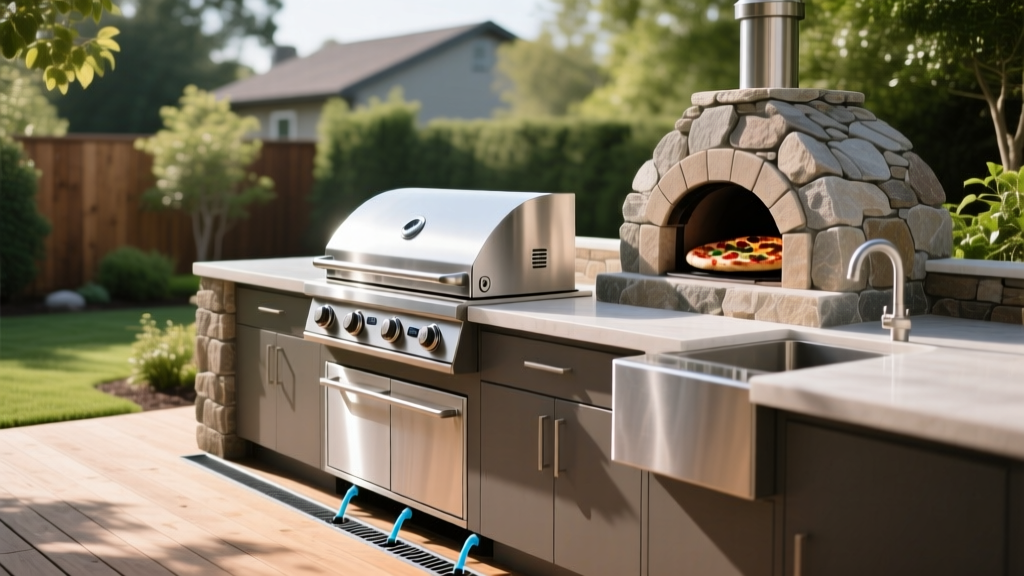
2026 Outdoor Kitchen Irrigation & Drainage Design Guide
Lisa ThompsonPublished
The Intersection of Culinary Hardscapes and Landscape Hydraulics
The evolution of outdoor living in 2026 has transformed the American backyard into a fully equipped culinary hub. Homeowners are no longer settling for a simple charcoal kettle on a patio; today's standard includes sophisticated outdoor kitchen designs featuring built-in gas grills, kamado smokers, and masonry wood-fired pizza ovens. According to recent housing trend reports from the National Association of Home Builders, outdoor kitchens with permanent masonry structures and integrated plumbing are among the highest-return investments for modern properties. However, integrating these high-end appliances into your landscape introduces a critical vulnerability that many contractors overlook: water management. From the perspective of irrigation and landscape drainage, designing an outdoor kitchen requires a holistic approach that bridges landscape hydraulics with hardscape architecture to protect your investment.
The Hidden Dangers of Irrigation Overspray
When you install a built-in grill or a traditional brick pizza oven, you are introducing materials that are highly susceptible to moisture damage. Stainless steel cabinetry, while durable, will quickly develop hard water stains and surface corrosion if subjected to daily irrigation overspray. More critically, masonry pizza ovens rely on specialized ceramic insulation and refractory mortar to retain high temperatures. Constant exposure to sprinkler overspray can lead to moisture intrusion within the masonry dome. When the oven is fired up, this trapped moisture turns to steam, causing spalling, cracking, and structural degradation over time. Furthermore, hard water deposits from municipal or well water can clog the ventilation dampers and stain the exterior stucco or stone veneer of your kitchen island. Preventing this damage requires a complete re-evaluation of your existing sprinkler system.
Smart Zoning and Geofencing for Hardscape Buffers
In 2026, smart irrigation controllers have moved beyond simple weather-based adjustments. Modern systems utilizing the Matter smart home protocol now feature advanced GPS polygon mapping and geofencing. When designing your outdoor kitchen, you must work with a licensed irrigation professional to map out a strict 'no-spray' buffer zone. Using the companion app of your smart controller, you can draw a digital boundary around the exact footprint of your outdoor kitchen, patio furniture, and dining areas. The system will automatically calculate the throw distance of nearby rotor heads and disable or adjust any zones that intersect with this hardscape polygon. This ensures that even during high-wind events, the system will pause or delay watering to prevent wind drift from carrying atomized water onto your built-in grill surfaces or into the chimney flue of your pizza oven.
Transitioning to Drip Irrigation and Rotary Nozzles
To maintain the lush landscaping surrounding your outdoor kitchen without risking water damage, you must transition away from traditional fixed-spray heads. Fixed-spray heads atomize water into a fine mist that is easily carried by a light breeze directly onto your cooking surfaces. Instead, upgrade the perimeter beds to subsurface drip irrigation or point-source emitters. Drip lines deliver water directly to the root zone of your shrubs and perennials, eliminating airborne moisture entirely. For areas where overhead watering is necessary, such as nearby lawn strips, install high-efficiency rotary nozzles. Rotary nozzles throw larger, heavier droplets of water in a slow, sweeping stream that is highly resistant to wind drift. The EPA WaterSense Outdoor Irrigation Guidelines highly recommend rotary nozzles and drip systems for their superior efficiency and ability to keep hardscapes dry while reducing overall water consumption by up to 30 percent.
Hardscape Drainage and Grading Strategies
Irrigation is only half the battle; managing the water that naturally falls or runs off the hardscape is equally vital. The grading around your outdoor kitchen island must be sloped at a minimum of 2 percent away from the masonry structures to prevent pooling. When water pools at the base of a pizza oven or grill island, it wicks up into the concrete block and mortar through capillary action, leading to efflorescence and freeze-thaw damage in colder climates. To combat this, integrate trench drains or channel drains along the edges of the patio where the hardscape meets the soil or lawn. These drains should be tied into a dedicated stormwater management system or a dry well, completely separate from your home's sanitary sewer system. For the planting beds immediately adjacent to the kitchen, installing a French drain wrapped in filter fabric will intercept subsurface irrigation runoff before it can migrate under the patio pavers.
Managing Outdoor Sink Plumbing and Gray Water
Most 2026 outdoor kitchen designs include a built-in prep sink, which introduces a new layer of water management: gray water. The water that goes down your outdoor sink drain must be handled carefully to prevent it from undermining the structural base of your kitchen island. Local plumbing codes vary, but many municipalities prohibit draining gray water directly into the soil or landscape beds near the home's foundation due to the presence of food particles, grease, and soaps. The best practice is to route the outdoor sink's drain line to an approved dry well equipped with a grease trap, or tie it into the home's main sanitary sewer line with a proper P-trap and vent. Additionally, ensure that the water supply lines feeding the sink are equipped with an indoor shut-off valve and an outdoor blow-out port to facilitate easy winterization.
2026 Component Comparison for Outdoor Kitchens
Selecting the right materials and smart components is essential for a resilient outdoor culinary space. Below is a comparison of the top irrigation and drainage solutions recommended for outdoor kitchen perimeters in 2026.
| Component Type | Best Application | 2026 Estimated Cost | Key Benefit for Outdoor Kitchens |
|---|---|---|---|
| Subsurface Drip Grid | Planting beds within 5 feet of the kitchen island | $1.50 - $2.50 per sq. ft. | Zero overspray; keeps masonry and stainless steel completely dry. |
| High-Efficiency Rotary Nozzles | Lawn strips adjacent to the dining and cooking patio | $8 - $12 per nozzle | Heavy droplet stream resists wind drift toward the pizza oven. |
| Smart Controller with Polygon Mapping | Central hub for entire landscape irrigation management | $250 - $400 | Creates digital 'no-spray' geofences around hardscape investments. |
| Stainless Steel Trench Drain | Patio perimeter and transition zones between pavers and turf | $80 - $150 per linear ft. | Intercepts surface runoff before it reaches the kitchen island base. |
| Smart Auto-Shutoff Valve | Main water supply line feeding the outdoor sink and drip zones | $180 - $250 | Detects micro-leaks and shuts off water to prevent foundation erosion. |
Smart Winterization and Leak Detection
For homeowners in regions that experience freezing temperatures, winterizing the water lines associated with your outdoor kitchen is non-negotiable. A burst pipe beneath a masonry pizza oven can cause catastrophic structural shifting. In 2026, smart irrigation systems are frequently paired with inline acoustic leak detectors and automatic shut-off valves. If a micro-leak develops in the supply line feeding your outdoor sink or the drip zones around the patio, the smart valve detects the anomalous flow rate and instantly cuts the water supply, sending an alert to your smartphone. Furthermore, ensure your irrigation contractor installs dedicated blow-out ports on the outdoor kitchen plumbing lines. This allows you to connect an air compressor in late autumn to purge all residual water from the sink supply lines and the perimeter drip irrigation zones, ensuring that expanding ice cannot crack your fittings or damage the base of your hardscape.
Conclusion: Protecting Your Culinary Investment
Designing an outdoor kitchen with a built-in grill and a wood-fired pizza oven is a significant financial and lifestyle investment. By approaching the project through the lens of professional irrigation and drainage design, you ensure that your culinary oasis remains pristine for decades. Upgrading to smart polygon mapping, eliminating fixed-spray heads in favor of drip and rotary technologies, and implementing rigorous hardscape drainage will safeguard your masonry and stainless steel from the destructive forces of water. As highlighted by the Irrigation Association, integrating smart water management into landscape architecture is the hallmark of modern, sustainable, and resilient property design. Plan your water management strategy before the first stone is laid, and your 2026 outdoor kitchen will be as durable as it is beautiful.
