Lawn Care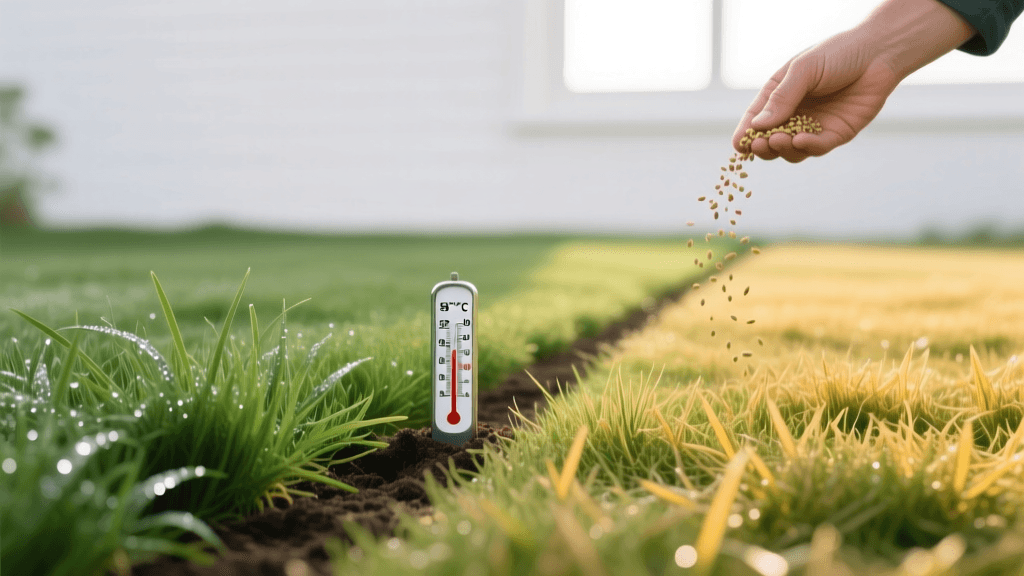
Best Overseeding Schedules for Cool & Warm-Season Lawns
Why Timing is Everything for Overseeding
Overseeding is one of the most effective ways to rejuvenate a thinning lawn, introduce disease-resistant grass varieties, and crowd out invasive weeds. However, the success of your overseeding efforts hinges almost entirely on seasonal timing. Planting seed at the wrong time of year can result in poor germination, frost kill, or severe competition from aggressive summer weeds. To achieve a thick, lush carpet of grass, homeowners must align their planting schedules with the specific biological needs of their turfgrass species.
Grasses are broadly categorized into cool-season and warm-season types, and each has a distinctly different optimal planting window. Understanding these seasonal schedules is the difference between a vibrant, thriving lawn and a patchy, wasted investment in seed and fertilizer.
The Science of Seed Germination and Soil Temperature
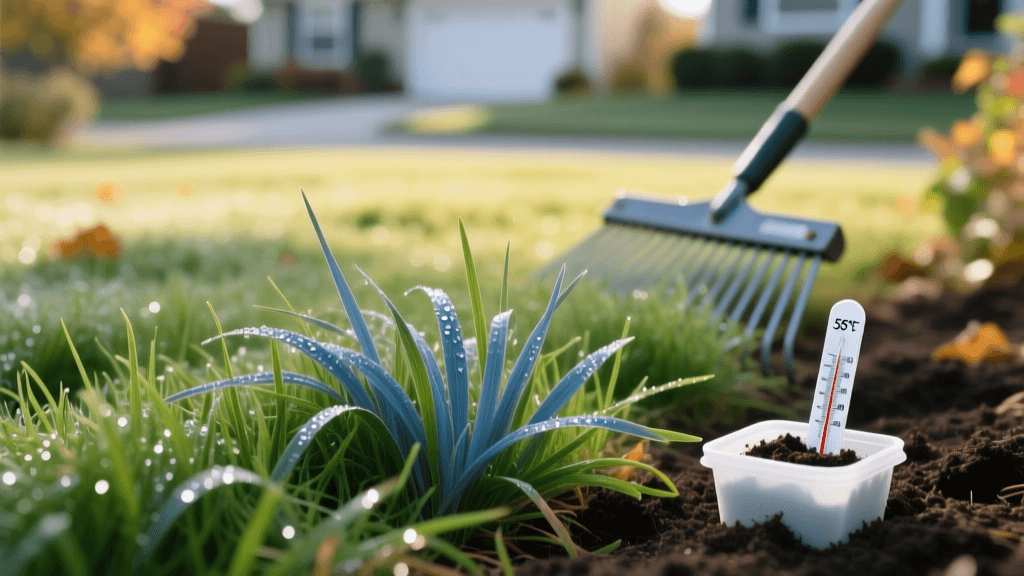
Many amateur gardeners make the mistake of watching the air temperature to decide when to seed. However, seed germination is driven primarily by soil temperature. Cool-season grasses require soil temperatures between 50°F and 65°F for optimal germination, while warm-season grasses demand soil temperatures ranging from 65°F to 75°F. According to the University of Minnesota Extension, monitoring soil temperature at a depth of two inches is the most reliable way to time your overseeding schedule.
Furthermore, seasonal timing dictates the level of weed competition your new grass will face. Crabgrass and other aggressive summer annuals thrive in warm soil, which can easily choke out slow-germinating cool-season grass seeds planted in late spring. By aligning your schedule with the natural dormancy cycles of weeds, you give your new turf a massive competitive advantage.
Cool-Season Grass Overseeding Schedule (Late Summer to Early Fall)
Cool-season grasses—including Kentucky Bluegrass, Tall Fescue, Fine Fescue, and Perennial Ryegrass—thrive in regions with cold winters and moderate summers. The absolute best time to overseed these lawns is in the late summer to early fall.
The Fall Advantage
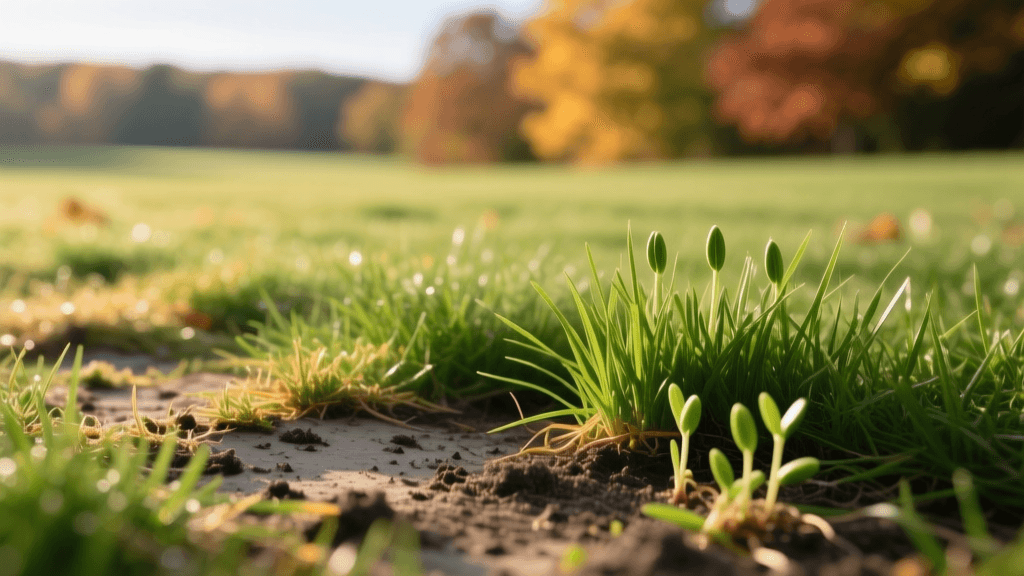
Why is fall the gold standard for cool-season lawns? First, the soil is still warm from the summer sun, which speeds up germination. Second, the air temperatures are beginning to cool, reducing heat stress on tender seedlings. Third, autumn typically brings more consistent rainfall. Finally, and most importantly, aggressive summer weeds like crabgrass are dying off, leaving space and nutrients for your new grass to establish.
Step-by-Step Fall Timeline
- 45 Days Before First Frost: This is your target seeding window. In northern zones (USDA Zones 3-5), this typically falls between mid-August and early September. In transition zones (Zones 6-7), aim for early to mid-September.
- Preparation (1 Week Prior): Mow the lawn shorter than usual (about 1.5 to 2 inches) and perform core aeration to relieve soil compaction and create direct seed-to-soil contact. As noted by Penn State Extension, proper soil contact is critical for seed imbibition and germination.
- Seeding Day: Apply your seed at the recommended rate. Use a broadcast spreader for even coverage, splitting your seed amount in half and applying it in a crisscross pattern.
- Fertilization: Apply a high-phosphorus starter fertilizer (e.g., a 10-18-10 or 20-27-5 NPK ratio) on the same day as seeding to promote rapid root development.
Warm-Season Grass Overseeding Schedule (Late Spring to Early Summer)
Warm-season grasses—such as Bermudagrass, Zoysiagrass, Centipedegrass, and Bahiagrass—dominate the southern United States. These grasses love the heat and go dormant (turning brown) during the winter. The optimal time to overseed warm-season lawns is in the late spring to early summer.
Beating the Frost and the Weeds
You must wait until all danger of spring frost has completely passed. If you seed warm-season grass too early, the seeds will rot in the cold, damp soil. Your target is when nighttime air temperatures consistently stay above 65°F and soil temperatures reach at least 70°F.
Step-by-Step Spring Timeline
- 2 to 3 Weeks After Last Frost: In the deep south (Zones 8-10), this can be as early as late April or May. In the upper transition zones, wait until late May or early June.
- Preparation: Warm-season lawns often develop thick thatch layers. Dethatch or heavily rake the lawn to ensure seeds reach the soil. Scalp the lawn down to about 1 inch to allow sunlight to reach the soil and warm it up.
- Seeding Day: Broadcast the seed evenly. Bermudagrass seed is incredibly small; mixing it with dry sand or using a drop spreader can help prevent over-application.
- Watering: Warm-season seeds dry out rapidly in the summer sun. You must commit to watering lightly 3 to 4 times a day for the first two weeks.
The Winter Color Exception: Overseeding for Winter
There is a unique seasonal exception for warm-season lawns in the Sunbelt. Homeowners who want a green lawn year-round will overseed their dormant Bermudagrass or Zoysiagrass with Perennial Ryegrass in the early fall (usually October). The cool-season ryegrass germinates quickly in the warm autumn soil, provides a lush green carpet through the winter, and naturally dies off when the brutal summer heat returns, allowing the warm-season base grass to wake up and take over again.
Comprehensive Overseeding Timing & Rate Chart
Use the following data table to plan your specific lawn care schedule based on your grass type and regional climate.
| Grass Type | Category | Best Overseeding Season | Target Soil Temp | Seeding Rate (per 1,000 sq ft) | Days to Germinate |
|---|---|---|---|---|---|
| Tall Fescue | Cool-Season | Early Fall | 50°F - 65°F | 5 - 8 lbs | 7 - 14 days |
| Kentucky Bluegrass | Cool-Season | Early Fall | 50°F - 65°F | 1 - 2 lbs | 14 - 30 days |
| Perennial Ryegrass | Cool-Season | Early Fall / Winter Overseed | 50°F - 65°F | 5 - 7 lbs | 5 - 10 days |
| Bermudagrass | Warm-Season | Late Spring / Early Summer | 65°F - 75°F | 1 - 2 lbs (hulled) | 10 - 21 days |
| Centipedegrass | Warm-Season | Late Spring | 70°F - 75°F | 0.5 - 1 lb | 14 - 21 days |
Soil Preparation and Seeding Execution
Timing means nothing if the soil environment is hostile to new roots. Before your scheduled seeding day, conduct a soil test. Most turfgrasses prefer a pH between 6.0 and 7.0. If your soil is too acidic, apply pelletized lime; if it is too alkaline, apply elemental sulfur. For warm-season grasses, Texas A&M AgriLife Extension emphasizes that proper soil pH is critical for nutrient uptake, particularly for iron and nitrogen.
Pro Tip: Never apply a pre-emergent crabgrass preventer in the spring if you plan to overseed with warm-season grass. Pre-emergents create a chemical barrier in the soil that stops all seeds from germinating, including your expensive turfgrass seed. If you must control weeds, use post-emergent spot treatments well before your seeding date.
Post-Planting Care: The Critical First 30 Days
Once the seed is in the ground according to your seasonal schedule, your focus must shift entirely to moisture management and mowing discipline.
The Watering Schedule
- Days 1 to 14 (Germination Phase): Water lightly 2 to 4 times a day for 5-10 minutes per session. The goal is to keep the top 1 inch of soil constantly moist, not soggy. If the seed dries out even once during germination, it will die.
- Days 15 to 28 (Establishment Phase): As seedlings emerge and reach an inch tall, reduce watering frequency to once a day, but increase the duration to 20-30 minutes. This encourages roots to grow deeper into the soil profile.
- Days 29+ (Maturation Phase): Transition to a standard deep-and-infrequent watering schedule, providing about 1 inch of water per week, including rainfall.
The First Mow
Resist the urge to mow your new grass too early. Wait until the new seedlings have reached at least 3.5 to 4 inches in height. When you do mow, ensure your mower blades are razor-sharp to prevent tearing the tender young leaf tissue. Never remove more than the top one-third of the grass blade during a single mowing session.
Common Timing Mistakes to Avoid
Even experienced homeowners can fall victim to these common scheduling errors:
- Seeding Cool-Season Grass in Late Spring: The seed will germinate, but the shallow root system will not survive the impending summer heat and drought, resulting in total die-off by July.
- Seeding Warm-Season Grass in Late Fall: The seeds will fail to germinate due to cold soil, or the seedlings will be immediately killed by the first hard frost.
- Ignoring the Frost Calendar: Always check your local historical frost dates. For cool-season grasses, you need a minimum of 45 days of frost-free weather after planting to allow the roots to anchor deeply enough to survive winter heaving.
Conclusion
Mastering the seasonal timing and planting schedules for your specific grass type is the foundation of professional-level lawn care. By respecting the biological needs of cool-season and warm-season grasses, preparing the soil correctly, and committing to a rigorous post-planting watering routine, you can transform a tired, thin lawn into a dense, vibrant landscape that will be the envy of the neighborhood. Mark your calendar, check your soil temperatures, and prepare to plant at the perfect moment.