Gardening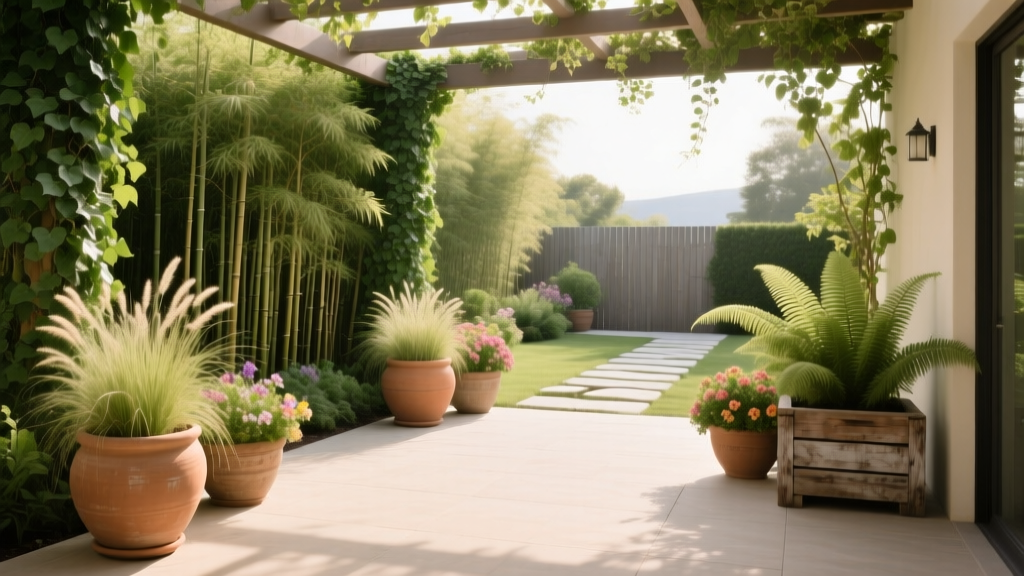
Patio Privacy & Curb Appeal: Large Container Garden Design
Mike RodriguezPublished
The Intersection of Curb Appeal and Outdoor Entertaining
When hosting friends and family, your outdoor space should feel like a private, luxurious retreat rather than an exposed extension of your living room. While traditional landscaping often focuses on the front yard to boost neighborhood curb appeal, modern outdoor entertaining demands that we apply those same design principles to our patios, decks, and backyard gathering spaces. The challenge? Creating a sense of enclosure, privacy, and high-end aesthetic appeal without committing to the massive expense and permanent footprint of building masonry walls or planting slow-growing hedge rows.
The ultimate solution for modern homeowners is the strategic use of large-scale container gardens and modular raised bed borders. By utilizing oversized planters filled with carefully selected privacy shrubs, ornamental grasses, and companion-planted perennials, you can instantly frame your entertaining space. This approach not only elevates your backyard curb appeal but also provides flexible, movable privacy screens that adapt to your hosting needs.
Choosing the Right Large-Scale Containers
To create a genuine privacy screen that doubles as a stunning design feature, you must abandon standard 12-inch terracotta pots. Privacy screening requires large, architectural containers that can hold substantial soil volume and support the root systems of woody shrubs and deep-rooted grasses. According to the Clemson University Home & Garden Information Center, larger containers not only support larger plants but also retain moisture significantly better, reducing the maintenance burden during summer entertaining seasons.
Material Selection for High-End Curb Appeal
- Corten Steel: Weathering steel develops a beautiful, protective rust patina that contrasts gorgeously with green foliage. It is incredibly durable and provides a modern, industrial-chic look perfect for contemporary patios.
- Fiberglass: Lightweight yet incredibly strong, fiberglass planters can be molded to mimic stone, concrete, or wood. They are frost-resistant and easy to move if you need to reconfigure your seating area for a large party.
- Cast Stone or Glazed Ceramic: For a more traditional or Mediterranean aesthetic, massive glazed urns or cast stone troughs provide a heavy, permanent feel that anchors the corners of a patio.
Container Sizing and Soil Volume Guide
One of the most common mistakes in container privacy screening is underestimating the soil volume required to keep large plants healthy and upright in high winds. Use the chart below to plan your purchases and ensure your patio structure can support the weight.
| Container Dimensions (L x W x H) | Ideal Plant Type | Approx. Soil Volume | Estimated Wet Weight |
|---|---|---|---|
| 24" x 24" x 24" | Dwarf Shrubs & Small Trees (e.g., Sky Pencil Holly) | 60 Gallons | ~450 lbs |
| 36" x 18" x 18" | Ornamental Grasses & Perennials | 45 Gallons | ~350 lbs |
| 48" x 20" x 24" | Mixed Privacy Screens (Shrub + Understory) | 100 Gallons | ~800 lbs |
| 72" x 24" x 30" | Custom Modular Privacy Walls | 180 Gallons | ~1,400 lbs |
Plant Selection: Building a Living Privacy Screen
To achieve maximum curb appeal, your container privacy screen should offer multi-season interest. Relying solely on dense evergreens can look monotonous. Instead, layer your planting using a mix of structural evergreens, movement-inducing grasses, and colorful companion plants.
1. The Structural Backbone: Columnar Evergreens
For narrow spaces between patio furniture or along property lines, columnar evergreens are indispensable. Ilex crenata 'Sky Pencil' (Sky Pencil Holly) or Thuja occidentalis 'Emerald Green' (Arborvitae) can grow 6 to 8 feet tall while remaining only 2 to 3 feet wide. They provide year-round, dense screening that blocks the sightlines of two-story neighboring homes. The University of Minnesota Extension recommends mixing evergreen textures to prevent a "flat" visual appearance in privacy screens.
2. Movement and Sound: Ornamental Grasses
Entertaining spaces benefit from sensory elements. Ornamental grasses rustle in the breeze, providing a natural white noise that masks street traffic or close neighbors. Calamagrostis x acutiflora 'Karl Foerster' (Feather Reed Grass) grows up to 5 feet tall and features striking vertical plumes that catch the glow of evening patio lights.
3. The Understory: Companion Planting for Pest Control and Color
Don't leave the soil surface of your large containers bare. Utilize companion planting to deter pests that might bother your guests. Planting Lavandula angustifolia (Lavender) or Tagetes (Marigolds) at the base of your privacy shrubs not only provides a beautiful, fragrant border but also naturally repels mosquitoes and nematodes. This creates a multi-tiered garden that looks professionally landscaped.
The Ultimate Soil Mix for Large Containers
Never use topsoil or garden soil in large containers; it will compact, suffocate roots, and create a waterlogged mess that breeds mosquitoes. For large privacy planters, you need a lightweight, well-draining, yet nutrient-dense medium.
Pro-Mix Recipe for Privacy Containers:
Combine 40% high-quality peat moss or coco coir (for moisture retention), 30% perlite or pumice (for drainage and aeration), and 30% screened organic compost (for slow-release nutrients and microbial life). Add 1 cup of slow-release granular fertilizer (like Osmocote) per 10 gallons of mix to feed heavy-feeding shrubs throughout the entertaining season.
Design Principles for Entertaining Spaces
When arranging your large containers, avoid lining them up like soldiers against a fence. Instead, use the "staggered cluster" technique. Group three containers of varying heights (e.g., one 36-inch trough, flanked by two 24-inch cubes) to create a dynamic, organic edge to your patio. This breaks up the hardscaping and invites guests to flow naturally around the greenery.
Consider the "Thriller, Filler, Spiller" concept, scaled up for privacy. Your "thriller" is the 6-foot Arborvitae. Your "filler" is the mid-level Karl Foerster grass providing volume. Your "spiller" could be Lysimachia nummularia (Creeping Jenny) or Ipomoea batatas (Sweet Potato Vine) cascading over the edge of the Corten steel planter, softening the hardscape and integrating the container into the patio floor.
Illuminating Your Container Privacy Screen
Curb appeal and entertaining often peak after the sun goes down. Lighting your container privacy screens transforms them from a daytime boundary into a dramatic nighttime backdrop. Use low-voltage LED uplights (aiming for a warm 2700K color temperature) placed at the base of the containers, angled upward into the foliage. This highlights the architectural branching of the shrubs and the feathery plumes of the grasses, creating an intimate, high-end resort atmosphere for your evening gatherings. Solar-powered spotlights are an easy, wire-free alternative for renters or those who prefer not to trench low-voltage wiring through their patio joints.
Effortless Hosting: Automated Irrigation
Large containers dry out rapidly in the heat of summer, and the last thing you want to do during a barbecue is excuse yourself to hand-water 800 pounds of soil. Install a simple drip irrigation system. Run a main 1/2-inch poly tube along the back of the containers, hidden by the foliage, and use 1/4-inch micro-tubing with adjustable drip emitters (rated at 2 gallons per hour) routed directly to the root zone of each shrub. Connect this to a smart hose timer that adjusts watering based on local weather forecasts, ensuring your privacy screen remains lush and vibrant with zero effort on your part.
Seasonal Maintenance and Winterizing
To protect your investment and ensure your curb appeal returns flawlessly every spring, winterizing is crucial. In freezing climates, the root ball in a container is exposed to ambient air temperatures on all sides. Wrap the interior of your containers with bubble wrap or rigid foam insulation before planting, or use frost-proof materials like fiberglass and thick polyurethane. For evergreens, apply an anti-desiccant spray in late November to prevent winter wind burn, ensuring your living privacy wall remains emerald green and ready for the first warm weekend of spring entertaining.
