Pest Control
Pest-Free Patios: Mosquito and Fly Control for Entertaining
The Intersection of Curb Appeal and Outdoor Entertaining
When you invest time and money into creating a beautiful outdoor living space, the last thing you want is for your guests to be chased away by swarms of mosquitoes or clouds of biting flies. True curb appeal extends beyond the visual aesthetics of a manicured lawn and pristine landscaping; it encompasses the entire sensory experience of your property. A patio or deck that is plagued by pests is functionally useless, no matter how expensive the outdoor furniture or how vibrant the floral arrangements. To maintain a welcoming environment for outdoor dining, evening gatherings, and weekend barbecues, homeowners must adopt an integrated approach to pest control that prioritizes both aesthetics and efficacy.
Managing pests around entertaining spaces requires a delicate balance. You want to eliminate the nuisance insects without resorting to harsh chemicals that could harm your guests, pets, or the beneficial pollinators visiting your garden beds. By combining source reduction, strategic landscaping, and targeted patio defenses, you can create an invisible shield around your outdoor living areas. This comprehensive guide will walk you through the most effective, science-backed methods for keeping mosquitoes, flies, and gnats at bay, ensuring your patio remains the premier destination for summer entertaining.
Step 1: Source Reduction and Water Management
The most critical step in any mosquito control program is source reduction. Mosquitoes require standing water to complete their life cycle, and it takes only a few ounces of stagnant water for hundreds of eggs to hatch. According to the Environmental Protection Agency (EPA), eliminating standing water around the home is the most effective long-term strategy for reducing mosquito populations. For homeowners focused on curb appeal, this means looking closely at the decorative elements of your landscape that might be secretly harboring pests.
- Birdbaths and Water Features: Decorative birdbaths are classic curb appeal staples, but they are prime mosquito breeding grounds. Change the water completely every five days, or install a small solar-powered fountain to keep the water agitated. Mosquito larvae cannot survive in moving water.
- Plant Saucers and Container Gardens: Potted plants framing your patio or lining your walkways often sit in deep saucers that collect rainwater and irrigation runoff. Empty these saucers weekly, or fill them with coarse sand to the top, which allows water to drain to the roots while eliminating the surface pool where mosquitoes breed.
- Gutters and Downspouts: Clogged gutters not only damage your roof but also create massive, hidden breeding sites. Ensure gutters are cleaned bi-annually and that downspout extensions carry water at least four feet away from your foundation and patio areas.
For water features that cannot be drained or agitated, such as deep decorative ponds or rain barrels, use products containing Bacillus thuringiensis israelensis (BTI). BTI is a naturally occurring bacterium that is highly toxic to mosquito and black fly larvae but completely safe for humans, pets, birds, and fish. BTI dunks typically cost around $10 to $15 for a pack of six, with a single dunk treating 100 square feet of surface water for up to 30 days.
Step 2: Strategic Landscaping for Airflow and Visual Appeal
Overgrown landscaping might look lush, but it creates the cool, damp, and windless microclimates that adult mosquitoes seek out during the heat of the day. By refining your landscape design, you can improve both the visual lines of your property and its natural pest resistance.
Start by establishing a "dry zone" around your patio and the foundation of your home. Trim back shrubs, ornamental grasses, and tree canopies so they are at least two feet away from your entertaining spaces. This pruning technique not only opens up sightlines—enhancing your curb appeal—but also allows sunlight to penetrate the soil, drying out damp areas where pests rest. Furthermore, removing broadleaf weeds and clearing thick groundcovers like English ivy near the patio will eliminate daytime harborage sites for adult mosquitoes.
Consider incorporating pest-repelling plants into your patio borders. While plants alone will not eliminate a mosquito problem, species like alliums, marigolds, lavender, and citronella grass contain natural volatile oils that insects find unpleasant. Grouping these plants in large, visually striking containers near seating areas provides a mild deterrent while adding vibrant color and texture to your outdoor decor.
Step 3: Active Defenses for the Patio and Dining Area
Even with impeccable source reduction and landscaping, stray mosquitoes will inevitably enter your yard. To protect your guests while they are actively using the patio, you must deploy physical and spatial defenses that do not compromise the elegance of your outdoor setup.
The Physics of Patio Fans
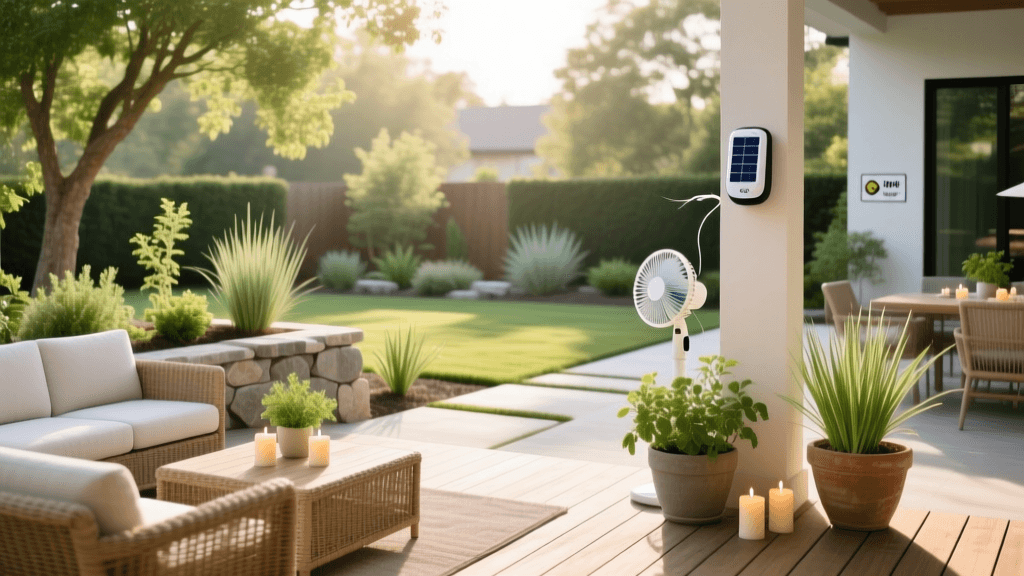
One of the most effective, chemical-free methods for protecting an outdoor dining table is the strategic use of oscillating fans. Mosquitoes are notoriously weak fliers; they struggle to navigate in wind speeds exceeding 1 mile per hour. Positioning an 18-inch or larger oscillating pedestal fan near your seating area creates a turbulent air current that grounds mosquitoes and disperses the carbon dioxide and lactic acid plumes that attract them to human hosts. As a bonus, the breeze keeps your guests cool and helps deter flying insects from landing on food platters.
Spatial Repellents and Thermacell Technology
For a more targeted approach, spatial repellents have revolutionized patio pest control. Devices that heat a mat or cartridge containing allethrin (a synthetic derivative of a natural extract found in chrysanthemum flowers) create an invisible 15-foot dome of protection. These devices are odorless, silent, and do not require open flames, making them ideal for elegant dining tables where traditional citronella candles might produce unwanted smoke and soot.
Comparison Chart: Patio Pest Control Methods
| Method | Mechanism of Action | Estimated Cost | Pros | Cons |
|---|---|---|---|---|
| Oscillating Fans | Physical wind barrier; disperses CO2 | $30 - $80 | Chemical-free, cools guests, immediate effect | Requires power source, can blow napkins/lightweight items |
| Spatial Repellents (e.g., Thermacell) | Heated allethrin vapor zone | $20 - $40 (plus refills) | Odorless, highly effective 15-ft radius, portable | Refills add up over time, less effective in high winds |
| BTI Dunks/Bits | Biological larvicide in standing water | $10 - $15 per pack | Safe for pets/wildlife, lasts 30 days | Only kills larvae, does not repel adult flying insects |
| Citronella Candles | Smoke and scent masking | $5 - $20 | Ambient lighting, inexpensive, pleasant aesthetic | Low efficacy, smoke can irritate eyes, limited radius |
Step 4: Managing Flies and Gnats Near Food Stations
While mosquitoes ruin the evening ambiance, flies and gnats can ruin the actual meal. House flies, fruit flies, and fungus gnats are highly attracted to the sugars, proteins, and yeasts present in outdoor dining setups, trash receptacles, and nearby compost bins.
To maintain a hygienic and visually appealing food station, always use mesh food domes or cloches. Not only do these protect your culinary creations from pests, but high-quality metallic or bamboo-framed cloches also elevate the visual presentation of your outdoor buffet. For the trash and recycling bins, ensure they are located at least 15 feet downwind from the primary entertaining area and are fitted with tight-sealing, animal-proof lids.
If fruit flies or gnats become a nuisance around your outdoor bar or beverage station, deploy discreet DIY traps. Fill a small, aesthetically pleasing mason jar with one cup of apple cider vinegar, a tablespoon of sugar, and two drops of liquid dish soap. Cover the top with plastic wrap and poke a few small holes in it. The vinegar and sugar attract the gnats, while the dish soap breaks the surface tension of the liquid, causing them to sink and drown. Empty and refresh these traps every 48 hours during peak entertaining season.
When to Hire a Professional Exterminator
If your property borders a wooded area, a wetland, or a dense municipal drainage system, DIY methods may not be enough to keep your patio usable. In these cases, hiring a licensed pest control professional to apply a barrier treatment is a worthwhile investment in your home's outdoor livability.
Professional barrier treatments typically involve spraying a micro-encapsulated synthetic pyrethroid (such as bifenthrin or lambda-cyhalothrin) onto the foliage, shrubs, and shaded perimeter surrounding your patio. When adult mosquitoes land on these treated leaves to rest, they absorb the product and die. These treatments generally cost between $150 and $300 per application and must be reapplied every 21 to 28 days throughout the summer. While highly effective, it is crucial to time these applications carefully to avoid spraying when beneficial pollinators like bees are actively foraging. The American Mosquito Control Association (AMCA) advises that professionals should apply these treatments in the early morning or late evening when pollinator activity is at its lowest, ensuring that your curb appeal is maintained without harming the local ecosystem.
Personal Protection: The Final Line of Defense
Even with a perfectly managed patio environment, providing personal protection options for your guests is a hallmark of a thoughtful host. Keep a stylish woven basket on your patio table filled with individual packets of EPA-registered insect repellents. Look for formulations containing Picaridin or Oil of Lemon Eucalyptus (OLE). Unlike traditional DEET products, which can feel greasy and have a strong chemical odor that clashes with the sensory experience of an outdoor dinner, Picaridin is odorless, non-greasy, and safe to use around plastics and synthetic outdoor fabrics, ensuring your expensive patio cushions and guests' clothing remain unblemished.
Conclusion
Achieving a pest-free patio is not about sterilizing your yard; it is about smart, strategic management that aligns with your goals for curb appeal and outdoor entertaining. By aggressively eliminating standing water, pruning your landscape to promote airflow, utilizing modern spatial repellents, and managing food waste, you can reclaim your outdoor living spaces. Implementing these integrated pest management strategies ensures that when you send out invitations for your next summer soirée, your guests will remember the beautiful ambiance, the delicious food, and the excellent company—not the bugs.