Pest Control
Pest-Proof Your Patio: Mosquito and Tick Control Guide
The Intersection of Curb Appeal and Pest Control
Hosting a summer barbecue or an elegant evening garden party is one of the greatest joys of homeownership. However, nothing ruins the ambiance of an outdoor gathering faster than a swarm of mosquitoes or the looming threat of tick-borne illnesses. When designing and maintaining outdoor entertaining spaces, homeowners often face a difficult compromise: deploy harsh, visible pest control measures that ruin the landscape's aesthetic, or endure the pests. Fortunately, modern Integrated Pest Management (IPM) offers a middle ground. By combining strategic landscaping, targeted biological controls, and discreet spatial repellents, you can maintain impeccable curb appeal while ensuring your patio remains a comfortable, pest-free zone for your guests.
Effective mosquito and tick management around high-traffic entertaining areas requires a multi-pronged approach that targets the pest's life cycle without compromising the visual harmony of your landscape design.
According to the American Mosquito Control Association, eliminating breeding sites and utilizing targeted barriers are the most effective ways to reduce mosquito populations in residential areas. When applied to patios, decks, and pergolas, these principles can be adapted to enhance, rather than detract from, your outdoor living space.
Designing a Pest-Resistant Entertaining Landscape
The foundation of any successful outdoor entertaining area is the landscape design itself. By making smart horticultural and hardscaping choices, you can naturally deter pests while boosting your property's curb appeal.
The Tick-Safe Hardscape Border
Ticks thrive in moist, shaded, and overgrown areas, particularly in leaf litter and tall ornamental grasses. If your patio or deck is adjacent to wooded areas or dense garden beds, you are at a high risk for tick encounters. The Centers for Disease Control and Prevention recommends creating a physical barrier to separate lawn and patio areas from wooded or brushy zones.
To maintain curb appeal, install a 3-foot-wide border of dry cedar mulch or decorative gravel between your entertaining space and any dense vegetation. Ticks struggle to cross dry, hot, and arid surfaces. Cedar mulch not only provides a beautiful, textural contrast to green lawn grass and stone patios, but it also contains natural oils that repel a variety of insects. Ensure that ornamental grasses are kept trimmed back at least two feet from the edge of your seating area to prevent ticks from brushing onto guests' clothing.
Aromatic and Repellent Plantings
While no plant will entirely eliminate mosquitoes on its own, incorporating highly aromatic herbs and flowers into your patio containers and border beds can create a localized deterrent effect. When guests brush against these plants, the release of essential oils helps mask the carbon dioxide and lactic acid that attract mosquitoes. Consider integrating the following into your patio planters:
- Lavender (Lavandula): Thrives in well-drained patio containers, offers stunning purple blooms, and its scent is highly unappealing to mosquitoes.
- Rosemary (Salvia rosmarinus): A woody perennial that looks elegant in terracotta pots. Burning sprigs of rosemary in a patio fire pit acts as a natural, aromatic fumigant.
- Marigolds (Tagetes): Contain pyrethrum, a compound used in many commercial insect repellents. Plant them in bright clusters along the perimeter of your deck.
Targeted Treatments for Immediate Guest Comfort
Landscaping provides a baseline of defense, but active entertaining requires targeted, immediate solutions that do not involve spraying your guests or your carefully curated outdoor furniture with sticky chemical aerosols.
Spatial Repellents vs. Traditional Sprays
For intimate gatherings on a patio or under a pergola, spatial repellents are the gold standard for maintaining both comfort and aesthetics. Devices like the Thermacell E55 or Radius use a heated mat or cartridge to vaporize a synthetic pyrethroid (typically allethrin or metofluthrin), creating a 15-to-20-foot dome of protection. The Environmental Protection Agency notes that spatial repellents are highly effective for localized outdoor use when used according to label directions. Because these devices are compact, sleek, and odorless, they can be placed on dining tables or hidden behind outdoor sofas without disrupting your decor.
Biological Controls for Water Features
Water features like birdbaths, koi ponds, and bubbling fountains are stunning focal points that elevate curb appeal. However, standing water is the primary breeding ground for mosquitoes. To protect your guests without draining your beautiful water features, utilize Bacillus thuringiensis israelensis (Bti). Sold under brand names like Mosquito Dunks or Bits, Bti is a naturally occurring soil bacterium that is lethal to mosquito and black fly larvae but completely harmless to humans, pets, birds, and fish. Drop a quarter of a Bti dunk into birdbaths or fountain basins every 30 days. It dissolves quietly, leaving no unsightly residue or chemical sheen on the water's surface.
Comparing Patio Pest Control Methods
Choosing the right pest control method depends on the size of your entertaining area, your budget, and your aesthetic preferences. Below is a comparison of the most effective options for patio and deck environments.
| Control Method | Best For | Curb Appeal Impact | Estimated Cost | Duration of Effect |
|---|---|---|---|---|
| Spatial Repellents (e.g., Thermacell) | Small patios, dining tables, intimate gatherings | High (Sleek, discreet, no visible traps) | $20 - $40 (Device) + $15 (Refills) | 4 to 12 hours per cartridge |
| Bti Dunks (Biological) | Birdbaths, fountains, rain barrels, decorative ponds | High (Invisible treatment, preserves water features) | $10 - $15 per pack | 30 days per dunk |
| Perimeter Bifenthrin Spray | Large yards, dense shrubbery bordering the patio | Medium (Requires hiding spray equipment; no visual residue) | $40 (DIY) or $150-$300 (Pro) | 3 to 4 weeks |
| Citronella Candles / Torches | Ambient lighting, mild pest pressure | Medium to High (Adds to decor, but smoke can be bothersome) | $15 - $30 | 3 to 5 hours (Highly localized) |
| Outdoor Fogging Systems | Large estates, frequent massive parties | Low to Medium (Visible misting nozzles and tubing) | $800 - $2,500+ (Installation) | On-demand (Automated) |
The 48-Hour Pre-Party Pest Protocol
To guarantee a flawless outdoor event, implement this actionable checklist in the days leading up to your gathering. This protocol ensures that your yard is not only visually stunning but also highly inhospitable to pests.
48 Hours Before the Event
- Eliminate Micro-Breeding Sites: Walk the perimeter of your entertaining area and empty any hidden water sources. Check plant saucers, folded tarps, kids' toys, and clogged gutter downspouts. Even a bottle cap full of water can breed hundreds of mosquitoes.
- Apply Perimeter Spray (If Necessary): If you are using a DIY bifenthrin or permethrin spray on the dense shrubbery surrounding the patio, apply it now. This allows the chemical to dry completely and bind to the foliage, ensuring it is safe for guests and pets while maximizing its knockdown effect on resting mosquitoes.
- Mow and Edge: Mow the lawn and edge the beds. Ticks and mosquitoes rest in tall grass during the heat of the day. A freshly manicured lawn looks incredibly inviting and forces pests to retreat to deeper, shaded cover away from the party zone.
24 Hours Before the Event
- Refresh Bti Treatments: Check your water features. If it has rained recently or it has been over a month, drop a fresh Bti dunk or a few Bti bits into the water.
- Trim Foliage: Prune back any overhanging branches or creeping vines that touch your patio furniture. Pests often use these as bridges to access seating areas.
Day of the Event
- Deploy Spatial Repellents: Turn on your Thermacell devices or plug-in spatial repellents 30 minutes before guests arrive to allow the protective dome to fully establish.
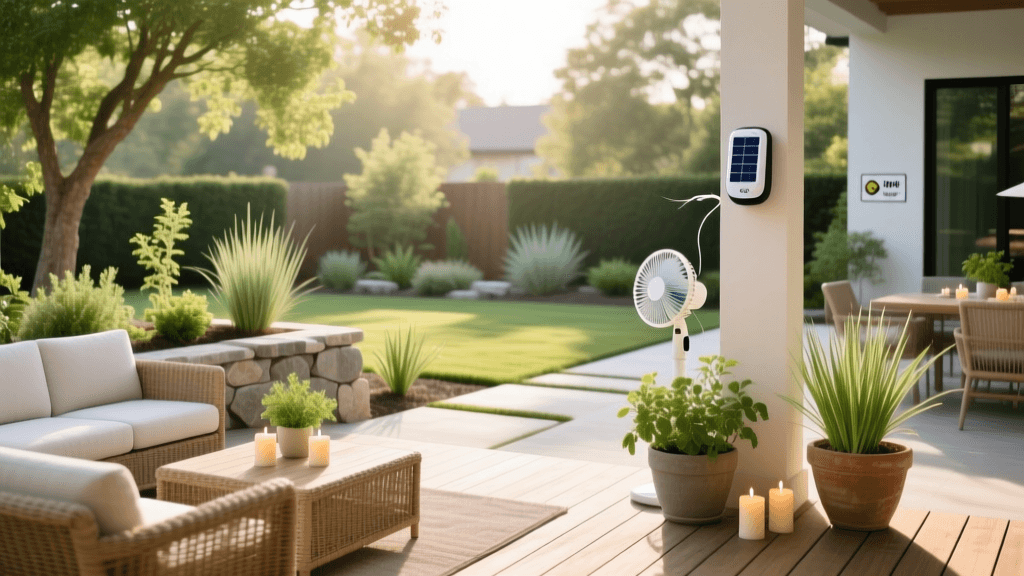
- Activate Airflow: Mosquitoes are notoriously weak fliers. Positioning an elegant, high-velocity outdoor floor fan or turning on ceiling fans in your pergola not only keeps guests cool but creates a wind barrier that mosquitoes simply cannot penetrate.
- Light Strategically: Swap out standard bright white exterior bulbs for warm, yellow "bug lights" (LEDs with a longer wavelength). While they don't repel insects, they are significantly less attractive to them, reducing the swarm around your patio doors and outdoor dining chandeliers.
Maintaining the Aesthetic Year-Round
True curb appeal is about consistency and attention to detail. By integrating IPM strategies directly into your landscape design and entertaining routines, you eliminate the need for unsightly bug zappers, sticky traps, and harsh chemical odors. Your patio will remain a sanctuary of beauty and comfort, allowing you to focus on what truly matters: enjoying the outdoors with family and friends, completely undisturbed by the pests that plague lesser-prepared yards.