Home & Garden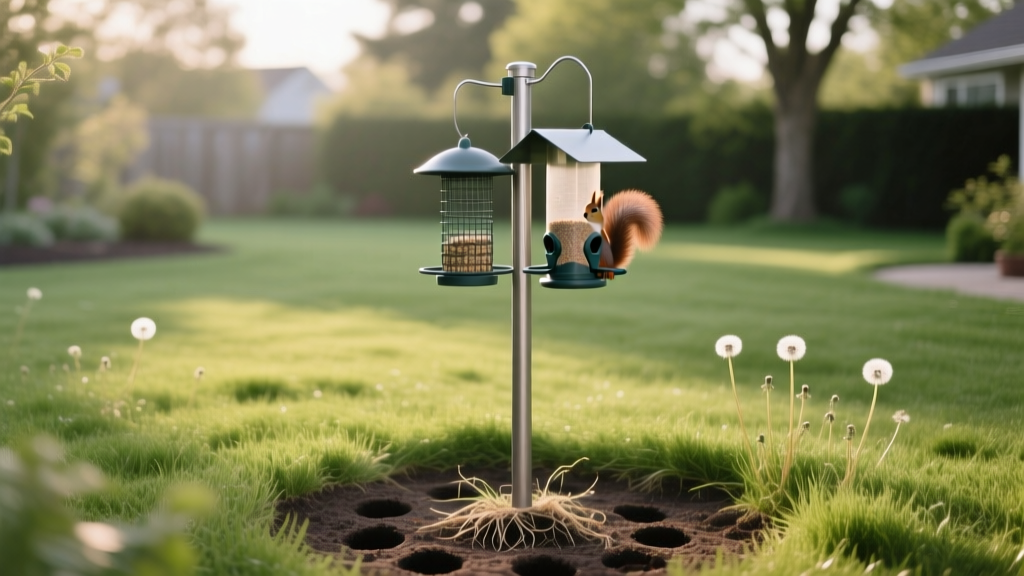
Pole Mount Bird Feeder Stations & Core Aeration Guide 2026
David ParkPublished
The Hidden Lawn Care Cost of Bird Feeding
As a turf management specialist focused on soil health and core aeration, I often see homeowners invest hundreds of dollars into a premium bird feeder station with pole mount and squirrel baffle, only to watch the grass beneath it die within a single season. Bird feeding is a beloved hobby that beautifully bridges our indoor and outdoor living spaces, but it introduces severe localized stress to your lawn. The constant foot traffic required to refill the feeder, the scratching of ground-foraging birds, and the accumulation of seed husks create a highly compacted, toxic dead zone in your turf.
In 2026, the trend of heavy, tech-enabled smart bird feeders has only exacerbated this issue. These modern setups require sturdier pole mounts driven deep into the soil, disrupting the root zone and accelerating compaction. However, by selecting the right hardware and implementing a targeted core aeration strategy, you can maintain a pristine, lush lawn while still enjoying a thriving backyard bird sanctuary.
Top Pole Mount Bird Feeder Stations with Squirrel Baffles for 2026
Before we can aerate and rehabilitate the soil, we must ensure the hardware itself is optimized for both wildlife deterrence and minimal lawn disruption. Here are the top-rated pole mount bird feeder stations with squirrel baffles available this year.
1. Woodlink NACLAD 5-Piece Pole System with Dome Baffle
The Woodlink NACLAD system remains a gold standard in 2026 for its durability and modular design. The integrated dome baffle is exceptionally effective at thwarting climbing squirrels and raccoons. From a lawn care perspective, the steel pole requires an 18-inch ground insertion. While this provides excellent stability against high winds, the installation process severely disrupts the soil profile. We recommend using a narrow post-hole digger rather than a wide auger to minimize the footprint of disturbed earth, followed immediately by localized core aeration around the base to relieve the surrounding compaction.
2. Brome Squirrel Buster Plus on a Heavy-Duty Mount
Brome's weight-activated shroud technology is legendary, and their 2026 reinforced pole mount adapter is designed to handle the torque of persistent squirrels. The Squirrel Buster Plus minimizes seed spillage compared to open-tray feeders, which directly reduces the allelopathic (growth-inhibiting) chemicals released by decaying sunflower husks into your topsoil. Less seed spillage means less acidic soil buildup, making your seasonal core aeration and overseeding efforts significantly more successful.
3. Birdfy Smart Feeder Pro (2026 Edition) with Motorized Baffle
Smart feeders equipped with AI bird recognition and high-definition cameras are incredibly heavy. The 2026 Birdfy Pro requires a thick-gauge pole mount to prevent leaning. The motorized squirrel baffle gently spins pests away without harming them. Because of the heavy battery and camera housing, the pole must be anchored in concrete or packed tightly with gravel. This creates an impermeable barrier in the soil, altering local water drainage and necessitating a wider core aeration radius to ensure water can penetrate the compacted perimeter.
Why Feeder Zones Demand Core Aeration
Why does the grass under a bird feeder station turn into a muddy, barren patch? The answer lies in soil physics and biology. According to turfgrass experts at the University of Minnesota Extension, soil compaction reduces the pore space necessary for air, water, and nutrients to reach grassroots. When you walk the same path to your pole mount feeder every few days, you compress the soil particles.
Furthermore, seed spillage introduces a secondary problem. Sunflower seed hulls contain natural toxins that inhibit the germination of competing plants—a survival mechanism for the sunflower, but a disaster for your Kentucky Bluegrass or Fescue. When you combine physical soil compaction with chemical growth inhibition, the turf suffocates. Core aeration is the only mechanical solution capable of reversing this damage. By extracting physical plugs of soil, you break up the compaction layer, introduce oxygen to the rhizosphere, and create micro-trenches where beneficial soil microbes can break down the toxic seed husks.
Your 2026 Step-by-Step Core Aeration Strategy for Feeder Zones
To protect the lawn surrounding your bird feeder station with pole mount and squirrel baffle, follow this targeted aeration protocol during the optimal growing seasons (early fall or mid-spring).
Step 1: Soil Moisture Calibration
Core aeration equipment will bounce off dry, compacted soil and turn wet soil into a muddy mess. Water the feeder zone deeply 24 hours before aerating. The soil should be moist but not saturated, allowing the aerator tines to penetrate to a depth of 2.5 to 3 inches.
Step 2: The Double-Pass Extraction
Using a walk-behind core aerator (or a manual pitchfork aerator for tight spaces immediately around the pole), make two passes over a 4-foot radius around the feeder station. Make the second pass perpendicular to the first. Your goal is to pull plugs that are 0.5 to 0.75 inches in diameter, spaced no more than 3 inches apart. Leave the extracted plugs on the lawn; they will break down and return vital microbes to the surface.
Step 3: Topdressing and Overseeding
Immediately after aeration, apply a thin layer (about 0.25 inches) of high-quality compost over the feeder zone. The compost will fall into the aeration holes, permanently improving soil structure. Follow this with a shade-tolerant, wear-resistant grass seed blend, such as a Turf-Type Tall Fescue mix, which is highly resilient to the scratching of ground-feeding birds like sparrows and doves.
Step 4: Smart Irrigation Integration
If you utilize a smart home irrigation system, adjust the sprinkler heads around the pole mount. Compacted soil repels water, causing runoff. After core aeration, the soil's infiltration rate increases dramatically. Recalibrate your smart controller's flow meters to deliver shorter, more frequent watering cycles to the feeder zone, ensuring the newly planted grass seed remains consistently moist without washing away.
Comparison Chart: Feeder Setups and Turf Impact
| Feeder Station Type | Soil Compaction Risk | Seed Spillage Volume | Recommended Aeration Frequency |
|---|---|---|---|
| Standard Pole Mount (No Baffle) | Moderate | High (Squirrels knock seed out) | Twice Annually |
| Pole Mount with Dome Baffle | Moderate | Moderate | Once Annually |
| Weight-Activated Baffle Pole | High (Heavier hardware) | Low | Once Annually |
| Smart Feeder on Reinforced Pole | Severe (Concrete anchor) | Very Low | Twice Annually (Wide Radius) |
Mitigating Seed Spillage Before It Hits the Soil
While core aeration repairs the damage, prevention is the ultimate lawn care strategy. The team at the National Audubon Society frequently highlights the importance of selecting the right seed to minimize waste and backyard mess. To protect the soil biology beneath your pole mount bird feeder station, transition to 'no-mess' seed blends in 2026.
Hulled sunflower hearts, shelled peanuts, and suet cakes provide high-energy nutrition for birds without leaving behind decaying husks. By eliminating the husks, you eliminate the allelopathic toxins that stunt grass growth. Additionally, consider installing a specialized seed-catching tray beneath your baffle. Many 2026 models feature ultra-lightweight mesh trays that catch falling seed without blocking the view or interfering with the squirrel baffle's mechanics.
Relocation and Long-Term Turf Recovery
Even with perfect core aeration and premium no-mess seed, a permanent pole mount will eventually cause wear patterns from your own footsteps. The most effective long-term strategy recommended by wildlife and turf experts at Cornell University's Project FeederWatch is seasonal rotation. If your pole mount system allows for it, consider installing two ground sleeves in different areas of your yard. Move the feeder station every six months. This allows you to aggressively core aerate, topdress, and recover the dormant zone while the active zone takes the seasonal traffic.
Conclusion
A bird feeder station with pole mount and squirrel baffle is a fantastic addition to any garden, offering endless entertainment and supporting local ecosystems. However, as any lawn care professional will tell you, the health of your turf depends entirely on what happens beneath the surface. By understanding the compaction and chemical challenges introduced by bird feeding, and by deploying strategic core aeration techniques, you can maintain a vibrant, thick lawn that perfectly complements your outdoor wildlife sanctuary in 2026 and beyond.
