Home & Garden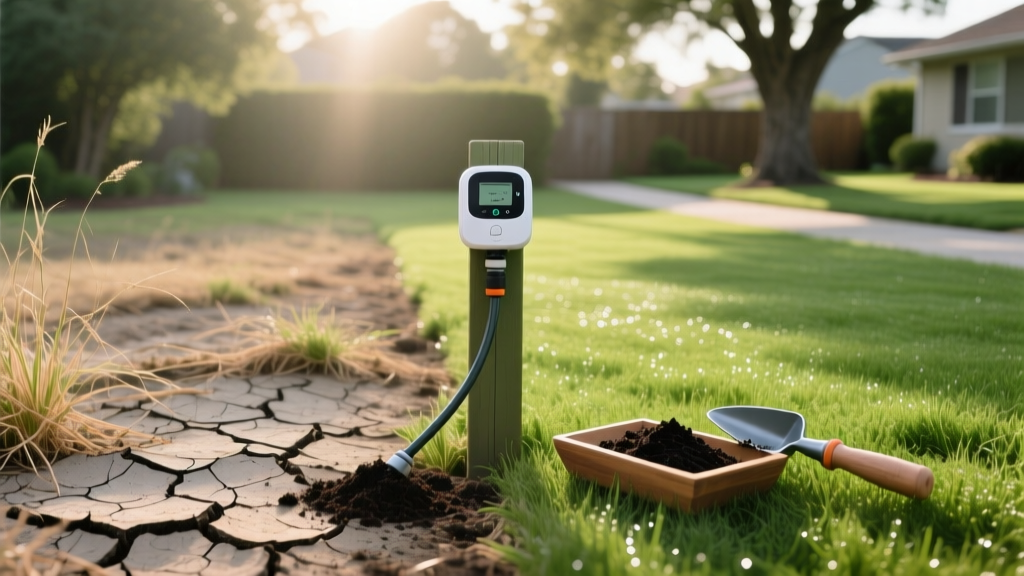
Post-Drought Lawn Recovery: Smart Irrigation and Soil Care
Mike RodriguezPublished
The Hidden Toll of Drought on Your Lawn's Root System
When a severe drought strikes, the visible symptoms of a dying lawn—brown patches, thinning blades, and brittle turf—are only the tip of the iceberg. Beneath the surface, the soil structure undergoes drastic changes that make traditional recovery methods ineffective. Prolonged dry spells cause clay-heavy soils to shrink and crack, severing delicate root hairs and creating hydrophobic (water-repellent) layers. When the rains finally return or you turn on the hose, the water simply runs off the surface rather than penetrating the root zone. According to turfgrass researchers at the University of Minnesota Turfgrass Science program, drought stress forces grass plants to abort their younger roots and focus all remaining energy on keeping the crown alive. To truly renovate a drought-damaged lawn, you must address both the subterranean soil environment and the precision of your water delivery system.
Step 1: Core Aeration and Deep Soil Amendment
Before you drop a single grass seed or install a new sprinkler head, you must break up the compacted, hydrophobic soil. Core aeration is the non-negotiable first step in any serious lawn renovation project. Using a gas-powered or heavy-duty electric core aerator, extract plugs of soil that are at least 2 to 3 inches deep and 0.5 to 0.75 inches in diameter. Space these holes no more than 3 to 4 inches apart across the entire lawn. This process relieves soil compaction, creates channels for oxygen to reach the surviving roots, and provides a direct pathway for water and amendments to enter the soil profile.
Choosing the Right Soil Amendments
Once the lawn is aerated, immediately apply a combination of soil amendments to restore organic matter and improve moisture retention. Top-dressing with high-quality compost is excellent, but liquid amendments can penetrate the aeration holes more effectively to break up clay and stimulate microbial activity. Below is a comparison of the most effective soil amendments for post-drought recovery:
| Amendment Type | Primary Benefit | Application Rate | Best Used For |
|---|---|---|---|
| Liquid Humic Acid | Chelates nutrients, improves water retention | 3-6 oz per 1,000 sq ft | Heavy clay soils, hydrophobic patches |
| Compost Top-Dress | Adds organic matter, introduces microbes | 1/4 to 1/2 inch layer | General soil building, overseeding prep |
| Biochar | Permanent carbon sponge, holds moisture | 10-20 lbs per 1,000 sq ft | Sandy soils that drain too quickly |
| Calcium Sulfate (Gypsum) | Loosens clay without altering pH | 40-50 lbs per 1,000 sq ft | Sodic soils, severe clay compaction |
Step 2: Upgrading to Smart Irrigation for Precision Recovery
Watering a recovering lawn requires a delicate balance. Too much water invites fungal diseases like Pythium blight, while too little pushes the turf back into dormancy. This is where smart home integration becomes a game-changer for outdoor maintenance. Replacing your legacy mechanical timer with a Wi-Fi-enabled smart irrigation controller ensures your lawn receives the exact amount of water it needs based on real-time environmental data. The EPA WaterSense program highly recommends weather-based irrigation controllers (WBICs), which use local evapotranspiration (ET) data to automatically adjust watering schedules. If it rained 0.5 inches yesterday, a smart controller will skip today's scheduled cycle, preventing waterlogged soil and saving you money on your utility bill.
Key Features of Smart Controllers
When shopping for a smart controller to aid in your lawn's recovery, look for these specific features:
- Evapotranspiration (ET) Tracking: The controller pulls data from local weather stations to calculate how much moisture your specific grass type has lost to the sun and wind.
- Soil Moisture Sensor Compatibility: For the ultimate precision, pair your smart hub with in-ground soil moisture sensors. These bypass weather forecasts and measure the actual volumetric water content in the root zone.
- Zone-Specific Customization: Your front yard might be full sun and composed of Kentucky Bluegrass, while your backyard is shaded and planted with Fine Fescue. Smart controllers allow you to set distinct watering algorithms for every single zone.
- Smart Home Ecosystem Integration: Modern controllers integrate seamlessly with platforms like Amazon Alexa, Google Home, and Apple HomeKit, allowing you to monitor soil conditions and trigger manual watering cycles via voice commands or automated routines.
Step 3: Strategic Overseeding for Bare Patches
Even with perfect soil preparation and smart watering, drought will inevitably leave bare spots where the turf crown completely desiccated. Overseeding is critical to crowd out weeds and restore the lawn's carpet-like density. The timing of your overseeding is just as important as the seed you choose. For cool-season grasses (like Tall Fescue and Kentucky Bluegrass), early fall is the ideal window, as soil temperatures are still warm enough for germination, but air temperatures are cool enough to reduce heat stress. For warm-season grasses (like Bermuda and Zoysia), late spring to early summer is the target window.
Selecting Drought-Resistant Grass Varieties
Do not simply buy whatever generic seed mix is on sale at the hardware store. To future-proof your landscape against subsequent dry spells, select cultivars bred for deep rooting and drought tolerance. Turfgrass breeders at institutions like Texas A&M AgriLife Extension and UC Davis have spent decades developing varieties that require significantly less water. For cool-season lawns, look for Turf-Type Tall Fescue (TTTF) blends, which can send roots down 2 to 3 feet into the soil profile to scavenge for deep moisture. For warm-season lawns, consider transitioning to deep-rooted Zoysia or improved Bermuda cultivars like 'TifTuf', which has been scientifically proven to maintain green color and density with up to 38% less water than standard varieties.
Ongoing Maintenance and Smart Home Integration
Lawn renovation is not a one-and-done weekend project; it is a seasonal commitment that bridges the gap between outdoor landscaping and indoor smart home management. Once your new seed has germinated and established (usually after 3 to 4 mowing cycles), transition your smart irrigation system from the 'daily light watering' germination schedule to a 'deep and infrequent' maintenance schedule. Deep watering encourages roots to chase the moisture downward, creating a resilient turf that can survive weeks without rain.
Furthermore, integrate your outdoor smart sensors with your indoor home automation routines. For example, you can set up a geofencing routine that alerts your smartphone if soil moisture drops below 15% while you are on vacation, allowing you to trigger the sprinklers remotely to protect your investment. You can also link your smart irrigation system to your local utility's demand-response programs, which often offer rebates for reducing outdoor water usage during peak summer hours. By treating your lawn as an integrated component of your home's overall ecosystem, you ensure that your outdoor living space remains lush, energy-efficient, and resilient against the unpredictable realities of modern climate patterns.
Conclusion
Recovering a drought-damaged lawn requires moving beyond the outdated paradigm of simply turning on the hose and hoping for the best. By combining the physical soil remediation of core aeration and targeted amendments with the digital precision of smart irrigation controllers, you create an environment where turfgrass can thrive. Whether you are preparing your yard for a summer of outdoor entertaining or simply looking to boost your home's curb appeal and energy efficiency, these renovation strategies will yield a vibrant, resilient landscape for years to come.
