Home & Garden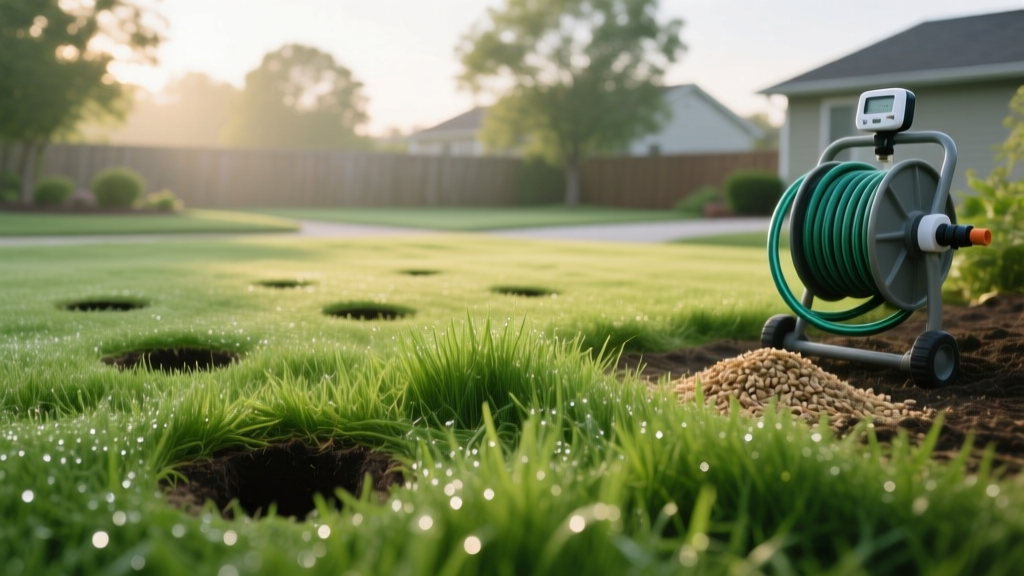
Revive Your Lawn: Post-Drought Renovation and Smart Tech
Robert HayesPublished
Assessing the Damage: Dormant vs. Dead Grass
Before you invest time and money into lawn renovation and recovery, it is crucial to determine whether your grass is truly dead or simply dormant. During periods of severe drought or water restrictions, many cool-season and warm-season grasses enter a state of dormancy to protect their crowns and root systems. According to the Texas A&M AgriLife Extension, dormant grass may look brown and lifeless on the surface, but the crown—the growing point at the soil line—remains firm and pale white or green.
To perform the 'tug test,' grab a handful of brown grass and pull gently. If the grass resists and stays anchored, the roots are likely still viable, and the lawn is dormant. If it pulls up effortlessly like loose straw, the grass is dead, and complete renovation or patching is required. Understanding this distinction will dictate your recovery strategy and save you from unnecessary reseeding costs.
The 4-Step Post-Drought Renovation Process
Reviving a neglected, drought-stressed lawn requires a systematic approach that bridges soil health, proper seeding, and modern outdoor maintenance techniques. Follow this actionable roadmap to restore your yard to a vibrant extension of your outdoor living space.
Step 1: Dethatching and Core Aeration
Drought and heavy foot traffic often lead to compacted soil and a thick layer of thatch, which prevents water and nutrients from reaching the root zone. Begin your renovation by dethatching if the thatch layer exceeds half an inch. Follow this with core aeration, which involves pulling 2-to-3-inch soil plugs from the ground. Penn State Extension recommends core aeration in the early fall for cool-season grasses and late spring for warm-season varieties. Rent a walk-behind core aerator for approximately $70 to $100 per day, and make two passes over your lawn in perpendicular directions to maximize soil exposure.
Step 2: Soil Testing and Targeted Amendment
Do not guess your soil's needs. Purchase a comprehensive soil test kit from your local university extension office (usually costing between $15 and $30). The results will reveal your soil's pH and nutrient deficiencies. For post-drought recovery, top-dressing the lawn with a quarter-inch layer of screened organic compost is highly recommended. This introduces beneficial microbes, improves moisture retention, and provides a perfect seedbed for overseeding.
Step 3: Overseeding with Climate-Adapted Varieties
If your lawn has bare patches or thin areas, overseeding is mandatory. Choose drought-tolerant, deep-rooting grass varieties suited to your USDA Hardiness Zone. For cool-season regions, Turf-Type Tall Fescue or Rhizomatous Tall Fescue (RTF) are excellent choices due to their deep root systems. For warm-season zones, consider Bermuda or Zoysia. Apply seed at the recommended rate—typically 5 to 8 pounds per 1,000 square feet for Tall Fescue. Use a broadcast spreader for even distribution, and lightly rake the seed into the top quarter-inch of the compost top-dressing.
Step 4: Starter Fertilization and Initial Watering
Apply a high-phosphorus starter fertilizer (such as a 10-18-10 N-P-K ratio) immediately after seeding to promote rapid root development. Phosphorus is critical for establishing new grass seedlings. Keep the top inch of soil consistently moist by watering lightly two to three times a day for the first 14 to 21 days. Once the new grass reaches a height of 3 inches, transition to deeper, less frequent watering to encourage drought-resistant root growth.
Integrating Smart Irrigation for Long-Term Resilience
A successful lawn renovation is only as good as the irrigation strategy that maintains it. To bridge the gap between outdoor landscaping and smart home integration, upgrading to a weather-based smart irrigation controller is one of the most impactful investments you can make. These devices connect to your home's Wi-Fi network and use hyper-local weather data, soil moisture sensors, and evapotranspiration rates to automatically adjust watering schedules.
According to the EPA WaterSense program, smart controllers can save the average home nearly 7,600 gallons of water annually, making them a cornerstone of energy-efficient and sustainable landscaping.
| Feature | Standard Timer | Smart Weather-Based Controller |
|---|---|---|
| Average Cost | $40 - $80 | $150 - $300 |
| Water Savings | 0% (Baseline) | 20% - 50% Annually |
| Wi-Fi Connectivity | Rarely | Always |
| Adjusts to Rain/Freeze | No (Manual Override) | Yes (Automatic Skip) |
| Soil Moisture Integration | No | Yes (with add-on sensors) |
| Smart Home Integration | None | Alexa, Google Home, Apple HomeKit |
Popular models like the Rachio 3 or the Orbit B-hyve allow you to monitor your outdoor water usage directly from your smartphone, ensuring your newly renovated lawn receives the exact amount of hydration it needs without wasting municipal water resources.
The Microclimate Effect: Lawns and Home Energy Efficiency
Lawn renovation extends beyond curb appeal; it plays a vital role in your home's overall energy efficiency. A healthy, densely turfed lawn acts as a natural evaporative cooler. On a hot summer day, an irrigated grass surface can be 30 to 40 degrees Fahrenheit cooler than adjacent concrete, asphalt, or artificial turf. By recovering your drought-damaged lawn, you actively reduce the ambient temperature around your home's foundation and windows. This localized microclimate effect reduces the thermal load on your home's HVAC system, potentially lowering your indoor cooling costs by up to 10% during peak summer months.
Seasonal Maintenance Calendar for Recovered Lawns
To ensure your renovated lawn remains a lush, functional space for garden-to-table entertaining and outdoor relaxation, adhere to this seasonal maintenance schedule:
- Early Spring: Apply pre-emergent crabgrass control when soil temperatures consistently reach 55°F. Sharpen mower blades to ensure clean cuts that prevent moisture loss.
- Late Spring: Conduct a soil test and apply a slow-release nitrogen fertilizer. Adjust your smart irrigation controller's seasonal shift settings as temperatures rise.
- Early Fall: Perform core aeration and overseeding. This is the most critical window for cool-season lawn recovery and root establishment before winter.
- Late Fall: Apply a winterizer fertilizer (high in potassium) to increase the grass's cold tolerance and disease resistance. Mulch fallen leaves directly into the turf to return organic matter to the soil.
'A recovered lawn is not just a patch of grass; it is a living, breathing extension of your home that supports local ecology, cools your property, and provides a safe, beautiful foundation for outdoor living.' — Lawn Care Best Practices Guide
Conclusion
Recovering a drought-damaged lawn requires patience, precise timing, and the right combination of soil amendments and modern technology. By accurately assessing turf health, executing a thorough core aeration and overseeding process, and integrating smart irrigation, you can transform a barren yard into a resilient, eco-friendly oasis. Not only will this renovation elevate your outdoor living space, but it will also contribute to a more energy-efficient home environment, proving that thoughtful landscaping is one of the best investments a homeowner can make.
