Tree Care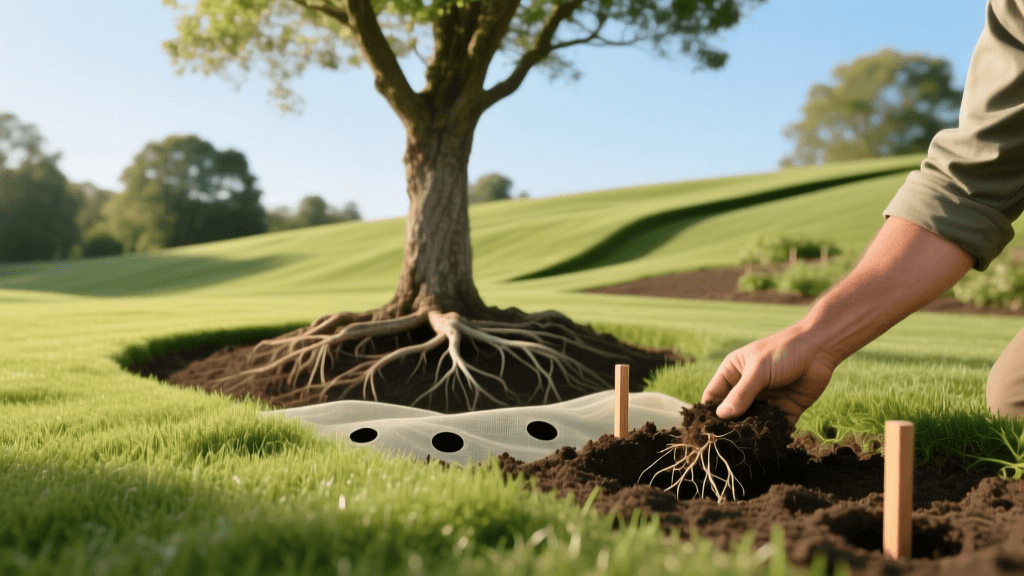
Protecting Tree Roots During Lawn Renovation and Recovery
The Hidden Conflict: Lawn Renovation vs. Tree Health
Renovating a tired, patchy, or compacted lawn is one of the most rewarding landscape projects a homeowner can undertake. Whether you are overseeding a cool-season fescue blend, laying down warm-season Bermuda sod, or performing aggressive core aeration and dethatching, the goal is a lush, vibrant turf. However, this heavy-duty lawn recovery process often puts established landscape trees at severe risk. Heavy equipment, deep soil disruption, and sudden changes in soil grading can devastate a tree's delicate root system, leading to a slow, invisible decline that may not manifest until years after the lawn looks perfect.
According to the University of Minnesota Extension, the majority of a tree's water and nutrient-absorbing roots are located in the top 12 to 18 inches of soil. This is the exact same zone targeted by lawn renovation equipment. To achieve a pristine lawn without sacrificing your mature shade trees, you must understand root architecture, establish strict operational boundaries, and implement a post-renovation recovery protocol.
Understanding the Critical Root Zone (CRZ)
A common myth in landscaping is that a tree's root system perfectly mirrors its above-ground canopy, ending at the 'dripline.' In reality, structural and feeder roots often extend two to three times beyond the dripline. However, for the sake of lawn renovation planning, arborists use the Critical Root Zone (CRZ) to establish minimum protection boundaries. The CRZ is typically calculated as a circle with a radius of 1 to 1.5 feet for every inch of the tree's trunk diameter at breast height (DBH), measured 4.5 feet above the ground.
Before renting an aerator or bringing in a bobcat for grading, measure the DBH of your trees and map out these zones using landscaping paint. The table below outlines the minimum protection radii you should establish based on trunk size.
| Tree Trunk Diameter (DBH) | Minimum Root Protection Radius | Approximate CRZ Area |
|---|---|---|
| 10 inches | 10 to 15 feet | 314 to 706 sq ft |
| 20 inches | 20 to 30 feet | 1,256 to 2,827 sq ft |
| 30 inches | 30 to 45 feet | 2,827 to 6,361 sq ft |
| 40 inches | 40 to 60 feet | 5,026 to 11,309 sq ft |
Inside this painted boundary, heavy foot traffic, equipment storage, and soil compaction must be strictly prohibited. The Penn State Extension emphasizes that soil compaction within the CRZ destroys soil pore space, effectively suffocating the tree and preventing water infiltration long after the renovation is complete.
Setting Boundaries for Aeration and Dethatching
Core aeration and power dethatching are foundational steps in lawn recovery, particularly for relieving soil compaction and removing thatch buildup. However, the tines and blades of these machines can severely damage the shallow feeder roots of trees.
- Core Aeration Limits: Keep mechanical core aerators at least 8 to 10 feet away from the base of mature trees. If you must aerate closer to the dripline to establish new grass seed, use a manual hand aerator or a lightweight, shallow-tine aerator that penetrates no more than 2 inches into the soil.
- Power Dethatching Risks: Vertical mowers (dethatchers) have aggressive blades that slice through the turf and the top layer of soil. Never run a power dethatcher within the CRZ. The feeder roots of trees like maples, oaks, and ash often grow directly into the thatch layer; ripping this layer out will strip the tree of its primary nutrient-gathering network.
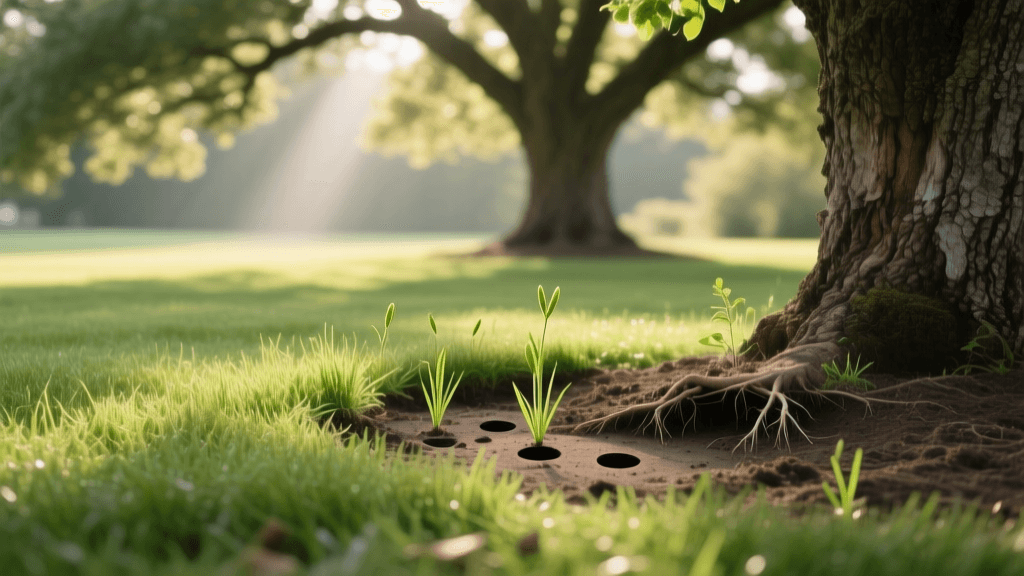
- Alternative Turf Prep: Within the tree's protection zone, opt for gentle raking with a flexible leaf rake to remove debris, and use a garden fork to gently poke holes for seed-to-soil contact rather than utilizing motorized tilling equipment.
The Dangers of Soil Grading and Topdressing
Lawn renovation frequently involves leveling low spots, regrading for drainage, or applying a thick layer of topsoil and compost to prepare a seedbed. Adding soil over a tree's root zone is one of the most common and fatal mistakes made during landscape overhauls.
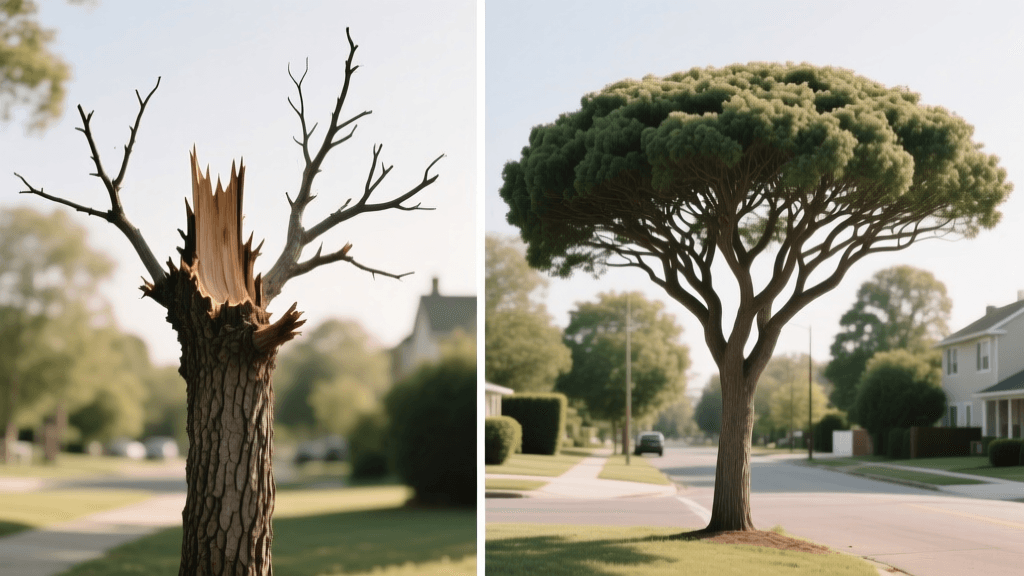
Tree roots require oxygen just as much as they require water. Adding even 2 to 3 inches of heavy topsoil or dense compost over the CRZ can reduce soil oxygen levels to zero, causing the roots to suffocate and die. This leads to a condition known as 'crown dieback,' where the upper branches of the tree slowly wither over a period of 2 to 5 years. If you must level the ground near a tree for turf establishment, use a highly porous, sandy loam mix and apply it in layers no thicker than half an inch, allowing the soil to settle and breathe between applications. Conversely, removing soil (cutting) to level a slope will sever structural roots, compromising the tree's stability and making it a hazard during future storms.
Timing Your Renovation: Turf Needs vs. Tree Dormancy
Aligning your lawn renovation schedule with the natural cycles of your trees can mitigate stress. For cool-season grasses (Kentucky Bluegrass, Tall Fescue), early fall is the ideal time for aeration and overseeding. Fortunately, this coincides with trees shifting energy from canopy growth to root storage, making them slightly more resilient to minor surface disturbances. Avoid heavy lawn renovations during late spring and early summer when trees are expending massive amounts of energy on leaf production and shoot elongation. If you are renovating a warm-season lawn (Zoysia, Bermuda) in late spring, ensure the trees are deeply watered prior to the project to help them withstand the inevitable soil surface disruption.
Post-Renovation Tree Recovery Protocol
Once the new grass seed is down and the sod is laid, your focus must shift to helping the trees recover from the peripheral stress of the renovation. Implement the following recovery steps to ensure long-term arboreal health.
Step 1: Deep Root Watering
Newly seeded or sodded lawns require frequent, shallow watering to keep the top inch of soil moist. This is detrimental to trees, which thrive on deep, infrequent soaking. To satisfy both, maintain your shallow lawn watering schedule, but once a week, use a deep-root watering probe or a slow-drip soaker hose placed at the edge of the tree's dripline. Allow water to penetrate 8 to 12 inches deep. This encourages the tree's roots to grow downward, away from the competitive, moisture-stealing grass roots near the surface.
Step 2: Vertical Mulching (Radial Trenching)
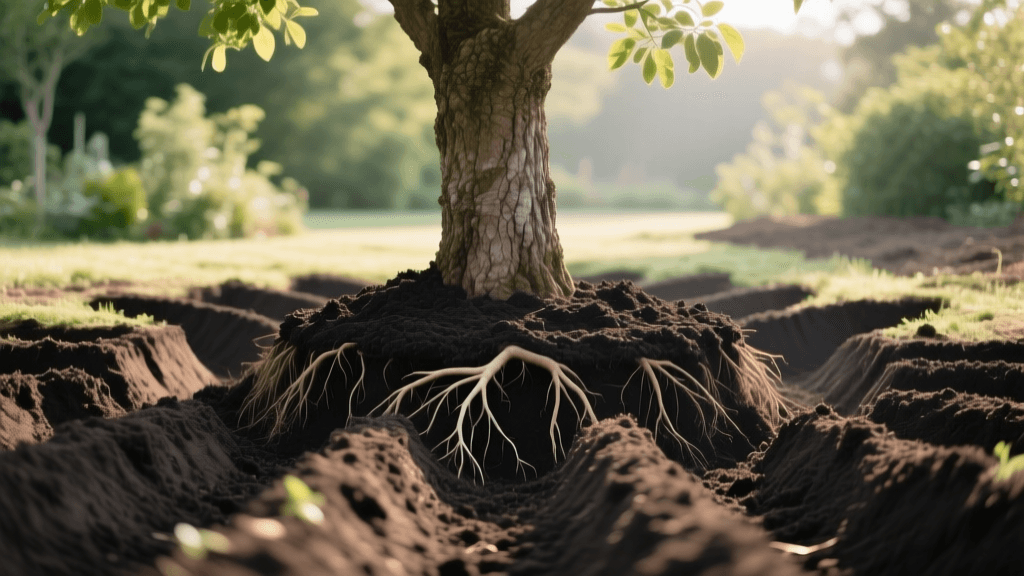
If heavy equipment was inadvertently driven over the tree's root zone during the lawn overhaul, the soil is likely compacted. You can reverse this damage through vertical mulching. Using a 2-inch auger or a specialized air-spade, dig holes 8 to 12 inches deep in a radial pattern starting 4 feet from the trunk and extending to the dripline. Fill these holes with a mixture of coarse sand, compost, and mycorrhizal inoculants. This creates vertical channels that restore oxygen to the compacted soil and provide a direct pathway for water and nutrients to reach the stressed roots. Professional arborists typically charge between $15 and $25 per linear foot for radial trenching, making it a worthy investment for saving a mature shade tree.
Step 3: Proper Mulch Application
Do not let your new lawn grow right up to the trunk of the tree. String trimmers used to maintain the new turf edges will cause 'lawnmower blight,' girdling the tree's vascular system. Instead, create a dedicated mulch ring. Remove any grass within a 3 to 4-foot radius of the trunk and apply 2 to 4 inches of organic wood chip mulch. Keep the mulch pulled back 2 inches from the actual trunk to prevent rot and rodent damage. This mulch ring regulates soil temperature, retains deep moisture, and creates a physical barrier that keeps renovation equipment and string trimmers safely away from the root flare.
Recognizing Signs of Root Stress Post-Renovation
Monitor your trees closely for the first two years following a major lawn renovation. Symptoms of root damage are often delayed. Watch for undersized, pale green, or yellowing leaves (chlorosis), premature fall coloration, and dead twigs in the upper canopy. If you notice these signs, consult an ISA-Certified Arborist immediately. They can prescribe specialized treatments, such as soil-applied bio-stimulants, phosphite fungicides to prevent opportunistic root rot, or targeted growth regulators that pause canopy expansion while the root system regenerates.
By respecting the Critical Root Zone, modifying your aeration practices, and avoiding the temptation to bury roots under fresh topsoil, you can achieve the lush, renovated lawn of your dreams while preserving the majestic trees that give your landscape its character and value.