Home & Garden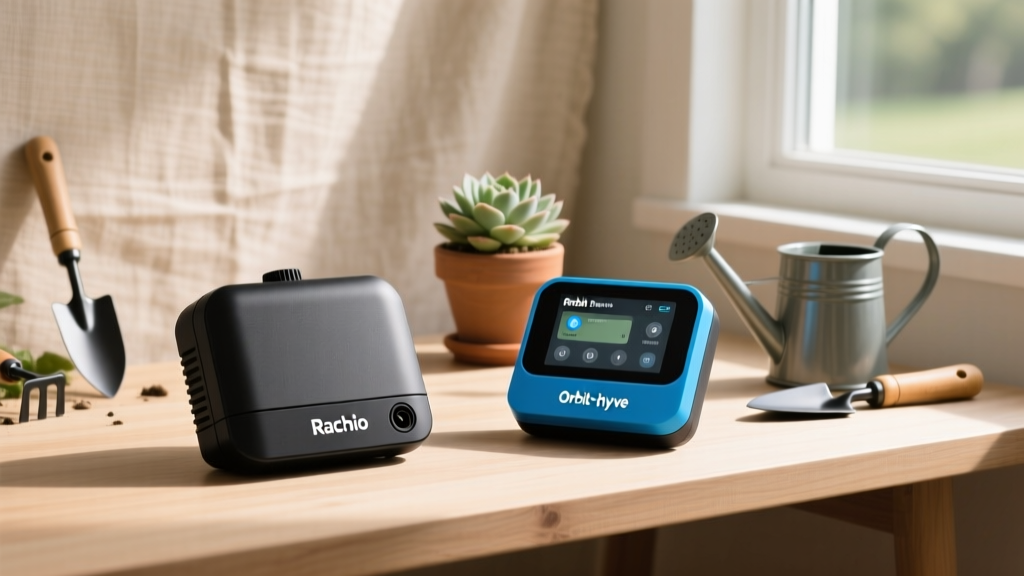
Rachio vs Orbit B-hyve: Best Smart Sprinkler Controller
Lisa ThompsonPublished
The Evolution of Lawn Irrigation
Transitioning from a traditional, dial-based sprinkler timer to a smart irrigation controller is one of the most impactful upgrades you can make for your home and garden. Traditional timers operate on rigid schedules, often watering your lawn during rainstorms or peak heat, leading to massive water waste, shallow root systems, and increased susceptibility to fungal diseases. According to the Environmental Protection Agency (EPA), outdoor water use accounts for nearly 30% of total household water consumption, and up to 50% of that water is wasted due to wind, evaporation, and runoff from inefficient irrigation methods.
Smart sprinkler controllers bridge the gap between indoor smart home automation and outdoor landscaping. By leveraging real-time weather data, soil types, and evapotranspiration (ET) rates, these devices ensure your garden-to-table vegetables and ornamental lawns receive the exact amount of moisture they need. In this comprehensive comparison, we pit the premium industry leader, the Rachio 3, against the budget-friendly challenger, the Orbit B-hyve, to help you decide which Wi-Fi irrigation system deserves a spot on your garage wall.
Meet the Contenders: Overview
Rachio 3 Smart Sprinkler Controller
The Rachio 3 has long been considered the gold standard in smart irrigation. Known for its sleek, minimalist design and incredibly intuitive mobile application, it focuses heavily on hyper-local weather intelligence. It is designed for homeowners who want a 'set it and forget it' system that actively learns and adapts to micro-climate changes without requiring constant manual overrides.
Orbit B-hyve Smart Indoor/Outdoor Controller
The Orbit B-hyve is a versatile, cost-effective alternative that punches well above its weight class. Available in both indoor and weather-resistant outdoor models, the B-hyve offers robust scheduling features and basic weather-skip capabilities. It is an excellent entry point for DIYers and budget-conscious gardeners who want smart features without the premium price tag.
Head-to-Head Feature Comparison
Before diving into the nuanced differences in software and installation, let us look at the hard specifications side-by-side. The following table outlines the core hardware and software capabilities of both 8-zone models.
| Feature | Rachio 3 (8-Zone) | Orbit B-hyve (8-Zone) |
|---|---|---|
| Retail Price (Approx.) | $229.00 | $119.00 |
| Wi-Fi Connectivity | 2.4 GHz & 5 GHz | 2.4 GHz only |
| Weather Data Source | Hyper-local (Weather Intelligence Plus) | Basic local weather station |
| EPA WaterSense Certified | Yes | Yes |
| Smart Home Integration | Alexa, Google, Apple HomeKit, IFTTT, Nest | Alexa, Google Assistant |
| App Interface Quality | Exceptional, highly visual | Functional, slightly cluttered |
| Flow Meter Support | Yes (with accessory) | No |
App Usability and User Experience
The hardware of a smart controller is only as good as the software that drives it. In this arena, the Rachio app is widely considered best-in-class. The onboarding process asks detailed questions about your specific yard, including soil type (clay, loam, sand), vegetation type (cool-season grass, warm-season grass, garden beds), and shade levels. The app then calculates custom watering schedules based on the evapotranspiration rates recommended by university extension programs. The interface is clean, utilizing visual timelines and easy-to-read moisture graphs that show you exactly when your soil will dry out.
The Orbit B-hyve app, while functional, feels a bit more dated. It provides all the necessary tools to set up schedules, enable weather skip, and manually trigger zones, but navigating between menus can be clunky. Setting up soil-specific parameters requires digging into sub-menus, whereas Rachio places these options front and center. However, for users who simply want to program a basic schedule and enable rain-skip, the B-hyve app gets the job done adequately.
Water Conservation and EPA WaterSense Certification
Both the Rachio 3 and the Orbit B-hyve have earned the prestigious EPA WaterSense certification. This certification is not handed out lightly; it requires rigorous third-party testing to prove that the controller can effectively reduce outdoor water use by at least 15% to 30% compared to a standard clock timer, without harming landscape health.
According to EPA WaterSense data, replacing a standard clock timer with a WaterSense labeled weather-based irrigation controller can save an average home nearly 7,600 gallons of water annually.
Where the two diverge is in the granularity of their weather data. The Rachio 3 utilizes 'Weather Intelligence Plus,' which pulls data from over 250,000 hyper-local weather stations, radar, and satellite imagery. It accounts for micro-climates, meaning it knows if a specific cloud formation dropped half an inch of rain on your specific zip code. The Orbit B-hyve relies on broader, regional weather forecasts. While it will successfully skip watering during a major regional storm, it may miss light, localized showers, occasionally resulting in unnecessary watering cycles.
Smart Home Integration and Automation
For enthusiasts looking to bridge their indoor smart home ecosystem with their outdoor landscaping, the Rachio 3 is the undisputed winner. It natively supports Apple HomeKit, Amazon Alexa, Google Assistant, Nest thermostats, and IFTTT (If This Then That). This allows for complex automations, such as having your sprinklers automatically pause if your Nest Protect detects smoke, or triggering a specific garden zone to water when a connected wireless soil moisture sensor reports dry conditions.
The Orbit B-hyve supports Alexa and Google Assistant, allowing for basic voice commands like, 'Hey Google, turn on the front lawn sprinklers for ten minutes.' However, it lacks native Apple HomeKit support and does not integrate as seamlessly with IFTTT or advanced smart home hubs, limiting its utility for hardcore automation enthusiasts.
Installation, Wiring, and Hardware Quality
Both controllers are designed to be direct replacements for standard residential irrigation systems. They support standard 18 AWG to 14 AWG solid or stranded copper irrigation wire. The physical installation process for both takes roughly 30 to 45 minutes for a homeowner with basic DIY skills.
The Rachio 3 features a highly rated, tool-less terminal block. You simply strip the wire, push the lever down, insert the wire, and release. It is incredibly secure and user-friendly. The Orbit B-hyve uses traditional screw-terminal connections. While perfectly reliable, screwing down tiny set-screws while holding multiple thin irrigation wires can be frustrating, especially if you are working in a dimly lit garage or outdoor shed.
It is worth noting that Orbit offers a dedicated 'Outdoor' B-hyve model that comes in a heavy-duty, weather-resistant metal enclosure. If you need to mount your controller on the exterior of your house or on a backyard fence, the Orbit Outdoor model is a more cost-effective solution than buying the indoor Rachio and purchasing a separate, expensive weatherproof enclosure.
Impact on Soil Health and Garden-to-Table Yields
Proper irrigation is not just about keeping grass green; it is vital for the health of your garden-to-table vegetable patches. Overwatering is a primary cause of root rot, nutrient leaching, and fungal blights in tomatoes and peppers. By utilizing smart controllers, you promote 'deep and infrequent' watering cycles.
Deep watering encourages plant roots to grow downward in search of moisture, creating a more drought-resilient plant that can access subterranean nutrients. The Rachio's 'Flex Daily' schedule is particularly adept at this, adjusting the exact run-time based on the daily moisture depletion of your specific soil type. For example, clay soil holds water longer but absorbs it slowly, requiring shorter, cycled run-times to prevent runoff. The Rachio handles these 'cycle and soak' adjustments automatically, ensuring your vegetable garden receives optimal hydration without drowning the root zones.
Pricing and Long-Term Value
The Orbit B-hyve is significantly cheaper upfront, often retailing for around $119 for the 8-zone indoor model. For many homeowners, the water savings generated in the first two summers will completely pay for the cost of the unit, making it an incredible value proposition. It is highly recommended by budget-conscious reviewers and is frequently highlighted in guides for the best affordable smart sprinkler controllers.
The Rachio 3 retails for approximately $229. While it is nearly double the price of the Orbit, the premium buys you superior Wi-Fi connectivity (5 GHz support is a lifesaver if your router is far from the garage), hyper-local weather accuracy, Apple HomeKit integration, and a vastly superior app experience. Furthermore, many local municipal water districts offer rebates of up to $100 or more for installing EPA WaterSense certified controllers, which can significantly offset the Rachio's higher initial cost.
The Final Verdict
Choosing between the Rachio 3 and the Orbit B-hyve ultimately comes down to your budget, your smart home ecosystem, and how deeply you want to engage with your landscape's micro-climate data.
Choose the Rachio 3 if: You are an Apple HomeKit user, you want the most accurate hyper-local weather adjustments to protect sensitive garden-to-table crops, you value a beautifully designed app, and you are willing to pay a premium for a 'set it and forget it' experience.
Choose the Orbit B-hyve if: You are on a strict budget, you need an outdoor-rated controller without buying a separate enclosure, you rely primarily on Alexa or Google Assistant, and you simply want reliable rain-skip features without needing advanced soil-moisture analytics.
Both controllers represent a massive leap forward from traditional timers. By upgrading to either system, you are taking a significant step toward energy-efficient landscaping, conserving vital water resources, and cultivating a healthier, more vibrant home garden.
