Lawn Care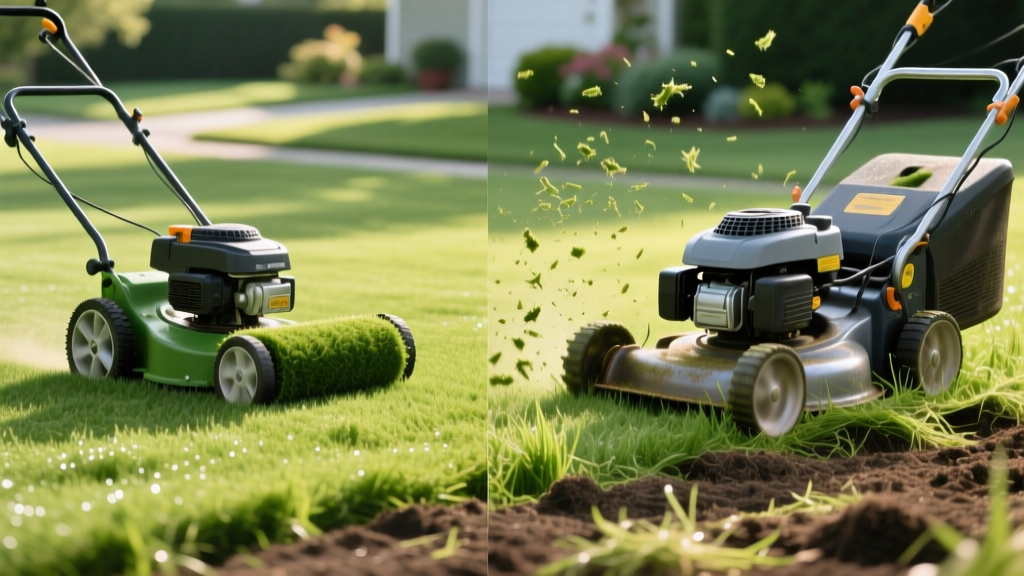
Reel vs Rotary Mower: Mulching Bermuda Grass in 2026
Mike RodriguezPublished
The Evolution of Bermuda Grass Mulching in 2026
Bermuda grass (Cynodon dactylon) remains one of the most resilient and popular warm-season turfgrasses for home lawns, athletic fields, and golf courses. As we navigate the 2026 lawn care season, sustainable practices have moved from optional to essential. At the forefront of this movement is 'grasscycling'—the method of mulching grass clippings directly back into the soil to return vital nutrients, retain moisture, and reduce landfill waste. However, a critical debate persists among turf enthusiasts and landscaping professionals: when it comes to mulching Bermuda grass, is a reel mower or a rotary mower the superior choice?
The answer is not entirely straightforward, as it depends heavily on the mechanical action of the mower, the desired cutting height, and the specific mulching materials (clippings) being returned to the soil. Bermuda grass thrives on frequent, low mowing, and the way your mower processes the leaf blade directly impacts soil health, thatch decomposition, and the overall vigor of your lawn. In this comprehensive guide, we break down the mechanics, benefits, and drawbacks of reel versus rotary mowers specifically through the lens of mulching methods and materials for Bermuda grass in 2026.
Understanding Mulching Mechanics: How Clippings Become Soil Material
Before comparing mower types, it is crucial to understand what happens when Bermuda grass clippings are used as a mulching material. When left on the lawn, clippings act as a lightweight, organic mulch layer. They decompose rapidly, releasing nitrogen, potassium, and phosphorus back into the soil profile. According to research highlighted by Penn State Extension, returning clippings to the lawn can provide up to 25% of the turf's annual nitrogen needs, significantly reducing the need for synthetic fertilizers.
For mulching to be effective, the clipping material must be small enough to filter down through the living turf canopy and reach the soil surface. If clippings are too long or clump together, they block sunlight, trap excess moisture against the leaf blades, and create a breeding ground for fungal diseases like dollar spot or brown patch. This is where the mower's cutting and dispersal mechanics become the most critical factor in your lawn care routine.
Rotary Mowers: High-Velocity Mulching Kits
Rotary mowers operate using a single horizontal blade that spins at high RPMs inside a specialized deck. In 2026, modern rotary mowers equipped with dedicated mulching kits (featuring high-lift mulching blades and deck baffles) are engineered to keep clippings suspended in the air vortex beneath the deck. The blade's extra cutting teeth repeatedly chop the Bermuda grass into microscopic particles before dropping them onto the soil.
The Mulching Advantage: The primary benefit of a rotary mulching kit is its ability to handle slightly overgrown Bermuda grass. If you miss a mowing day and the grass exceeds the recommended 1.5-inch height, the high-velocity vortex will still shred the longer leaf blades into manageable mulch material. Furthermore, the downward airflow created by specialized mulching blades helps part the grass canopy, ensuring the finely chopped organic material reaches the soil surface rather than resting on top of the turf.
The Drawback: Rotary mowers tear the grass blade before cutting it, especially if the blade is not razor-sharp. This frayed edge loses moisture faster and takes longer to break down as a mulching material. Additionally, rotary mowers struggle to maintain a consistent cut below 1 inch, which is often the ideal height for hybrid Bermuda grass varieties.
Reel Mowers: The Natural Scissor-Cut Mulch
Reel mowers utilize a completely different mechanical principle. A rotating cylinder of helical blades sweeps the grass against a stationary bottom plate known as a bedknife. This creates a precise, scissor-like shearing action. While reel mowers do not have 'mulching kits' or vacuum chambers to repeatedly chop clippings, they are inherently superior for mulching Bermuda grass due to the nature of the cut.
The Mulching Advantage: Because a reel mower slices the Bermuda grass cleanly, the resulting clipping is incredibly fine and lightweight. These ultra-fine clippings act as a perfect, natural mulch that immediately sifts down to the soil surface without the need for a high-velocity air vortex. The clean cut also seals the leaf blade, retaining moisture within the plant and accelerating the microbial breakdown of the clipping material once it hits the soil. Furthermore, reel mowers allow you to mow Bermuda grass at the optimal 0.5 to 1.0-inch height, promoting dense, lateral stolon growth that naturally shades the soil and enhances the mulching effect.
The Drawback: Reel mowers demand strict adherence to the 'one-third rule.' If your Bermuda grass grows too tall, the reel will simply push the stalks over rather than cutting them, resulting in unsightly windrows of un-mulched, matted grass that will smother the lawn and contribute to thatch.
2026 Comparison Chart: Reel vs. Rotary for Bermuda Mulching
| Feature | Rotary Mower (with Mulching Kit) | Reel Mower (Walk-Behind) |
|---|---|---|
| Cutting Action | Impact / Tear (requires sharp blade) | Scissor-shear (precise and clean) |
| Mulch Particle Size | Micro-chopped via repeated deck strikes | Fine, single-cut ribbons |
| Ideal Cut Height for Bermuda | 1.0 to 2.0 inches | 0.25 to 1.25 inches |
| Tolerance for Overgrown Grass | High (can mulch tall grass effectively) | Low (will scalp or push grass over) |
| Thatch Impact | Chops stolons if caught in deck | Promotes lateral growth (may increase thatch over time) |
| Mowing Frequency Required | 1 to 2 times per week | 2 to 3 times per week (peak summer) |
| 2026 Average Cost (Premium) | $600 - $1,200 (Lithium-Ion Battery) | $1,500 - $3,500 (Prosumer Battery/Gas) |
The Thatch Myth and Soil Nutrient Return
A persistent myth in lawn care is that mulching clippings causes thatch buildup. Thatch is a tightly intermingled layer of living and dead stems, stolons, rhizomes, and roots that accumulate between the soil surface and the green vegetation. According to turfgrass specialists at Texas A&M Aggie Turf, grass clippings do not contribute to thatch because they are composed primarily of water and easily degradable cellulose. They break down rapidly when in contact with soil microbes.
However, the *type* of mower you use can indirectly influence thatch. Reel mowers encourage Bermuda grass to spread laterally via stolons, creating an incredibly dense, carpet-like turf. While this is aesthetically pleasing and provides excellent soil shading, the dense network of stolons can eventually lead to thatch accumulation if the lawn is not regularly aerated and top-dressed. Rotary mowers, cutting slightly higher and with a more aggressive impact, do not promote the same level of ultra-dense lateral stolon growth, but they may leave behind slightly larger, slower-degrading organic material if the mulching blade is dull.
Top Mulching Strategies for Bermuda Grass in 2026
Regardless of whether you choose the scissor-cut precision of a reel mower or the high-velocity chopping of a rotary mulching kit, proper technique is required to maximize the benefits of your clippings as a soil amendment.
- Follow the One-Third Rule: Never remove more than one-third of the grass blade in a single mowing. For a reel mower maintaining a 0.5-inch height, you must mow when the grass reaches 0.75 inches. For a rotary mower at 1.5 inches, mow at 2.25 inches. This ensures the mulching material is small enough to decompose rapidly.
- Invest in 2026 Battery Technology: Modern brushless lithium-ion motors provide consistent torque even in thick, humid Bermuda grass. Consistent RPMs are vital for rotary mulching kits to maintain the air vortex, and for battery-powered reel mowers to ensure the cylinder doesn't bog down and tear the grass.
- Manage Moisture Levels: Never mulch wet Bermuda grass. Moisture causes clippings to clump together, forming heavy mats that block sunlight and trap fungal spores. If you must mow after a morning dew or light rain, use a rotary mower with a side-discharge chute rather than a mulching plug, and rake the clippings into your compost bin.
- Sharpen and Adjust Regularly: A dull rotary blade will shred the tips of the Bermuda grass, leaving a grayish-brown cast over the lawn and slowing down the decomposition of the mulch. Reel mowers require 'backlapping' and precise bedknife adjustments to maintain the scissor action. A piece of paper should be cleanly snipped at every point along the reel.
Which Mower Should You Choose?
Choosing between a reel and rotary mower for mulching Bermuda grass in 2026 ultimately comes down to your lifestyle, budget, and the specific cultivar of Bermuda you are growing. If you are growing a hybrid variety like TifTuf or Celebration Bermuda, and you desire a golf-course-quality lawn cut at 0.5 inches, a walk-behind reel mower is the undisputed champion. The fine, lightweight clippings it produces act as a perfect, natural mulch that disappears into the dense canopy, feeding the soil without smothering the turf.
Conversely, if you have a common Bermuda lawn, a busy schedule that only allows for mowing once a week, and you prefer a slightly higher cut of 1.5 inches, a high-quality rotary mower with an advanced mulching deck is your best option. The high-velocity chopping action will reliably process the taller grass into nutrient-rich mulch, saving you time while still supporting sustainable, organic lawn care practices. For further reading on maintaining optimal soil health and turf density, the resources provided by the NC State Turfgrass Program offer excellent, up-to-date guidelines on warm-season grass management and organic nutrient cycling.
Conclusion
Mulching is no longer just a convenient way to avoid bagging clippings; it is a foundational pillar of modern, sustainable lawn care. By understanding the distinct mechanical differences between reel and rotary mowers, you can optimize the way Bermuda grass clippings are returned to the soil. Whether you prefer the meticulous, low-cut scissor action of a reel mower or the versatile, high-torque chopping of a rotary mulching kit, the key to success in 2026 lies in frequent mowing, razor-sharp blades, and a deep appreciation for the organic materials that keep your lawn vibrant and healthy.