Lawn Care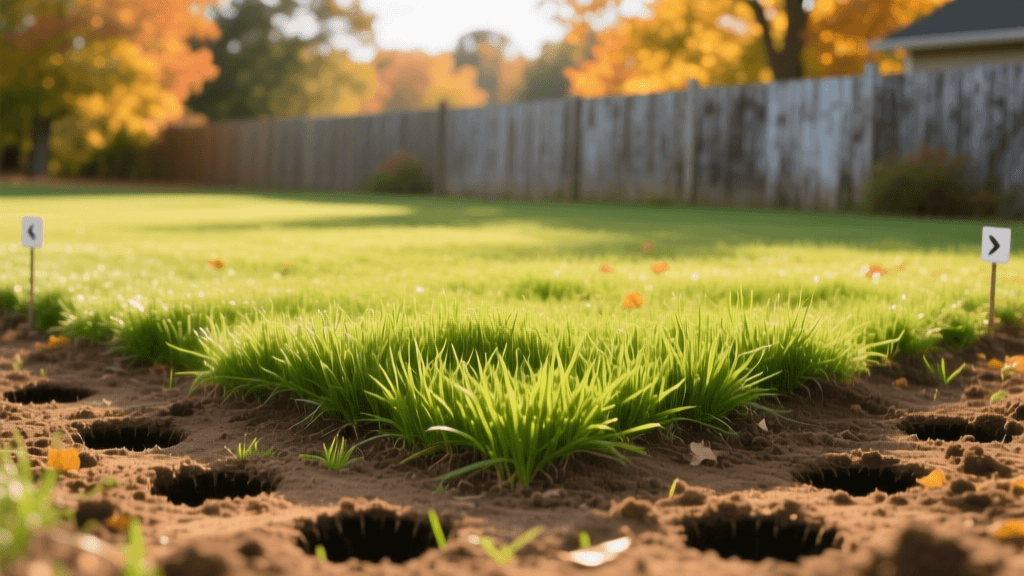
Revive Your Drought-Damaged Lawn: Fall Renovation Guide
Assessing the Damage: Is Your Lawn Dead or Dormant?
After a long, punishing summer, many homeowners are left staring at a patchy, brown, and brittle yard. Before you resign yourself to tearing up the entire landscape, it is crucial to determine whether your grass is dead or simply dormant. Cool-season grasses like Kentucky Bluegrass and Tall Fescue have built-in survival mechanisms that allow them to go dormant during extreme heat and drought, conserving energy in their root systems until conditions improve.
To perform the 'pull test,' grab a handful of brown grass and pull gently. If the grass pulls out easily with no resistance and the roots are brittle or non-existent, the grass is dead and must be replaced. If there is resistance and the crown (the base of the plant) feels firm and slightly moist, your lawn is likely dormant and can be revived with proper fall renovation techniques. According to Penn State Extension, early fall is the absolute best time to undertake major lawn renovations because the soil is still warm from the summer, promoting rapid seed germination, while the cooler air temperatures reduce stress on young seedlings.
The Fall Lawn Renovation Timeline
Successful lawn recovery requires precise timing. Below is a structured timeline to guide your renovation process over an 8-week period, starting in late August or early September.
| Week | Action Item | Key Details & Measurements |
|---|---|---|
| Week 1 | Soil Testing & Weed Control | Collect 5-10 soil cores; apply targeted post-emergent herbicide if necessary. |
| Week 2 | Mowing & Dethatching | Scalp lawn to 1.5 inches; remove thatch layer if it exceeds 0.5 inches. |
| Week 3 | Core Aeration | Pull 3-inch soil plugs; leave plugs on the lawn to break down naturally. |
| Week 4 | Overseeding & Topdressing | Apply 6-8 lbs of seed per 1,000 sq ft; add 1/4 inch of compost topdressing. |
| Week 4 | Starter Fertilizer Application | Apply a high-phosphorus starter fertilizer (e.g., 10-18-10) at label rates. |
| Weeks 4-6 | Intensive Watering Schedule | Water 2-3 times daily for 10 minutes to keep the top inch of soil moist. |
| Week 7 | First Mow of New Seed | Mow when new grass reaches 3.5 inches; never remove more than 1/3 blade. |
| Week 8 | Winterizer Fertilizer Prep | Transition to deep, infrequent watering; prepare for late-fall winterizer. |
Step 1: Core Aeration and Dethatching
Compacted soil and excessive thatch are the primary enemies of lawn recovery. Drought conditions cause clay-heavy soils to bake and harden, preventing water and nutrients from reaching the root zone. Core aeration involves using a machine to pull out small plugs of soil, typically 2 to 3 inches deep, which alleviates compaction and creates direct channels for water, oxygen, and fertilizer.
Renting a walk-behind core aerator from a local hardware store typically costs between $75 and $90 for a four-hour period. For best results, aerate when the soil is slightly moist. Water the lawn deeply the day before aerating to ensure the tines can penetrate the soil effectively. If your lawn has a thatch layer (the spongy layer of dead organic matter between the soil and the green grass) thicker than half an inch, you must also rent a power dethatcher. The UMass Amherst Extension emphasizes that failing to remove excessive thatch before overseeding will result in poor seed-to-soil contact, leading to widespread seedling failure.
Step 2: Soil Testing and Amendment
You cannot effectively treat a lawn if you do not understand its underlying chemistry. A comprehensive soil test will reveal your soil's pH level and its baseline macronutrient profile (Nitrogen, Phosphorus, and Potassium). Cool-season grasses thrive in a soil pH range of 6.0 to 7.0. If your soil test reveals a pH below 6.0, the soil is too acidic, and nutrients will remain locked up and unavailable to the grass roots.
To correct acidic soil, apply pelletized calcitic or dolomitic lime. The exact application rate will be dictated by your soil test results, but a general maintenance application is roughly 40 to 50 pounds of lime per 1,000 square feet. Apply the lime immediately after core aeration so the material can work its way deep into the aeration holes. Most university extension offices offer mail-in soil testing kits for $15 to $30, which is a minor investment that can save you hundreds of dollars in wasted fertilizers.
Step 3: Overseeding with Drought-Tolerant Varieties
If your existing lawn is comprised of older, shallow-rooted grass varieties, renovation is the perfect opportunity to introduce modern, drought-tolerant cultivars. Turf-type Tall Fescue (TTTF) is widely considered the best choice for drought-prone areas. TTTF develops deep, extensive root systems that can reach up to 3 feet into the soil, allowing it to access moisture that shallow-rooted Kentucky Bluegrass cannot reach.
When purchasing seed, avoid cheap, generic mixes found in big-box stores, as they often contain high percentages of annual ryegrass or agricultural weed seeds. Look for certified seed blends from professional suppliers like Jonathan Green, Scotts, or Barenbrug. For overseeding an existing thin lawn, apply seed at a rate of 6 to 8 pounds per 1,000 square feet. If you are completely renovating a dead area from bare dirt, increase the application rate to 8 to 10 pounds per 1,000 square feet. Use a broadcast spreader for even distribution, splitting the seed in half and applying it in two perpendicular directions to ensure uniform coverage.
Step 4: Starter Fertilizer and Topdressing
Newly germinated seeds require immediate access to phosphorus to develop strong root systems. Standard lawn fertilizers are high in nitrogen, which promotes leafy growth but does little for early root establishment. Instead, use a dedicated starter fertilizer with an N-P-K ratio resembling 10-18-10 or 12-24-12. Apply the starter fertilizer on the exact same day you overseed.
To further protect the seed and retain moisture, apply a thin layer (about 1/4 inch) of finely screened compost or peat moss over the newly seeded areas. This topdressing acts as a mulch, shielding the delicate seeds from birds and the sun while holding moisture against the seed coat. Be careful not to apply the topdressing too thickly, as burying the seed under more than 1/2 inch of soil or compost will prevent it from receiving the sunlight required for germination.
The Critical Watering Schedule for Seed Germination
The most common reason fall lawn renovations fail is improper watering. Grass seed must remain consistently moist until it germinates and establishes a secondary root system. This means the top one inch of your soil must never be allowed to dry out completely during the first 14 to 21 days.
- Weeks 1-2 (Germination Phase): Water the lawn lightly 2 to 3 times per day for 5 to 10 minutes per zone. The goal is to keep the seed bed damp, not saturated. Avoid creating puddles, which will wash the seeds away or cause them to rot.
- Weeks 3-4 (Establishment Phase): As seedlings emerge and grow to about 1 inch tall, reduce watering frequency to once per day, but increase the duration to 15-20 minutes. This encourages the young roots to stretch deeper into the soil profile to seek out moisture.
- Weeks 5+ (Maturation Phase): Transition to a standard deep-and-infrequent watering schedule. Water 1 to 1.5 inches per week, ideally split across two morning sessions. This trains the new drought-tolerant grass to develop deep roots capable of surviving future summer heat.
Long-Term Recovery and Maintenance
Once your new grass has been mowed three times, it is considered established. At this point, you can apply a standard high-nitrogen fall fertilizer to help the lawn store carbohydrates in its root system for the winter. According to the University of Minnesota Extension, late-fall fertilization is critical for cool-season grasses, as it promotes early spring green-up without causing excessive, disease-prone top growth.
Renovating a drought-damaged lawn is a labor-intensive process, but the rewards of a thick, deep-rooted, and resilient turf are well worth the effort. By combining core aeration, strategic overseeding with modern cultivars, and precise moisture management, you can transform a neglected, sun-baked yard into the most resilient lawn on your block.