Pest Control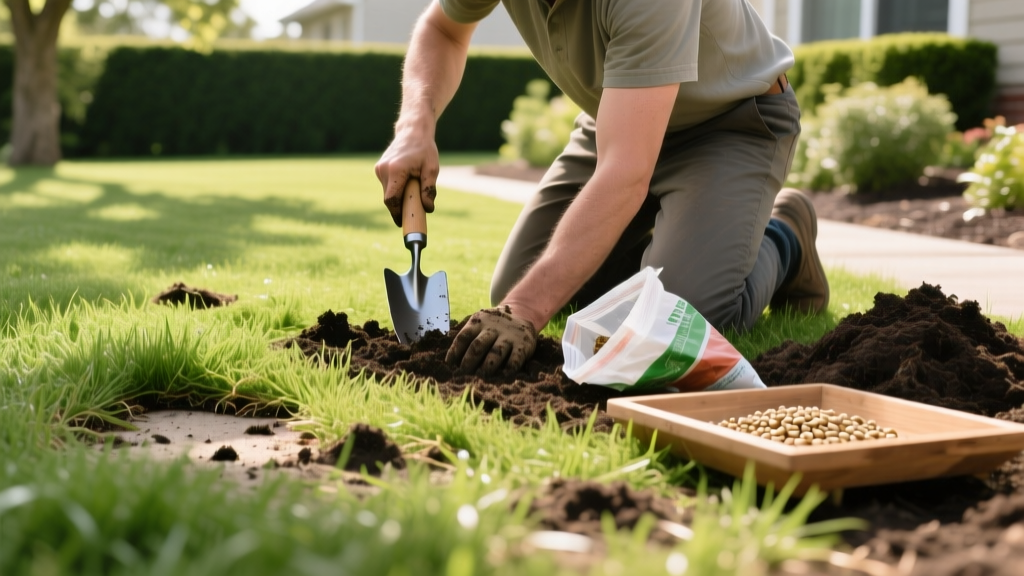
How to Renovate and Recover a Lawn After Grub Damage
Emily WatsonPublished
Assessing the Extent of Grub Damage
White grubs are the larval stage of various scarab beetles, including Japanese beetles, June bugs, and European chafers. These voracious pests live just beneath the soil surface, feeding aggressively on the root systems of your turfgrass. When a grub infestation is severe, the turf loses its anchor to the soil, resulting in spongy, brown patches that can be rolled back like a freshly laid carpet. If your lawn has suffered this fate, simple overseeding will not suffice. You must implement a comprehensive lawn renovation and recovery plan that addresses both the active pest problem and the underlying soil health to ensure long-term success.
Before beginning any renovation, you must confirm that grubs are the primary culprit and assess the severity of the infestation. According to University of Minnesota Extension, a healthy lawn can tolerate a low population of grubs without showing significant damage. However, when populations exceed eight to ten grubs per square foot, the root destruction outpaces the grass's ability to recover, necessitating immediate intervention.
To perform a proper assessment, use a flat spade to cut three sides of a one-foot square in the damaged area, then peel back the turf. Count the number of C-shaped, white grubs in the top three inches of soil. If you find more than ten grubs per square foot, curative pest control must precede your renovation efforts.
Step-by-Step Lawn Renovation After Grub Infestation
Step 1: Eradicate Remaining Grubs
You cannot successfully renovate a lawn if the pests are still active in the soil. If you are renovating in late summer or early fall when grubs are large and actively feeding, you must use a curative insecticide. Products containing Trichlorfon (commonly sold as Dylox) are highly effective against mature grubs. Apply the granular product according to the label instructions and immediately water it in with at least 0.5 inches of water to move the active ingredient into the root zone where the grubs are feeding.
For an organic integrated pest management (IPM) approach, apply beneficial nematodes, specifically the species Heterorhabditis bacteriophora. These microscopic worms seek out and infect grubs, releasing bacteria that kill the pest within 48 hours. Nematodes are highly sensitive to environmental conditions; they must be applied when soil temperatures are above 60°F, and the lawn must be kept consistently moist for two weeks following application to ensure their survival.
Step 2: Remove Dead Turf and Prepare the Soil
Once the active grub threat is neutralized, you must prepare the seedbed. Dead, rootless turf will prevent new grass seed from making soil contact, which is critical for germination. Use a heavy-duty dethatching rake or a power dethatcher to aggressively remove the dead grass, roots, and debris down to the bare soil.
Next, perform core aeration. Grub-damaged soil is often compacted from the initial pest activity and subsequent foot traffic during damage assessment. Core aeration pulls plugs of soil from the ground, alleviating compaction, improving oxygen flow, and creating micro-trenches for your new seed and topdressing. According to turfgrass experts at Rutgers University, improving soil structure is vital for establishing deep, resilient root systems that can better withstand future environmental and pest-related stress.
Step 3: Topdress, Overseed, and Fertilize
After aerating, apply a thin layer (about 1/4 inch) of high-quality, screened compost over the entire lawn. This topdressing will work its way into the aeration holes, improving soil biology and moisture retention.
When selecting grass seed for renovation, opt for endophyte-enhanced varieties of Tall Fescue or perennial ryegrass. Endophytes are naturally occurring, beneficial fungi that live inside the grass plant and produce alkaloids, which act as a natural deterrent against surface-feeding insects and improve the plant's overall stress tolerance. For northern climates, a mix containing 80% Tall Fescue and 20% Kentucky Bluegrass provides excellent drought tolerance and rhizomatous spreading to fill in gaps. Apply seed at a rate of 5 to 6 pounds per 1,000 square feet for a full lawn renovation.
Follow up immediately with a starter fertilizer high in phosphorus (such as a 10-18-10 NPK ratio) to promote rapid root development in the new seedlings. Use a drop or rotary spreader to ensure even coverage, and lightly rake the area to ensure the seed is covered by no more than 1/8 inch of soil or compost.
Step 4: Water and Protect the New Seed
Germination requires consistent moisture. Water the renovated area lightly two to three times a day for the first 14 to 21 days to keep the top inch of soil constantly damp. Avoid heavy watering, which can wash away the seed and topdressing. Once the new grass reaches a height of three inches, transition to a deep, infrequent watering schedule—providing about one inch of water per week to encourage deep root growth.
Long-Term Grub Prevention and IPM Strategies
Renovating your lawn is a significant investment of time and money. To protect your newly recovered turf, you must implement a proactive, long-term pest control strategy. Preventative treatments target grubs when they are in their earliest, most vulnerable larval stages, long before they can cause visible damage.
| Treatment Type | Active Ingredient Examples | Application Timing | Target Pest Stage |
|---|---|---|---|
| Preventative (Chemical) | Chlorantraniliprole, Imidacloprid | Early Summer (June - July) | Newly hatched, young grubs |
| Curative (Chemical) | Trichlorfon, Carbaryl | Late Summer / Early Fall | Large, actively feeding grubs |
| Biological (Nematodes) | Heterorhabditis bacteriophora | Late Summer (Soil > 60°F) | All active larval stages |
| Biological (Bacteria) | Milky Spore (Paenibacillus popilliae) | Spring or Fall | Japanese beetle grubs only |
The gold standard for preventative chemical control is Chlorantraniliprole (often sold under the brand name Acelepryn or Scotts GrubEx). Unlike older neonicotinoids, Chlorantraniliprole is highly targeted, posing minimal risk to beneficial pollinators and earthworms when applied correctly. It should be applied in late spring or early summer and watered in immediately. The active ingredient remains in the soil, ready to eliminate grubs as they hatch from eggs laid by adult beetles in mid-summer.
According to Penn State Extension, integrating cultural controls is just as important as chemical or biological treatments. Adjusting your lawn care habits can make your turf inherently less attractive to egg-laying beetles and less hospitable to developing grubs. Adult beetles prefer to lay their eggs in moist, irrigated soil during July and August. If your lawn is healthy and you can tolerate letting it go slightly dormant during peak summer heat, withholding irrigation during this egg-laying period can significantly reduce grub populations the following fall.
Furthermore, maintain a mowing height of 3.5 to 4 inches. Taller grass develops deeper, more robust root systems that can withstand minor grub feeding without showing surface damage. Taller turf also shades the soil, reducing surface moisture and making the environment less appealing to egg-laying female beetles. By combining proper cultural practices, strategic preventative treatments, and resilient grass varieties, your newly renovated lawn will remain thick, green, and highly resistant to future grub invasions.