
Landscaping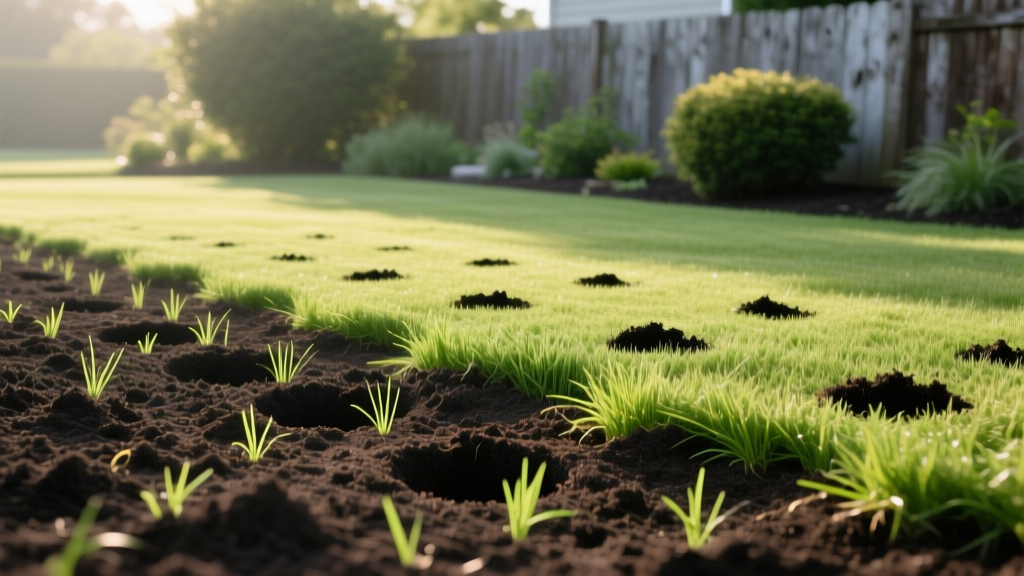
How to Renovate and Recover a Lawn in Heavy Clay Soil
Robert HayesPublished
The Challenge of Heavy Clay Soil in Landscaping
Landscaping in areas with heavy clay soil presents a unique set of challenges for homeowners and turf managers alike. Clay particles are microscopic and tend to bind tightly together, creating a dense, impermeable layer that restricts water infiltration, limits oxygen exchange, and chokes out grassroots systems. While clay soils are naturally rich in minerals and boast a high Cation Exchange Capacity (CEC)—meaning they hold onto nutrients well—the severe compaction prevents those nutrients from being accessible to your turf. According to soil science guidelines from the University of Minnesota Extension, managing clay requires a focus on improving soil structure through organic matter integration rather than attempting to change the soil's fundamental texture.
If your lawn suffers from chronic pooling, shallow root systems, thinning grass, and severe summer heat stress, you are likely dealing with a compacted clay base. Complete lawn renovation and recovery in these conditions require a multi-step approach that physically breaks up the soil profile and introduces biological activity. This guide will walk you through the exact measurements, product recommendations, and timelines required to transform a struggling clay lawn into a thriving, resilient landscape.
Step 1: Comprehensive Soil Testing and Preparation
Before purchasing seed or fertilizer, you must understand your soil's baseline chemistry. Clay soils often suffer from extreme pH imbalances and phosphorus lockout. Purchase a professional soil test kit from a lab such as Logan Labs or your local university extension office. Expect to pay between $20 and $30 for a comprehensive analysis.
When taking your samples, use a soil probe to extract 5 to 10 cores from the top 3 to 4 inches of soil across your lawn. Mix these in a clean plastic bucket, remove any thatch or debris, and send the composite sample to the lab. Your results will dictate your lime or sulfur requirements. For most turfgrasses, a pH between 6.0 and 7.0 is ideal. If your clay soil is highly alkaline (common in arid regions), you may need to apply elemental sulfur or acidifying fertilizers like ammonium sulfate to bring the pH down, unlocking trapped micronutrients like iron and manganese.
Step 2: Deep Core Aeration (The Game Changer)
You cannot renovate a clay lawn without physically fracturing the soil. Spike aeration or rolling are entirely ineffective for clay; they merely punch holes and further compact the surrounding soil walls. You must perform deep core aeration, which extracts actual plugs of soil, relieving compaction and creating channels for air, water, and amendments. The University of Minnesota Extension highly recommends core aeration as the primary mechanical intervention for compacted lawns.
- Timing: Early fall (for cool-season grasses) or late spring (for warm-season grasses) when the turf is actively growing.
- Preparation: Water your lawn deeply (about 1 inch) 24 hours before aerating. Clay must be moist to allow the aerator tines to penetrate 2 to 3 inches deep; otherwise, the tines will simply bounce off the hardened surface.
- Execution: Rent a walk-behind core aerator (brands like Billy Goat or Ryan). Make two passes over the entire lawn in perpendicular directions. Leave the extracted soil plugs on the lawn; they will break down during the next mowing and help inoculate the surface with native soil microbes.
Step 3: Compost Topdressing and Soil Amendment
This is the most critical step for long-term clay recovery. Topdressing with screened organic compost introduces vital organic matter that binds clay particles together into larger aggregates, a process known as flocculation. This permanently improves drainage and root penetration. The Environmental Protection Agency notes that adding compost to soils significantly enhances water retention, nutrient cycling, and overall soil biology.
The Math for Topdressing: You want to apply a thin layer, about 1/4 to 1/2 inch thick, so you do not smother the existing grass. To calculate how much compost you need, use this formula: (Square Footage x Depth in Inches) / 324 = Cubic Yards. For a 5,000 square foot lawn at a 1/4 inch depth: (5,000 x 0.25) / 324 = 3.85 cubic yards. Order 4 cubic yards of screened leaf compost or a compost-manure blend from a local landscape supplier. Spread it evenly using a leveling rake or a push broom, working it down into the aeration holes.
Step 4: Strategic Overseeding and Fertilization
With the soil fractured and amended, it is time to introduce new grass seed. For heavy clay soils, Turf-Type Tall Fescue (TTTF) is the premier choice for cool-season landscapes due to its deep, aggressive root system that can penetrate dense soil layers. Look for blends containing Rhizomatous Tall Fescue (RTF), which spreads via underground rhizomes to fill in bare spots.
- Seeding Rate: Apply 5 to 8 pounds of TTTF seed per 1,000 square feet for overseeding an existing lawn.
- Starter Fertilizer: Apply a high-phosphorus starter fertilizer (e.g., 18-24-12) immediately after seeding to promote rapid root development.
- Weed Prevention: Standard pre-emergents will kill grass seed. Instead, apply a liquid herbicide containing Mesotrione (such as Tenacity) at the time of seeding. It prevents broadleaf weeds and crabgrass from germinating without harming the new turfgrass seedlings.
Clay Lawn Renovation Cost and Timeline Breakdown
The following table outlines the estimated costs and timeline for renovating a 5,000 square foot lawn with heavy clay soil.
| Renovation Step | DIY Cost Estimate | Professional Cost Estimate | Timeline / Duration |
|---|---|---|---|
| Soil Testing | $25 - $35 | $50 - $100 | Day 1 (Wait 1 week for results) |
| Core Aeration | $90 - $150 (Rental) | $150 - $250 | Day 8 (4-6 hours) |
| Compost Topdressing (4 Yards) | $120 - $200 + Delivery | $400 - $600 | Day 9 (3-5 hours) |
| Seed & Starter Fertilizer | $150 - $220 | Included in Pro Package | Day 9 (1-2 hours) |
| Total Estimated Cost | $385 - $605 | $600 - $950+ | Total Active Work: 2 Days |
Step 5: Watering and Germination Care
Watering a newly renovated clay lawn requires a delicate balance. Because clay holds water tightly, overwatering will quickly lead to fungal diseases and seed rot. However, the top layer of compost and seed must remain consistently moist for the first 14 to 21 days.
The Syringing Method: For the first three weeks, water the lawn lightly 3 to 4 times a day for just 5 to 10 minutes per zone. The goal is to keep the seed and topdressing damp, not to saturate the underlying clay base. Once the seeds have germinated and the new grass reaches about 1 inch tall, begin tapering off the frequency while increasing the duration. Transition to deep, infrequent watering (e.g., 1 inch of water applied twice a week) to force the new TTTF roots to dig deep into the fractured clay profile.
Long-Term Landscaping Maintenance for Clay Soils
Renovation is only the beginning. To maintain a healthy landscape on heavy clay, you must adopt practices that prevent future compaction.
- Liquid Aeration: In the years following your mechanical core aeration, utilize liquid aeration products containing humic acid and saponins (such as N-EXT Air-8). These products help maintain soil porosity and encourage microbial activity without the need for heavy machinery.
- Mow High: Never scalp a clay lawn. Keep your mowing height between 3.5 and 4 inches. Taller grass blades shade the soil, reducing surface evaporation and keeping the clay base cooler and more hospitable to roots.
- Leave the Clippings: Grass clippings are a free source of organic matter. Mulching them back into the lawn returns vital nitrogen and carbon to the soil surface, feeding the microbes that keep clay soil aggregated and loose.
- Integrate Hardscaping and Drainage: If your clay soil causes severe water pooling that threatens your home's foundation, landscaping renovations must include subsurface drainage. Consider installing French drains or dry creek beds to intercept and redirect surface water before it settles into the clay basin.
By combining mechanical aeration, heavy compost topdressing, and strategic seed selection, you can fundamentally alter the growing environment of your lawn. Heavy clay does not have to be a landscaping death sentence; with the right renovation protocol, it can become the foundation for a thick, drought-tolerant, and deeply rooted turf.

