Tree Care
How To Grow Grass Under Trees: Lawn Renovation Guide
The Hidden Challenges of Renovating Under Trees
When homeowners decide to tackle a full lawn renovation, the open, sunny areas of the yard usually get the most attention. However, recovering and renovating the turf growing beneath mature trees presents a unique set of horticultural challenges. Grass and trees are natural competitors. In a forest ecosystem, trees win, and the ground is covered by shade-tolerant ferns, mosses, and decaying leaf litter—not turfgrass. When we attempt to force a pristine lawn under a dense canopy, we are fighting biology.
If your lawn renovation plans include recovering bare, compacted, or thinning patches under mature oaks, maples, or pines, you must approach the project with a dual-health mindset. You cannot sacrifice the tree's root system to achieve a perfect seedbed, nor can you ignore the turf's need for light and moisture. This guide will walk you through the precise, actionable steps to successfully renovate and recover your shaded lawn without compromising the structural integrity or health of your most valuable landscape assets.
Understanding the Turf vs. Tree Conflict
Before purchasing seed or renting an aerator, it is crucial to understand why the grass under your trees is failing. Recovery requires diagnosing the specific stressors at play:
- Light Deprivation: Most turfgrasses require at least four to six hours of direct sunlight. Dense canopies filter out the red and blue light spectrums that grass needs for photosynthesis.
- Moisture Competition: A mature tree can transpire over 50 gallons of water on a hot summer day. The tree's extensive fibrous root network will outcompete shallow grass roots for every drop of rainfall and irrigation.
- Soil Compaction: Years of foot traffic, fallen branches, and heavy leaf litter can compress the soil profile, suffocating both turf roots and the tree's vital feeder roots.
- Allelopathy: Certain trees, such as the Black Walnut (Juglans nigra) and Hackberry, release biochemicals (like juglone) into the soil that actively inhibit the growth of competing plants, including many turfgrass species.
Step 1: Canopy Management and Pruning
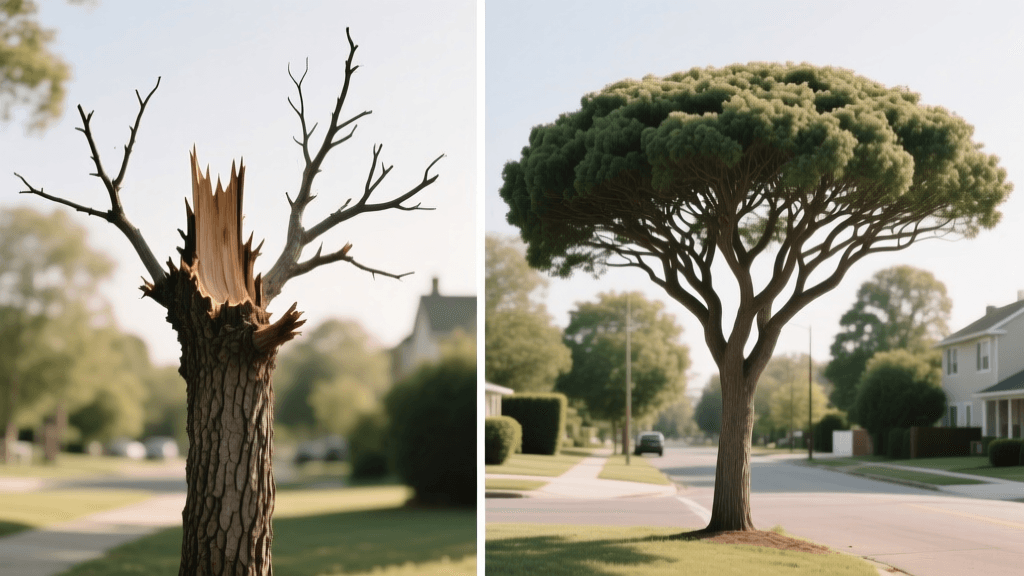
The first step in shaded lawn recovery is maximizing the light that reaches the soil surface. However, this must be done carefully. Topping a tree or stripping its lower limbs (a practice known as 'lion-tailing') can severely weaken the tree, making it susceptible to storm damage and sunscald.
According to guidelines published by the International Society of Arboriculture (ISA), proper pruning should focus on removing dead, diseased, or crossing branches, and selectively thinning the outer canopy to allow dappled sunlight to penetrate. Aim to raise the lowest branches to about 8 to 10 feet above the ground. If you have mature, high-value trees, hire an ISA-Certified Arborist to perform the pruning. The cost typically ranges from $300 to $800, but it prevents irreversible damage to the tree's vascular system.
Step 2: Root-Safe Soil Preparation
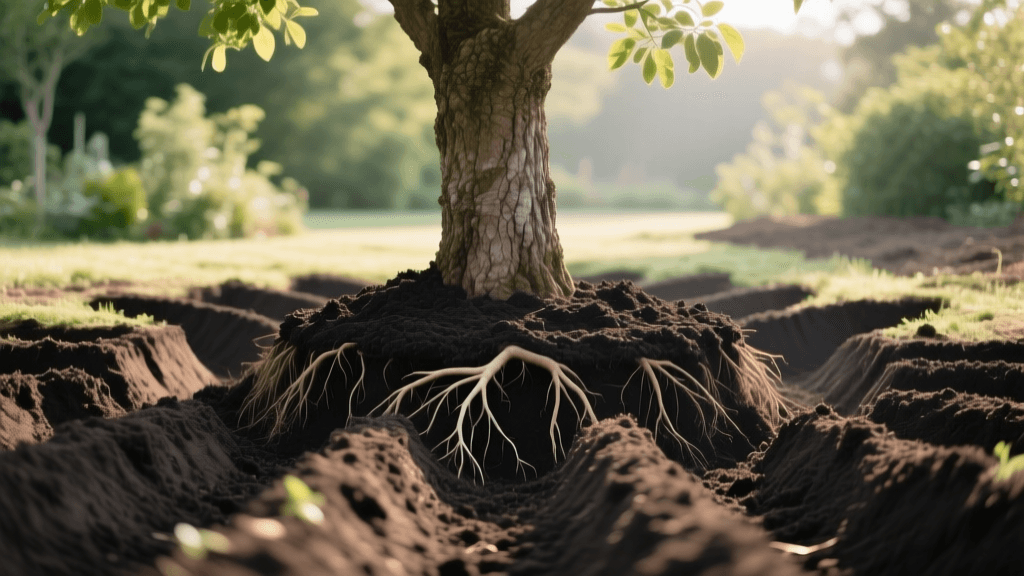
In a standard lawn renovation on an open lawn, rototilling the top 4 to 6 inches of soil is standard practice to create a fluffy seedbed. Under a tree, rototilling is strictly forbidden. The vast majority of a tree's water-and-nutrient-absorbing feeder roots reside in the top 6 to 12 inches of soil. Tilling will sever these roots, causing severe canopy dieback and potentially killing the tree.
Instead, use root-safe renovation techniques to relieve compaction and prepare the seedbed.
| Preparation Method | Turf Benefit | Tree Root Risk | Estimated Cost |
|---|---|---|---|
| Rototilling (4-6 inches) | Creates perfect seedbed | Severe (Destroys feeder roots) | $50-$100 (Rental) |
| Core Aeration (2-3 inches) | Relieves compaction, good seed-to-soil contact | Moderate (Severs some small roots) | $80-$120 (Service) |
| Liquid Aeration (e.g., N-EXT Air8) | Breaks up soil surface tension, safe for seed | Zero (Chemical/biological only) | $40-$60 (Product) |
| Shallow Raking & Topdressing | Provides seedbed without deep soil disruption | Low (Only disturbs surface) | $30-$50 (Materials) |
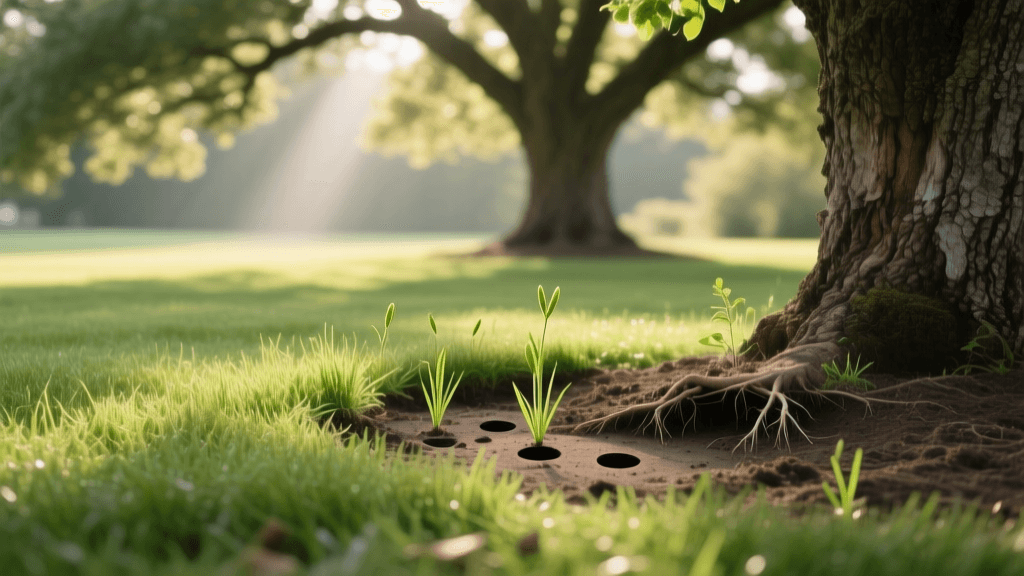
For the safest renovation, apply a liquid aerator like Simple Lawn Solutions N-EXT Air8 or Aerify Plus. These products use humic acids and saponins to break apart compacted clay molecules at a microscopic level without requiring heavy machinery that can crush surface roots. Follow this by lightly raking the bare spots with a flexible leaf rake and applying a thin (1/4 inch) layer of screened compost topdressing.
Step 3: Selecting Shade-Tolerant Seed
Do not use standard 'Sun and Shade' mixes for deep shade renovation; they often rely on perennial ryegrass, which will quickly thin out and die in heavy shade. For true recovery under trees, you must plant Fine Fescues. According to turfgrass research from the University of Minnesota Extension, fine fescues (including creeping red fescue, Chewings fescue, and hard fescue) possess the highest shade tolerance and require significantly less nitrogen and water than Kentucky Bluegrass.
Top Seed Recommendations for Tree-Shaded Lawns
- Jonathan Green Black Beauty Dense Shade: A premium blend heavily weighted toward fine fescues and shade-adapted tall fescue. Excellent for dry, shaded soils under maples. Cost: ~$45 for 3 lbs (covers ~1,200 sq ft).
- Pennington Smart Seed Dense Shade: Contains a mix of fine fescues and a small amount of perennial ryegrass for quick germination and erosion control on slopes. Cost: ~$35 for 3 lbs.
- Outsidepride Creeping Red Fescue: A pure stand of fine fescue, ideal for areas with dappled light and acidic soil (common under pine and oak trees). Cost: ~$25 for 5 lbs.
Timing is everything: The absolute best time to renovate shaded turf is in late summer to early fall (mid-August through late September). The soil is still warm enough for rapid germination, but the tree canopy will soon drop its leaves, allowing the young grass seedlings to receive the vital autumn sunlight they need to establish deep roots before winter.
Step 4: Fertilizing Without Burning Roots
Trees and grass have vastly different nutrient requirements. Applying a high-nitrogen, fast-release synthetic fertilizer (like a 32-0-4 weed and feed) to push grass growth can result in a massive flush of weak, succulent tree foliage that is highly susceptible to aphids and fungal diseases. Furthermore, the salts in synthetic fertilizers can burn the tree's shallow feeder roots.
For lawn recovery under trees, rely on slow-release, organic-based fertilizers. Milorganite (6-4-0) is an excellent choice. It provides gentle, slow-release nitrogen, contains essential iron, and will not burn the tree roots or the new grass seedlings, even in the heat of late summer. Apply at a rate of 32 lbs per 2,500 square feet at the time of seeding.
Step 5: Watering and Mowing Protocols
Establishing grass under trees requires a delicate watering balance. New grass seed needs the top inch of soil to remain consistently moist, requiring light waterings 2 to 3 times a day. However, frequent shallow watering encourages the tree to push its feeder roots closer to the surface, making the tree vulnerable to drought stress later.
Pro-Tip for Dual Watering: Once the new grass seed has germinated and reached 2 inches in height, immediately transition to deep, infrequent watering. Apply 1 inch of water once a week. This forces both the turf and the tree to send their roots deeper into the soil profile, reducing direct competition in the topsoil.
When mowing recovered shaded turf, always set your mower deck to its highest setting (3.5 to 4 inches). Taller grass blades have more surface area to capture the limited dappled sunlight available under the canopy. Never remove more than the top 1/3 of the grass blade, and leave the clippings on the lawn to return organic matter to the soil.
When to Abandon Grass: The Mulch Ring Alternative
Sometimes, despite your best renovation efforts, the shade is simply too dense, or the tree roots are too aggressive (common with Norway Maples and Silver Maples). If the grass refuses to recover after two consecutive fall renovations, it is time to embrace an alternative groundcover. Expanding the tree's mulch ring eliminates the competition entirely and greatly improves the tree's long-term health.
The Arbor Day Foundation strongly advocates for the 3-3-3 rule for tree mulching: create a ring 3 feet in radius (though 8 to 10 feet is vastly superior for mature trees), apply 3 inches of organic wood chip mulch, and keep the mulch 3 inches away from the actual trunk of the tree to prevent rot and rodent damage.
By removing the struggling turf and replacing it with a natural mulch bed or shade-tolerant groundcovers like Liriope, Pachysandra, or Hostas, you eliminate the need for mowing near the trunk (preventing devastating string-trimmer damage) and create a visually appealing, biologically harmonious landscape feature.
Summary of Your Renovation Timeline
Recovering a lawn under mature trees is an exercise in patience and precision. By selectively pruning the canopy, utilizing liquid aeration to protect feeder roots, planting specialized fine fescue blends, and applying gentle organic fertilizers, you can achieve a lush, green understory. Remember that the ultimate goal of your landscape renovation is a thriving ecosystem where both your turf and your trees can coexist in healthy balance.