Tree Care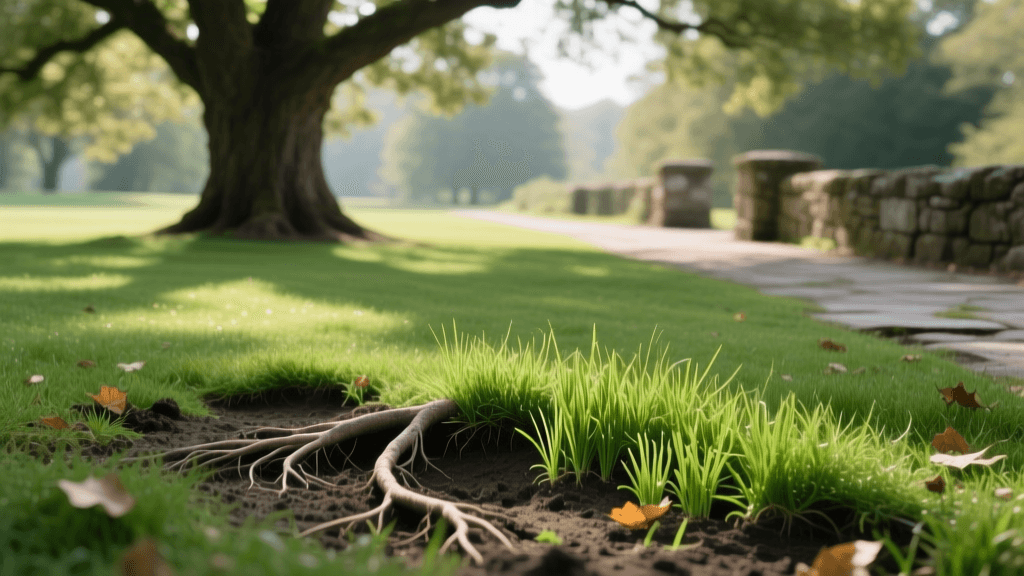
Renovating Lawns Under Trees: Root and Shade Management
The Challenge of Lawn Renovation Under Mature Trees
Renovating a struggling lawn is a rewarding project that can completely transform your outdoor space. However, when that patchy, thinning turf is located beneath the sprawling canopy of a mature tree, the renovation process becomes significantly more complex. Homeowners often find themselves caught in a frustrating cycle: seeding, watering, and fertilizing, only to watch the grass wither away by mid-summer. To achieve lasting lawn recovery in these challenging zones, you must understand the intense competition between turfgrass and trees.
Trees and turfgrass are both highly competitive organisms, but in a direct battle for sunlight, water, and soil nutrients, the mature tree will almost always win. The dense canopy intercepts rainfall and blocks the photosynthetically active radiation (PAR) that grass needs to thrive. Meanwhile, the tree's extensive root system acts as a massive sponge, rapidly absorbing moisture and nutrients before the shallow grass roots can access them. According to the University of Minnesota Extension, heavy shade not only reduces the vigor of turfgrass but also makes it highly susceptible to disease, drought stress, and weed invasion.
Understanding the Critical Root Zone (CRZ)
Before you begin any mechanical lawn renovation processes—such as dethatching, aerating, or tilling—you must identify and respect the tree's Critical Root Zone (CRZ). The CRZ is the area of soil essential for the tree's health and stability. Damaging the roots in this zone during lawn recovery efforts can lead to irreversible decline, structural instability, and eventually, the death of the tree.
How to Calculate the CRZ
A standard arboricultural rule of thumb is to measure the tree's trunk diameter at breast height (DBH), which is about 4.5 feet above the ground. For every one inch of trunk diameter, allocate one foot of critical root radius. For example, a mature oak tree with a 24-inch diameter trunk has a CRZ extending 24 feet outward from the base of the trunk in all directions. Within this zone, surface roots are incredibly sensitive to soil compaction, grade changes, and physical cutting.
Safe Soil Preparation and Aeration Techniques
Standard lawn renovation often involves aggressive tilling or deep core aeration to relieve soil compaction and prepare a seedbed. Under a tree canopy, these standard practices are highly destructive. Never use a rototiller or a gas-powered core aerator with deep tines within the CRZ, as severing large structural roots invites decay organisms and compromises the tree's anchorage.
Gentle Aeration Methods
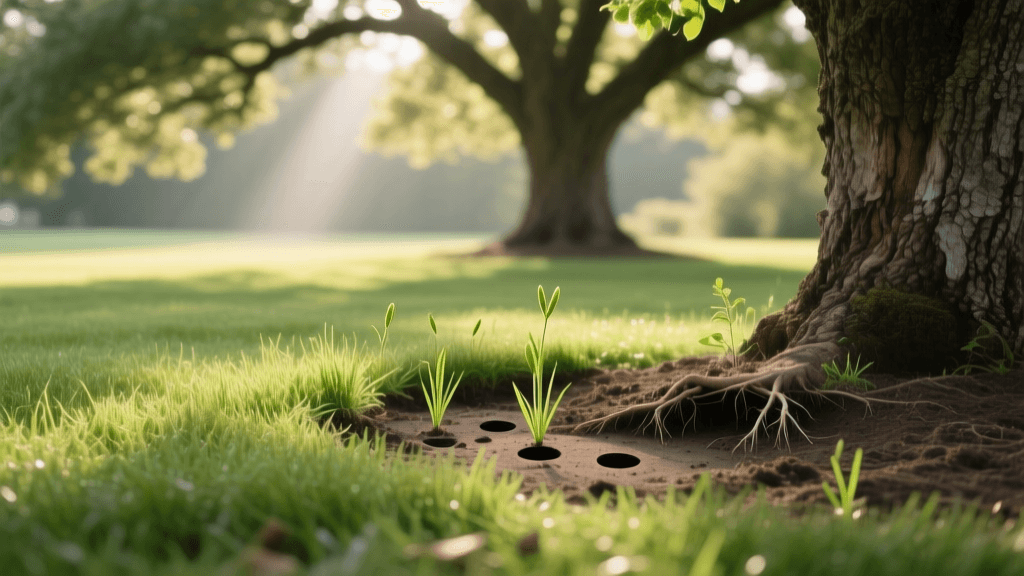
- Manual Core Aeration: Use a manual, foot-press core aerator. This allows you to feel the resistance of the soil. If you hit a root, you can simply move an inch to the left or right, avoiding damage while still creating small channels for water and air.
- Liquid Aeration: Apply a liquid soil conditioner containing humic acid or yucca extract. These products help break up compacted soil at a microscopic level without requiring physical soil penetration.
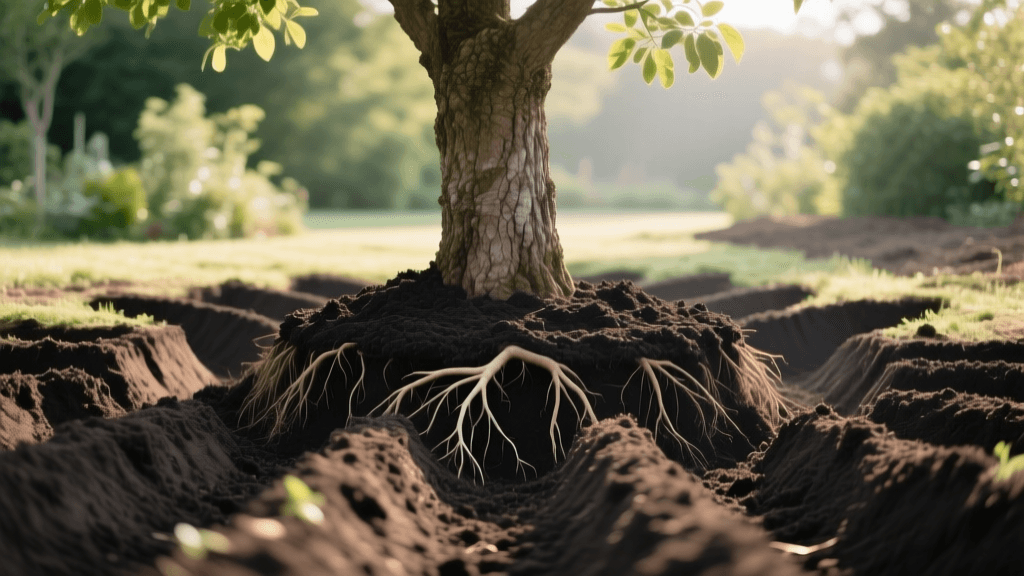
- Air Spading: For severely compacted soils under high-value trees, hire a certified arborist to use an air spade. This tool uses compressed air to fracture compacted soil without tearing or cutting the delicate root hairs.
The Rules of Topdressing
Adding soil over tree roots to create a smooth lawn surface is a common and fatal mistake. Tree roots require oxygen, and burying them under even a few inches of heavy topsoil will suffocate them. If you must topdress to level minor bumps or improve seed-to-soil contact, apply no more than a half-inch of a highly porous, compost-based mix. The Morton Arboretum explicitly warns against adding soil over surface roots, noting that suffocated roots will eventually die back, leading to canopy dieback and increased vulnerability to storms.
Selecting the Right Grass Seed for Shaded Recovery
If you are determined to recover the lawn under a tree, you must abandon the idea of a pristine, sun-drenched Kentucky Bluegrass turf. Shade-tolerant grasses have different growth habits, blade textures, and maintenance requirements. Fine fescues are generally the most shade-tolerant cool-season grasses available, though they struggle with heavy foot traffic and heat stress.
| Grass Species | Shade Tolerance | Drought Tolerance | Traffic Tolerance | Best Renovation Use |
|---|---|---|---|---|
| Creeping Red Fescue | Excellent | High | Low | Dry, deeply shaded areas under trees |
| Chewings Fescue | Very Good | Medium | Medium | Mixed shade lawns with moderate use |
| Rough Bluegrass (Poa trivialis) | Excellent | Low | Low | Damp, heavily shaded spots (e.g., near downspouts) |
| Tall Fescue (Turf-type) | Moderate | Very High | High | Partially shaded areas with high foot traffic |
Note: For warm-season lawns (like Zoysia or Bermuda), shade is a severe limiting factor. St. Augustinegrass offers the best shade tolerance among warm-season options, but it still requires at least four hours of direct sunlight to recover from thinning.
Strategic Pruning to Increase Sunlight
While you cannot move the sun, you can modify the tree's canopy to allow more light to reach the recovering turf. Crown thinning and crown raising are two arboricultural techniques that can significantly improve the light environment for your lawn.
- Crown Raising: This involves removing the lower branches of the tree to elevate the canopy edge. Aim to raise the lowest branches to at least 8 to 10 feet above the ground. This allows low-angle morning and evening sunlight to penetrate beneath the tree.
- Crown Thinning: Selectively removing smaller, interior branches opens up the canopy, allowing dappled sunlight to reach the grass. Never remove more than 15% to 20% of the live canopy in a single season, as over-pruning can stress the tree and trigger a flush of aggressive, shading water-sprouts.
Pro Tip: Always hire an ISA Certified Arborist for pruning mature trees. Improper pruning cuts can introduce disease and ruin the tree's natural defense mechanisms, ultimately costing you both the tree and the lawn.
Managing Tree Debris and Allelopathy
Renovating a lawn under a tree isn't just about shade and roots; it is also about managing the biological byproducts of the tree. Certain tree species, such as Black Walnut, Hackberry, and some Maples, exhibit allelopathy—a biological phenomenon where the tree releases chemical compounds into the soil that inhibit the germination and growth of competing plants, including turfgrass. If you are renovating beneath a Black Walnut, the juglone toxin present in its leaves, roots, and hulls will severely stunt Kentucky Bluegrass and many fescues.
Furthermore, heavy leaf drop in autumn and sap drippage in spring can smother newly germinated grass seedlings. During the renovation process, it is critical to keep the area meticulously clear of debris. Use a leaf blower on a low setting or gently rake with a flexible bamboo rake to avoid uprooting tender new grass shoots. If allelopathy is suspected, heavily amend the soil with activated charcoal or high-quality compost to help buffer the toxins, and select highly tolerant grass species like Tall Fescue, which has shown moderate resistance to juglone compared to other turfgrasses.
Watering and Fertilization: Balancing Competing Needs
The recovery phase of lawn renovation requires consistent moisture to germinate seed and establish young roots. However, frequent, shallow watering—the standard protocol for new grass—is detrimental to mature trees, which thrive on deep, infrequent soakings. Furthermore, excess nitrogen fertilizer applied to the lawn can force the tree into unnatural, weak growth spurts, making it susceptible to pests like aphids and borers.
The Compromise Watering Schedule
To satisfy both the new grass and the established tree, use a two-tiered watering approach. During the first three weeks of seed germination, water lightly twice a day to keep the top inch of soil moist. Once the grass reaches two inches in height, transition to deep, infrequent watering. Use a soaker hose wrapped in a spiral pattern around the tree's drip line once a week to deliver 1 inch of water deeply into the root zone, while using your sprinkler system to maintain the turf.
Fertilizing with Caution
Avoid high-nitrogen, quick-release synthetic fertilizers under the drip line. Instead, use a slow-release, organic fertilizer with a lower nitrogen ratio (such as a 5-3-2 NPK). This provides a steady, gentle nutrient supply that won't burn the delicate new grass or force aggressive, weak growth in the tree. Additionally, leaving grass clippings on the lawn (mulching mowing) will return valuable organic matter to the soil, slowly improving the ecosystem for both the turf and the tree roots.
Knowing When to Surrender: The Mulch Alternative
Sometimes, the most successful lawn renovation strategy is to stop trying to grow grass. If an area receives less than three hours of filtered sunlight per day, or if the surface roots are so dense that the soil is entirely comprised of woody fiber, turfgrass will simply not survive. In these cases, the best recovery method is to gracefully transition from turf to mulch.
Establish a natural drip-line bed using the 3-3-3 rule for mulching: apply a 3-inch layer of organic wood chips, starting 3 inches away from the tree trunk, and extending out to the drip line (or at least a 3-foot radius for smaller trees). This eliminates the competition for water, protects the sensitive surface roots from lawnmower damage (a leading cause of tree decline), and creates a clean, professional landscape aesthetic. By recognizing the limits of turfgrass and working with the tree's natural biology, you ensure the long-term health and beauty of your entire landscape.