Pest Control
Repairing Grub Damage: Lawn Recovery and Prevention
The Dual Threat of White Grubs in Lawn Renovation
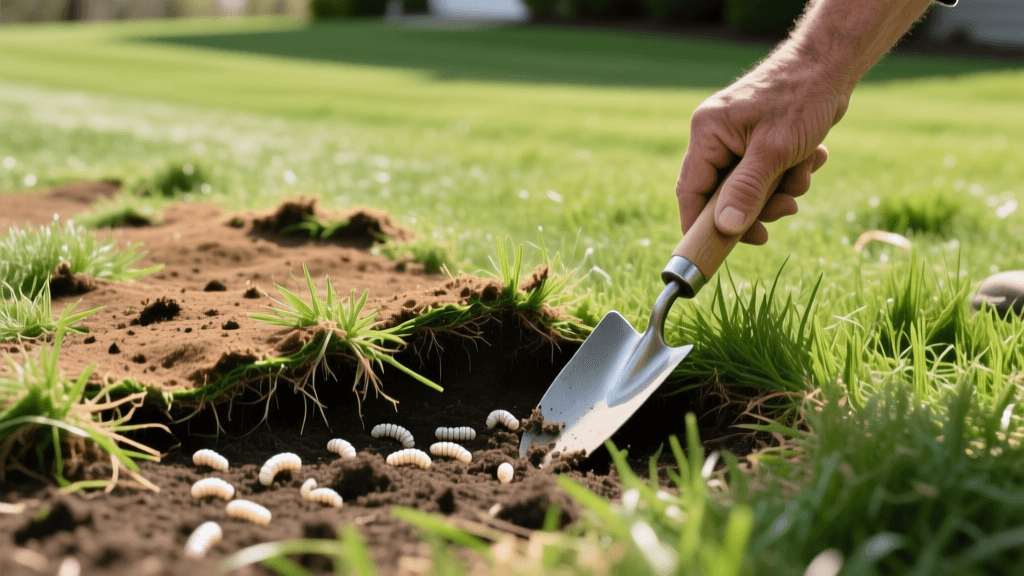
White grubs are the larval stage of scarab beetles, including Japanese beetles, June bugs, and European chafers. These C-shaped, cream-colored pests live just beneath the soil surface, feeding aggressively on the root systems of turfgrass. When a lawn is heavily infested, the grassroots are completely severed, leading to large, irregular brown patches that can be rolled back like a loose carpet. However, the grubs themselves are only half the problem during a lawn renovation project.
The secondary damage caused by foraging wildlife often necessitates a complete lawn overhaul. Skunks, raccoons, armadillos, and crows will aggressively tear up your turf to feast on the protein-rich grubs hiding below. This digging creates deep craters and mounds of displaced soil, destroying whatever grass the grubs left behind. If your lawn has suffered this dual threat, simple overseeding will not suffice. You must implement a comprehensive pest control and lawn recovery strategy to break the lifecycle, repair the soil structure, and re-establish a resilient turf.
Diagnosing the Damage: The Tug Test and Thresholds
Before purchasing seed or fertilizer, you must confirm that grubs are the culprit and assess the severity of the infestation. Brown patches can also be caused by drought stress, fungal diseases like brown patch, or dog urine spots. To confirm grub activity, perform the 'Tug Test'.
- The Tug Test: Grab a handful of brown, dying grass at the edge of a damaged patch and pull gently. If the turf lifts easily with little to no resistance and no roots attached, grubs have likely severed the root system.
- The Soil Inspection: Use a flat shovel to cut a 1-foot by 1-foot square of turf, about 2 inches deep, and peel it back. Sift through the topsoil and count the grubs.
According to turfgrass experts at the University of Minnesota Extension, finding fewer than five grubs per square foot is generally tolerable for a healthy lawn. However, if you uncover eight to ten or more grubs per square foot, treatment is mandatory before any renovation or seeding efforts can begin. If you seed over an active, untreated grub population, the newly germinated grass will simply become their next meal.
Treatment Options: Chemical vs. Biological Control
When renovating a grub-damaged lawn, timing and product selection are critical. Grub control products are broadly categorized into preventatives (which target young grubs) and curatives (which kill older, actively feeding grubs). Because you are dealing with an active infestation that has already caused visible damage, you will likely need a curative treatment to halt the destruction immediately.
| Active Ingredient | Product Type | Application Timing | Target Stage | Est. Cost per 1,000 sq ft |
|---|---|---|---|---|
| Trichlorfon (e.g., Dylox) | Curative Chemical | Late Summer / Early Fall | Large, active grubs | $3.00 - $4.00 |
| Imidacloprid (e.g., Merit) | Preventative Chemical | Early Summer (June) | Young, newly hatched grubs | $1.50 - $2.50 |
| Chlorantraniliprole (e.g., GrubEx) | Preventative Chemical | Spring (April - May) | Eggs and early instars | $2.00 - $3.00 |
| Heterorhabditis bacteriophora | Curative Biological | Late Summer (Soil > 60F) | Active grubs (all stages) | $8.00 - $12.00 |
Organic Recovery: Beneficial Nematodes
For homeowners pursuing an organic lawn renovation, beneficial nematodes are a highly effective biological control method. Specifically, the Heterorhabditis bacteriophora (Hb) species actively seeks out and infects white grubs in the soil, releasing bacteria that kill the pest within 48 hours. Nematodes must be applied to moist soil in the late afternoon or evening, as UV light will kill them instantly. You must keep the soil consistently moist for 10 to 14 days post-application to allow the nematodes to move through the soil profile and locate their hosts.
Step-by-Step Lawn Renovation and Recovery
Once the active grub population has been neutralized, the physical renovation of the lawn can begin. Follow these actionable steps to restore your turf.
Step 1: Eradicate, Rake, and Level
If you applied a curative chemical like Trichlorfon, ensure it has been watered in thoroughly (at least 1/2 inch of irrigation) to push the active ingredient into the root zone. Wait 7 to 10 days for the grubs to die. Next, use a power rake or a stiff metal leaf rake to aggressively remove the dead turf, animal debris, and excessive thatch. This scarification process not only cleans the area but also scratches the soil surface, creating an ideal seedbed for new grass. Fill in deep animal digging craters with a mixture of topsoil and compost, leveling the grade with a landscaping rake.
Step 2: Core Aeration
Wildlife foraging and heavy foot traffic during pest inspection severely compact the soil. Rent a walk-behind core aerator and make two passes over the damaged areas in perpendicular directions. Core aeration pulls 2-to-3-inch plugs of soil from the ground, relieving compaction, improving water infiltration, and creating micro-pockets for grass seed to fall into and establish securely.
Step 3: Overseeding with Resilient Cultivars
Not all grasses are equally susceptible to grub damage. Grasses with deep, robust root systems can tolerate minor root pruning better than shallow-rooted species. For cool-season lawns, Tall Fescue is highly recommended for renovation due to its extensive root system and drought tolerance. For warm-season lawns, Zoysiagrass recovers from pest damage much faster than St. Augustinegrass.
- Seeding Rate: Apply 5 to 8 pounds of Tall Fescue seed per 1,000 square feet for bare spots, or 3 to 4 pounds per 1,000 square feet if overseeding thin existing turf.
- Topdressing: After seeding, apply a 1/4-inch layer of fine compost over the area. This protects the seed from birds, retains moisture, and provides a slow-release organic fertilizer.
Step 4: Starter Fertilizer and Weed Control
Apply a high-quality starter fertilizer (e.g., an N-P-K ratio of 18-24-12) to promote rapid root development. During fall renovations, weed competition can be fierce. Standard pre-emergent herbicides will kill your new grass seed. Instead, use a starter fertilizer that contains Mesotrione (the active ingredient in Tenacity). Mesotrione provides selective post-emergent and pre-emergent weed control without harming germinating turfgrass seedlings.
Long-Term Preventative Strategies
Renovating a lawn is an expensive and labor-intensive process. To protect your investment, you must implement a long-term preventative pest control strategy. According to turfgrass researchers at Penn State Extension, the most effective way to manage grubs is to target them before they reach the destructive third-instar stage in late summer.
Expert Renovation Tip: Never apply preventative grub control products containing Chlorantraniliprole or Imidacloprid at the exact same time you are planting new grass seed. While these chemicals are generally safe for established turf, the heavy, frequent watering required to keep new seed moist can cause the chemical to leach past the root zone before it is fully absorbed by the plant tissue. Apply preventatives once the new lawn has been mowed at least three times and the root system is established.
By combining curative treatments for immediate relief, meticulous soil preparation, and the strategic selection of deep-rooted grass cultivars, you can successfully renovate a grub-damaged lawn. Maintaining proper mowing heights (3 to 4 inches for cool-season grasses) and deep, infrequent watering schedules will further encourage the deep root growth necessary to withstand future pest pressures, ensuring your renovated lawn remains thick, green, and resilient for years to come.