Pest Control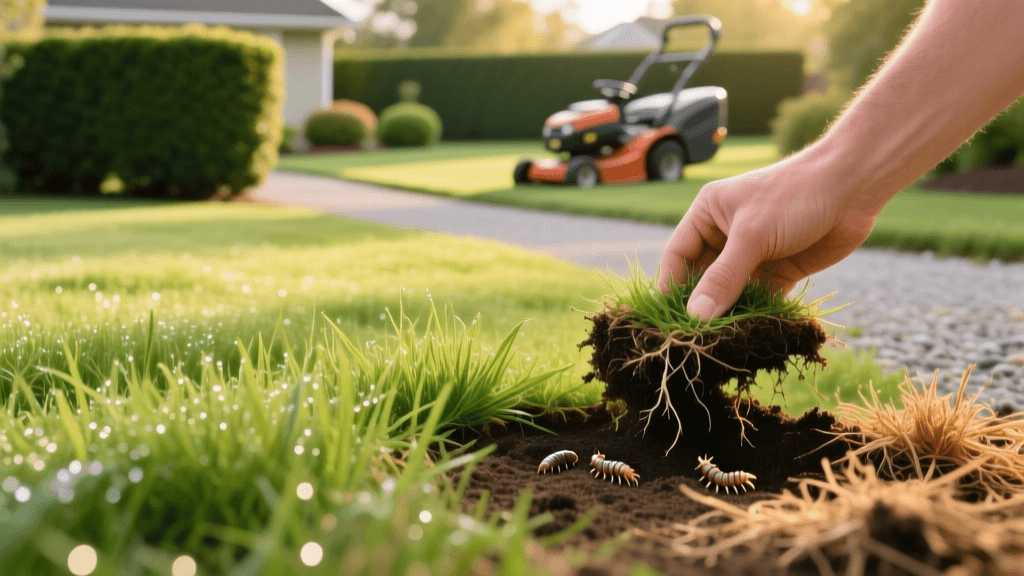
How to Repair Lawn Damage From Grubs and Prevent Return
The Hidden Threat Beneath Your Turf
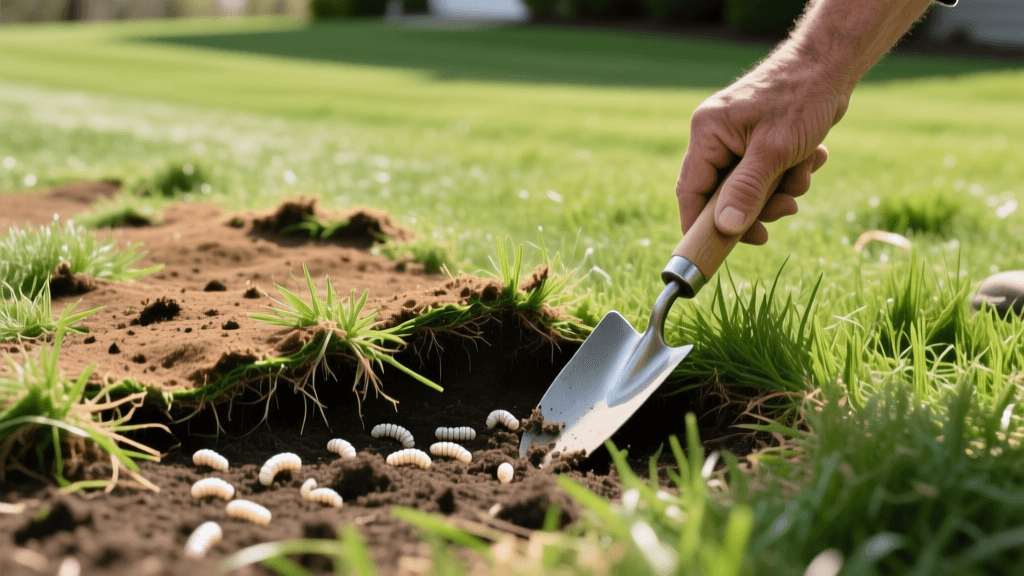
There are few sights more frustrating for a homeowner than walking out to a lush, green lawn only to find large, irregular brown patches that peel back like loose carpet. This is the hallmark of a severe white grub infestation. Grubs are the larval stage of various scarab beetles, including Japanese beetles, June bugs, and European chafers. They live just beneath the soil surface, feasting on the roots of your turfgrass and severing the plant's ability to take up water and nutrients.
When a grub population exceeds the threshold of roughly 8 to 10 grubs per square foot, the structural integrity of your lawn collapses. Furthermore, the damage is often compounded by secondary pests; foraging animals like skunks, raccoons, and crows will tear up your already weakened turf to feast on the protein-rich larvae. Recovering from this level of devastation requires more than just a quick application of pesticides. It demands a comprehensive lawn renovation strategy paired with a robust Integrated Pest Management (IPM) plan to ensure the pests do not return to destroy your newly renovated turf.
Diagnosing the Damage: Grubs vs. Other Lawn Killers
Before initiating a costly and labor-intensive lawn renovation, you must confirm that grubs are indeed the culprit. Brown patches can be caused by a variety of factors, and misdiagnosis will lead to wasted time and resources. According to the University of California Statewide Integrated Pest Management Program, proper identification of the pest and the nature of the damage is the foundational first step of any IPM strategy.
| Symptom | White Grubs | Chinch Bugs | Brown Patch (Fungus) | Drought Stress |
|---|---|---|---|---|
| Turf Pull Test | Peels back easily like a carpet; no roots attached. | Turf remains rooted but is yellowing/browning at the base. | Turf remains rooted; blades have distinct tan lesions with dark borders. | Turf remains rooted; footprints remain visible on grass. |
| Soil Inspection | C-shaped, white larvae with brown heads found in top 2 inches of soil. | Small black/white insects scurrying near the thatch line. | No insects; presence of white, cobweb-like mycelium in early morning. | Soil is hard, dry, and hydrophobic. |
| Secondary Signs | Digging holes from skunks, crows, or raccoons. | Damage usually starts near hot, paved edges or driveways. | Occurs during periods of high humidity and warm nights. | Uniform thinning and browning across the entire lawn. |
Step-by-Step Lawn Renovation After a Grub Infestation
Once you have confirmed a grub infestation and the damage is severe enough to warrant renovation, follow this precise, chronological protocol to restore your lawn.
Step 1: Eradicate the Active Threat (Curative Treatment)
You cannot plant new seed into soil that is still teeming with hungry larvae. If you are renovating in late summer or early fall when grubs are large and actively feeding, you must use a fast-acting curative insecticide. Products containing trichlorfon (commonly sold under the brand name Dylox) are the industry standard for rapid knockdown. Trichlorfon works quickly, killing active grubs within 24 to 48 hours. However, it degrades rapidly in the soil, meaning it will not provide long-term prevention. Apply the granules and water them in immediately with at least a half-inch of irrigation to move the active ingredient into the root zone where the grubs are feeding.
Step 2: Soil Preparation and Dethatching
After the pests are eliminated, remove the dead, detached turf. Use a heavy-duty leaf rake or a mechanical dethatcher to pull up the dead grass and expose the bare soil. This step is critical because grass seed must have direct seed-to-soil contact to germinate successfully. For heavily compacted areas where grub damage was severe, perform core aeration. Pulling 3-inch soil cores will relieve compaction, improve drainage, and create perfect micro-environments for your new seed to settle into.
Step 3: Overseeding and Topdressing
When selecting seed for a grub-damaged lawn, opt for turfgrass species that naturally tolerate root feeding. Tall fescue and fine fescues generally have deeper, more robust root systems than Kentucky bluegrass or perennial ryegrass, making them more resilient to minor grub activity. Furthermore, look for seed blends that contain endophytes—beneficial fungi that live within the grass plant and produce natural compounds that deter surface-feeding insects. Apply seed at a renovation rate of 8 to 10 pounds per 1,000 square feet. Follow this by topdressing the area with a 1/4-inch layer of high-quality compost to retain moisture and provide a sterile, nutrient-rich medium for germination.
Step 4: Strategic Watering and Fertilization
Newly seeded lawns require frequent, light watering. Water the renovated areas 2 to 3 times a day for 10-15 minutes to keep the top inch of soil consistently moist. Once the seedlings reach 2 inches in height, transition to deeper, less frequent watering to encourage deep root growth. Apply a starter fertilizer high in phosphorus (e.g., a 10-18-10 NPK ratio) at the time of seeding to promote rapid root development.
Integrated Pest Management (IPM) for Long-Term Recovery
Renovating your lawn is only half the battle. To protect your investment, you must implement a forward-looking IPM strategy. The United States Environmental Protection Agency (EPA) defines IPM as an effective and environmentally sensitive approach that relies on a combination of common-sense practices, utilizing biological, cultural, and chemical controls only when necessary.
| Control Method | Active Agent / Ingredient | Optimal Application Timing | Target Life Stage | Estimated Cost (per 1,000 sq ft) |
|---|---|---|---|---|
| Biological (Bacteria) | Milky Spore (Paenibacillus popilliae) | Early Fall or Spring | Japanese Beetle Grubs only | $15.00 - $20.00 |
| Biological (Nematodes) | Heterorhabditis bacteriophora | Late Summer (when grubs are young) | All early-instar grubs | $25.00 - $35.00 |
| Chemical Preventative | Chlorantraniliprole (Acelepryn) | April to Early June | Eggs / 1st Instar | $4.00 - $6.00 |
| Chemical Preventative | Imidacloprid (Merit) | Mid-June to Mid-July | Eggs / 1st Instar | $3.00 - $5.00 |
| Chemical Curative | Trichlorfon (Dylox) | August to September | 2nd / 3rd Instar (Active) | $5.00 - $8.00 |
Biological Controls: Working with Nature
For homeowners looking to minimize synthetic chemical use, biological controls are an excellent cornerstone of an IPM program. Beneficial nematodes, specifically the Heterorhabditis bacteriophora strain, are microscopic worms that naturally occur in soil. When applied via a hose-end sprayer in late summer, they actively seek out young grubs, enter their bodies, and release bacteria that kill the host within 48 hours. Research from the University of Minnesota Extension highlights that nematodes must be applied to moist soil and watered in immediately, as they are highly susceptible to desiccation and UV light.
Another biological option is Milky Spore disease, a naturally occurring bacterium that targets Japanese beetle grubs specifically. While it takes 2 to 3 years to fully establish in the soil, a successful application can provide 10 to 15 years of localized suppression without harming earthworms or beneficial soil microbes.
Chemical Preventatives: Timing is Everything
If your lawn has a documented history of severe grub infestations, a chemical preventative may be warranted to protect your newly renovated turf. The most environmentally responsible chemical option is chlorantraniliprole (often sold as Acelepryn or Scotts GrubEx). Unlike older neonicotinoids, chlorantraniliprole has a highly favorable environmental profile, posing minimal risk to pollinators and aquatic invertebrates when applied correctly. It must be applied in April or May, allowing it to bind to the soil organic matter and be taken up by the grass roots before the beetle eggs hatch in mid-summer.
Cultivating a Resilient, Pest-Resistant Lawn
Ultimately, the best defense against white grubs is a thick, vigorously growing lawn with a deep root system. Grubs thrive in lawns with shallow roots caused by frequent, light watering. By shifting your cultural practices to deep, infrequent irrigation (providing 1 to 1.5 inches of water per week, ideally in one or two deep sessions), you force your grass roots to grow deeper into the soil profile, making them far more tolerant of minor grub feeding.
Additionally, adjust your mowing height. Set your mower deck to 3.5 or 4 inches. Taller grass shades the soil surface, which not only conserves moisture and suppresses weed seeds but also makes the micro-environment less attractive to adult female beetles looking for warm, bare soil to lay their eggs. By combining meticulous renovation techniques with a proactive, science-backed IPM strategy, you can reclaim your landscape from subterranean pests and enjoy a dense, resilient lawn for years to come.