Pest Control
Repairing and Renovating Lawns After Severe Grub Damage
The Hidden Destroyers: Understanding Grub Damage
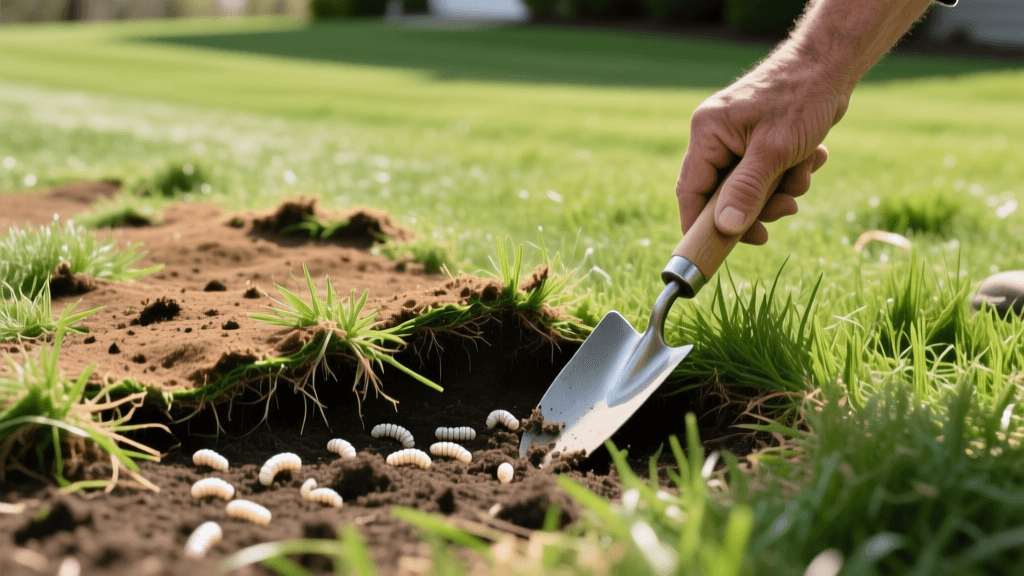
White grubs are the larval stage of various scarab beetles, including Japanese beetles, June bugs, and European chafers. These C-shaped, cream-colored pests live just beneath the soil surface, feasting aggressively on the root systems of turfgrass. When a lawn suffers a severe grub infestation, the roots are entirely severed from the soil, leading to widespread brown patches, wilting, and turf that can be rolled back like a freshly laid carpet. For homeowners facing this devastation, standard pest control is not enough; a comprehensive lawn renovation and recovery strategy is required to restore the landscape.
According to Penn State Extension, white grubs are among the most destructive turfgrass insects in North America. Because they destroy the foundational root structure, simply killing the pests will not bring dead grass back to life. Successful recovery demands a dual approach: eradicating the active pest population and executing a meticulous lawn renovation protocol to re-establish a resilient, deep-rooted turf.
Assessing the Damage: Is Renovation Necessary?
Before purchasing seed or renting aeration equipment, you must confirm that grubs are the culprit and assess the threshold of damage. The University of Minnesota Extension notes that a healthy lawn can tolerate a small grub population, but renovation becomes necessary when thresholds are exceeded and secondary damage occurs.
The Carpet Test and Soap Flush
- The Carpet Test: Grab a handful of grass at the edge of a brown patch and pull gently. If the turf rolls up easily like a carpet with no soil attached to the roots, grubs have severed the root system.
- The Square Foot Count: Use a spade to cut three sides of a 1-foot by 1-foot square of sod and peel it back. Count the grubs in the top 2 inches of soil. If you find more than 5 to 10 grubs per square foot, immediate curative treatment and subsequent renovation are mandatory.
- Secondary Pest Damage: Look for signs of digging. Skunks, raccoons, and birds will tear up lawns to feed on the protein-rich grubs, often causing more physical destruction to the turf than the grubs themselves.
Step 1: Eradicate the Active Grub Population
You cannot successfully renovate a lawn if the pests are still active. Newly planted grass seeds and tender young roots are highly susceptible to grub feeding. Therefore, curative pest control must precede any soil preparation.
Curative Chemical Controls
For late-summer or early-fall infestations when grubs are large and actively feeding, fast-acting curative insecticides are required. Products containing Trichlorfon (commonly sold under the brand name Dylox) are the industry standard for rapid knockdown. Trichlorfon penetrates the soil quickly and begins killing grubs within 24 to 48 hours. However, it degrades rapidly in the soil, meaning it offers no long-term residual protection.
Application Tip: Apply Trichlorfon at the label rate and immediately water the lawn with at least 0.5 inches of irrigation to move the active ingredient into the root zone where the grubs are feeding.
Organic and Biological Controls
For those pursuing an Integrated Pest Management (IPM) approach, beneficial nematodes (Heterorhabditis bacteriophora) can be applied to the soil. These microscopic worms seek out and infect grubs, releasing bacteria that kill the host within 48 hours. Nematodes require precise soil moisture and temperature conditions to be effective, making them slightly less predictable than synthetic curatives, but they are entirely safe for the environment and beneficial earthworms.
Step 2: Soil Preparation and Debris Removal
Once the grub population is neutralized, the physical renovation begins. The dead, rootless sod must be addressed to ensure new seed makes direct contact with the soil.
- Heavy Dethatching or Sod Cutting: If more than 50% of the lawn is dead, use a sod cutter to remove the dead mat entirely. If the damage is localized to scattered patches, use a heavy-duty thatch rake or a power dethatcher to aggressively rip out the dead grass and loosen the top layer of soil.
- Core Aeration: Grub-infested soils are often compacted due to the digging of secondary predators and the lack of living root channels. Run a core aerator over the entire lawn, making two passes in perpendicular directions. This pulls 2-to-3-inch soil plugs, relieving compaction and creating perfect micro-environments for new seed.
Step 3: Seed Selection and Overseeding
Choosing the right grass seed is a critical component of long-term pest resistance. The University of Kentucky Entomology Department highlights that certain grass species and cultivars possess natural defenses or can be enhanced to resist insect feeding.
Choosing Pest-Resistant Turfgrass
- Tall Fescue: This cool-season grass is renowned for its deep, extensive root system. A mature Tall Fescue lawn can tolerate grub feeding far better than shallow-rooted Kentucky Bluegrass because it has a massive root reserve to draw upon.
- Endophyte-Enhanced Perennial Ryegrass: Look for seed blends containing 'endophytes'—beneficial fungi that live within the grass plant. These fungi produce alkaloids that make the grass highly toxic and unpalatable to surface-feeding insects and root-feeding grubs.
Seeding Rates: For a full lawn renovation, apply Tall Fescue seed at a rate of 6 to 8 pounds per 1,000 square feet. For overseeding damaged patches, reduce the rate to 3 to 5 pounds per 1,000 square feet.
Step 4: Topdressing and Starter Fertilizer
After broadcasting the seed, apply a 1/4-inch layer of high-quality compost or peat moss over the lawn. This topdressing retains moisture, protects the seed from birds, and introduces beneficial microbes to the soil ecosystem. Follow this immediately with a starter fertilizer. A formula with an N-P-K ratio of 10-18-10 is ideal, as the high phosphorus content stimulates rapid root development in the new seedlings. Apply at a rate of 4 pounds per 1,000 square feet.
Grub Control Products: Curative vs. Preventative
To ensure your newly renovated lawn is not destroyed the following year, you must transition from curative treatments to a preventative IPM schedule. Below is a comparison of the primary chemical strategies.
| Product Type | Active Ingredient | Application Timing | Target Life Stage | Best Use Case |
|---|---|---|---|---|
| Curative | Trichlorfon (Dylox) | August - October | Active, feeding grubs | Emergency eradication prior to fall renovation |
| Preventative | Chlorantraniliprole (Acelepryn / GrubEx) | April - June | Eggs and early instar larvae | Long-term protection for newly renovated lawns |
| Biological | Beneficial Nematodes (Hb species) | August - September | Active grubs | Organic lawns and environmentally sensitive areas |
| Biological | Milky Spore (Paenibacillus popilliae) | Spring or Fall | Japanese Beetle grubs only | Long-term, multi-year soil inoculation |
Step 5: Post-Renovation Care and Watering Schedule
The success of your lawn recovery hinges entirely on the first 21 days of watering. New seed lacks the root structure to access deep soil moisture, and the disturbed soil from aeration dries out rapidly.
- Weeks 1-2: Water lightly 2 to 3 times per day, applying just enough to keep the top inch of soil and the seed consistently moist. Avoid heavy watering, which will wash away seeds and topdressing.
- Weeks 3-4: As seedlings reach 2 inches in height, reduce watering frequency to once daily, but increase the volume to encourage deeper root growth.
- Week 5 and Beyond: Transition to a standard deep-and-infrequent watering schedule, aiming for 1 to 1.5 inches of water per week, delivered in a single session to promote drought-resistant, deep roots.
The First Mow
Wait to mow the renovated lawn until the new grass reaches approximately 3.5 to 4 inches in height. Set your mower deck to 3 inches and ensure your blades are razor-sharp. Dull blades will tear the tender young grass, opening the door for fungal pathogens to destroy your hard-won recovery.
Long-Term Prevention: Securing Your Investment
Renovating a lawn is a significant investment of time, labor, and money. To protect your newly established turf, apply a preventative grub control product containing Chlorantraniliprole in early May of the following year. Unlike older neonicotinoid chemicals (like Imidacloprid) which can harm pollinators and soil health, Chlorantraniliprole is highly targeted, safe for earthworms, and provides season-long control by stopping grub eggs from developing into destructive larvae.
By combining aggressive curative pest control with meticulous soil preparation, resistant seed selection, and proactive IPM strategies, you can transform a devastated, grub-ridden yard into a thick, vibrant, and resilient landscape that will withstand environmental stressors for years to come.