Tree Care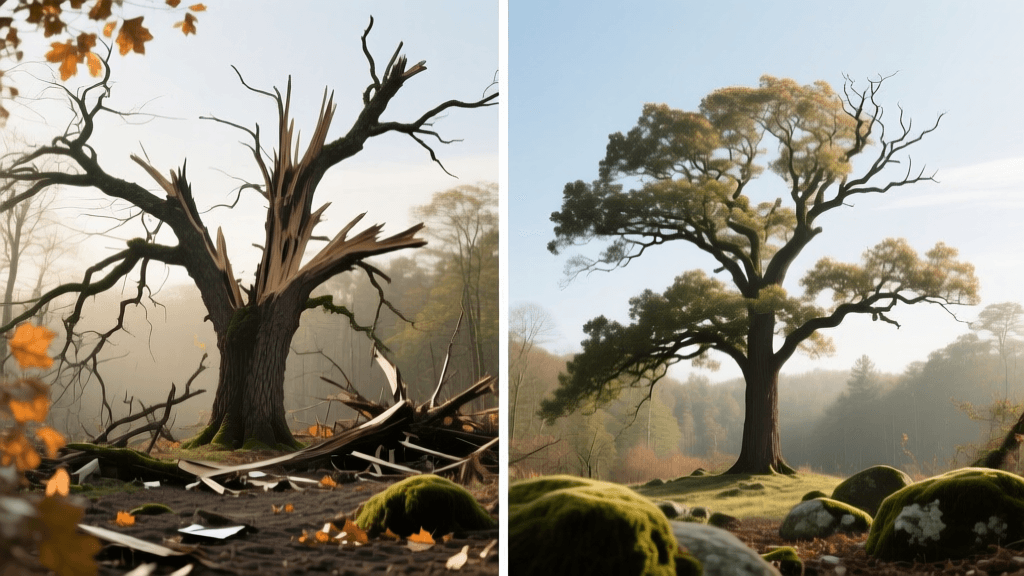
Before and After: Restoring Storm-Damaged Oak Trees
The Devastation: Assessing the "Before" State
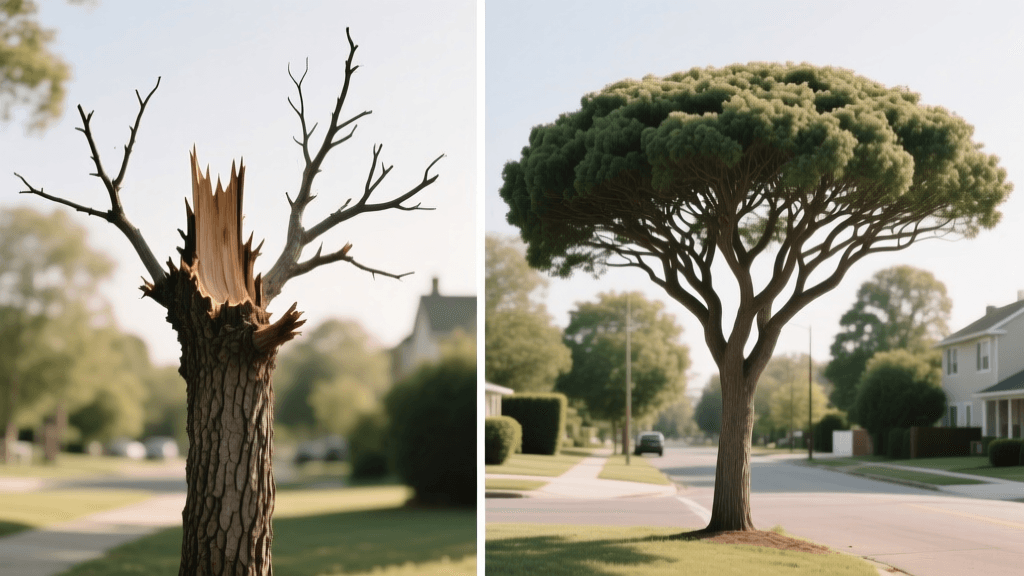
When a severe summer microburst or ice storm tears through a mature landscape, the immediate aftermath is often heartbreaking. Consider the "before" state of a 60-year-old Northern Red Oak (Quercus rubra) that has just suffered a massive codominant stem failure. The canopy is jagged, asymmetrical, and torn. A 14-inch diameter limb hangs precariously over a driveway, exposing the vulnerable heartwood to wood-decaying fungi and invasive pests. The tree looks like a lost cause, and the immediate instinct for many homeowners is to call for complete removal.
Removing a mature oak of this size is not only devastating to the landscape's microclimate and property value, but it is also incredibly expensive. Crane-assisted tree removal, combined with heavy wood chipping and stump grinding, typically costs between $2,500 and $4,500. However, a trained, certified arborist looks past the immediate devastation and sees a prime candidate for crown restoration. By shifting the perspective from destruction to rehabilitation, we can save the tree, preserve the landscape's aesthetic, and save the homeowner thousands of dollars.
The Transformation Plan: Crown Restoration Strategy
Crown restoration is a highly specialized pruning technique designed to improve the structure, form, and appearance of trees that have been severely damaged by storms, vandalized, or improperly topped. According to the International Society of Arboriculture (ISA), the primary goal of restoration pruning is to re-establish a central leader and a stable, well-spaced scaffold branch system. This process does not happen overnight; it is a multi-year transformation that requires strategic cuts, an understanding of tree biology, and a commitment to long-term canopy management.
Step-by-Step Restoration Process
Step 1: Hazard Mitigation and Cleaning
The first phase of the transformation is addressing immediate safety hazards. Hanging "widowmaker" limbs must be removed within 48 hours of the storm. For oak trees, the timing of subsequent structural pruning is critical. All non-emergency pruning must strictly occur during the dormant season (late fall to early winter). Pruning oaks in the spring or summer exposes the fresh wounds to sap-feeding Nitidulid beetles, which can transmit Bretziella fagacearum, the fatal fungus responsible for Oak Wilt.
Using a sharp Silky Gomboy 240mm folding saw, the arborist makes precise cuts to remove shattered limbs. Crucially, the torn bark around the wound is carefully traced and smoothed with a bypass pruner, such as the Felco 2. This removes jagged edges and loose bark where moisture and pests could accumulate, facilitating the tree's natural Compartmentalization of Decay in Trees (CODIT) process. Contrary to old myths, no black tar or wound paint is applied; research conclusively shows that sealants trap moisture and accelerate internal rot.
Step 2: Subordination and Structural Pruning
With the hazards cleared, the arborist identifies a strong, healthy lateral branch growing at a 45-degree angle to serve as the new central leader. To encourage this branch to take over, competing codominant stems are subordinated. This is achieved through reduction cuts, which reduce the length of the competing stem just above a lateral branch that is at least one-third the diameter of the stem being removed. This specific measurement ensures the lateral branch has enough leaf area and vigor to assume apical dominance, gradually pulling the tree's growth hormones toward the new leader and restoring the oak's natural pyramidal silhouette.
Step 3: Dynamic Cabling for Long-Term Support
Storm-damaged trees often have weakened branch unions that require supplemental support. To secure the remaining heavy scaffold limbs, we install a dynamic cabling system. Unlike traditional rigid steel cables that can girdle the tree and fail under sudden shock loads, modern arboriculture utilizes systems like the Cobra dynamic braided rope. This system allows the tree to sway naturally in the wind, which stimulates the growth of reaction wood and naturally strengthens the canopy over time. The cost for professional dynamic cabling typically ranges from $400 to $800, depending on the number of support points required.
Post-Pruning Soil Care and Mulching
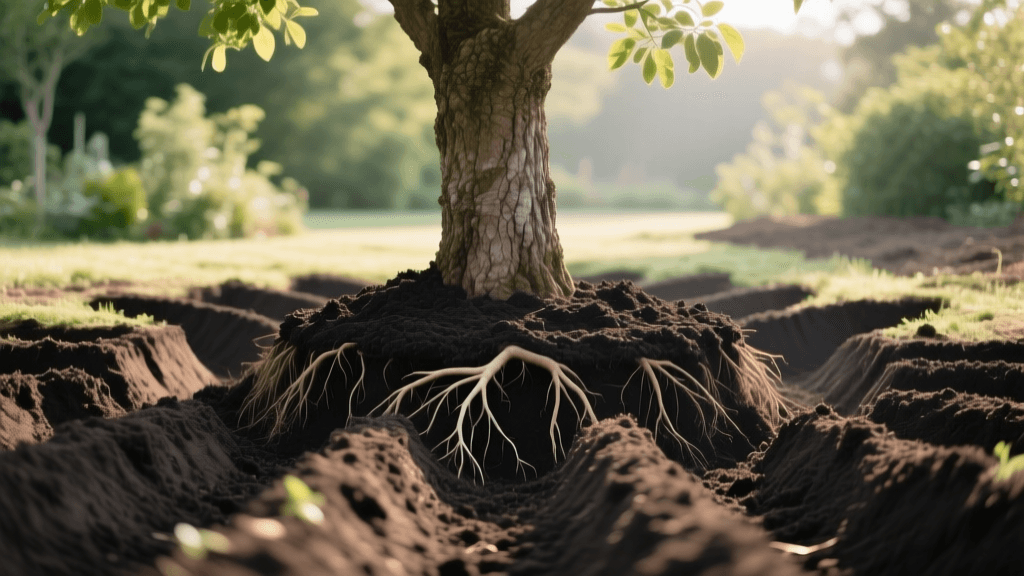
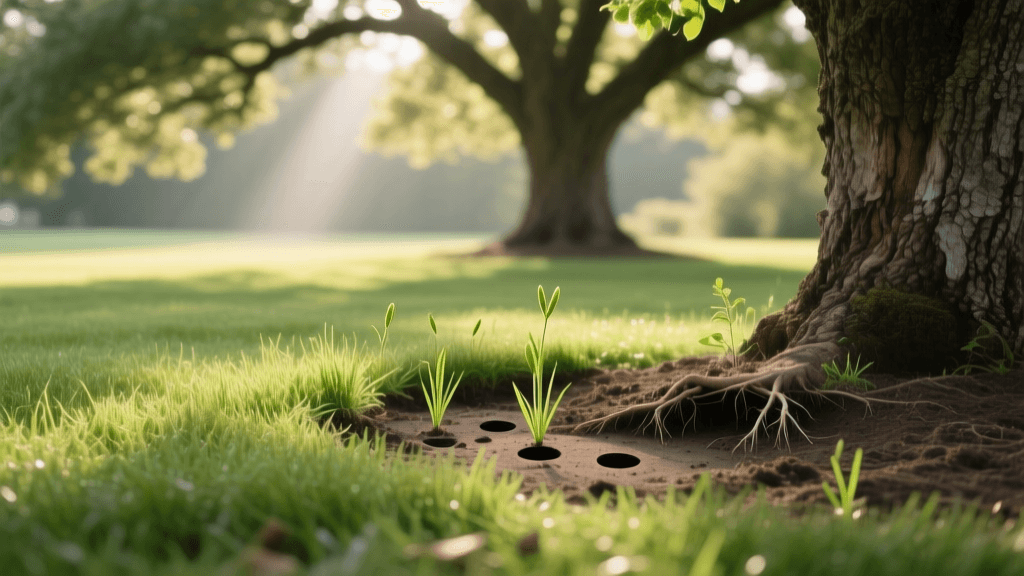
The transformation is not limited to the canopy; the root zone must also be addressed. Severe storms often cause soil compaction from heavy rain and debris impact. To aid recovery, a 3-inch layer of organic arborist wood chips is applied over the critical root zone. It is vital to keep the mulch at least 6 inches away from the trunk flare to prevent vole damage and root rot. This mulch layer regulates soil temperature, retains moisture, and slowly breaks down to feed the soil microbiome, giving the stressed oak the energy reserves it needs to push new growth in the spring.
The "After" State: A Thriving, Safe Canopy
Fast forward 24 months, and the "after" transformation is nothing short of remarkable. The jagged, traumatic wounds have successfully callused over, sealing the heartwood from pathogens. The subordinated lateral branch has thickened, assumed the role of the central leader, and restored the tree's majestic, balanced profile. The dynamic cabling system is virtually invisible from the ground but provides critical, flexible support during high winds. The tree remains a vital, shading asset to the property, actively sequestering carbon and cooling the home. As noted by the University of Minnesota Extension, proper pruning cuts made at the branch collar allow trees to effectively seal wounds and maintain structural integrity over decades, proving that a damaged tree is not necessarily a dead tree.
Before & After Transformation Comparison
| Feature | Before (Storm Damaged) | After (Crown Restored) |
|---|---|---|
| Risk Level | High (Imminent failure hazard) | Low (Structurally sound and monitored) |
| Canopy Aesthetics | Jagged, asymmetrical, torn | Natural, balanced, pyramidal |
| Financial Cost | $3,500+ (Removal & Stump Grinding) | $1,200 (Restoration Pruning & Cabling) |
| Longevity | 0-2 years (Rapid decline & death) | 20+ years (Continued vigorous growth) |
| Property Value Impact | Negative (Hazard, removal cost burden) | Positive (Mature shade asset preserved) |
What Not To Do: The Topping Trap
When assessing the "before" state, many homeowners are approached by unlicensed "tree trimmers" who suggest tree topping or applying thick layers of black tar wound sealant. Topping a storm-damaged oak is a catastrophic mistake. It forces the rapid, panic-induced growth of weakly attached epicormic shoots (water sprouts). These shoots are anchored only in the outer layers of sapwood and are highly prone to breaking in the next storm, creating an even more dangerous hazard than the original damage. Furthermore, wound sealants interfere with the tree's natural CODIT process, trapping fungal spores inside the exposed wood and guaranteeing internal decay.
Final Thoughts on Tree Rehabilitation
The before and after transformation of a storm-damaged oak tree is a testament to the resilience of nature when guided by proper arboricultural science. By opting for crown restoration over immediate removal, homeowners can preserve the historical and ecological value of their mature trees. The key lies in rapid hazard mitigation, scientifically timed dormant pruning, dynamic structural support, and a deep respect for the tree's natural healing mechanisms. The next time a storm leaves your landscape looking battered, remember that with the right strategy, the "after" picture can be even more beautiful than the "before."