Tree Care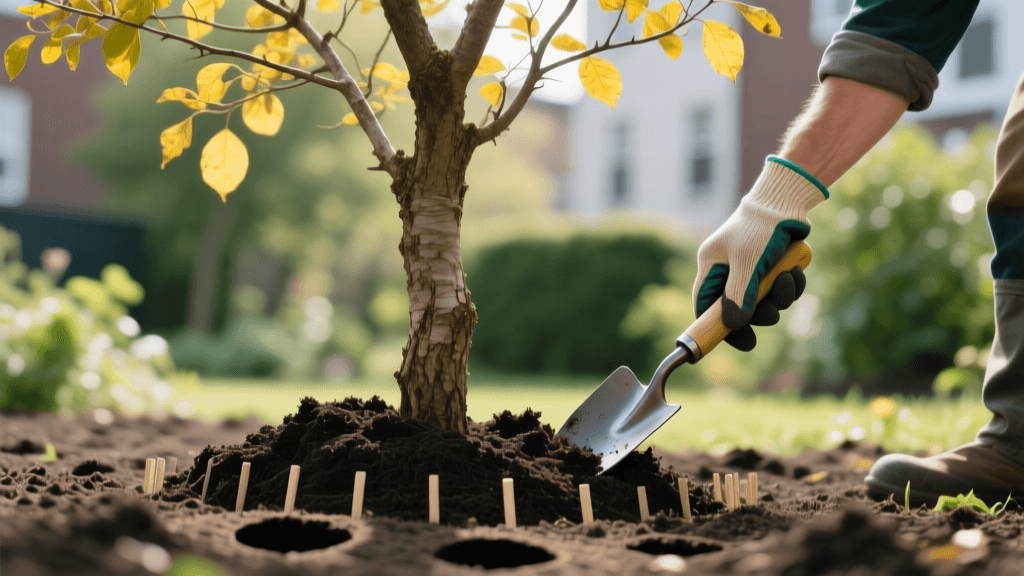
Revitalize Declining Trees Using Compost And Soil Amendments
The Hidden Crisis: Soil Compaction and Nutrient Depletion
When a mature tree in a suburban landscape begins to show signs of decline—such as undersized leaves, premature fall coloration, or dieback in the upper canopy—the culprit is rarely a sudden pest infestation. More often than not, the issue lies beneath the surface. According to the USDA Natural Resources Conservation Service, healthy soil is a living ecosystem that provides structure, water retention, and nutrients to plant roots. In residential yards, however, years of foot traffic, lawn mowing, and construction debris severely compact the soil, crushing the macropores that tree roots need for oxygen and water infiltration.
Furthermore, the natural cycle of organic matter decomposition is interrupted in manicured landscapes. In a forest, falling leaves and decaying wood constantly replenish the soil with humus and feed beneficial mycorrhizal fungi. In a yard, these materials are raked away, leaving the tree's Critical Root Zone (CRZ) starved of organic matter. Reintroducing high-quality compost and targeted soil amendments is the most effective, scientifically backed method to reverse this decline and restore vigorous growth.
The Science of Compost in the Tree Root Zone
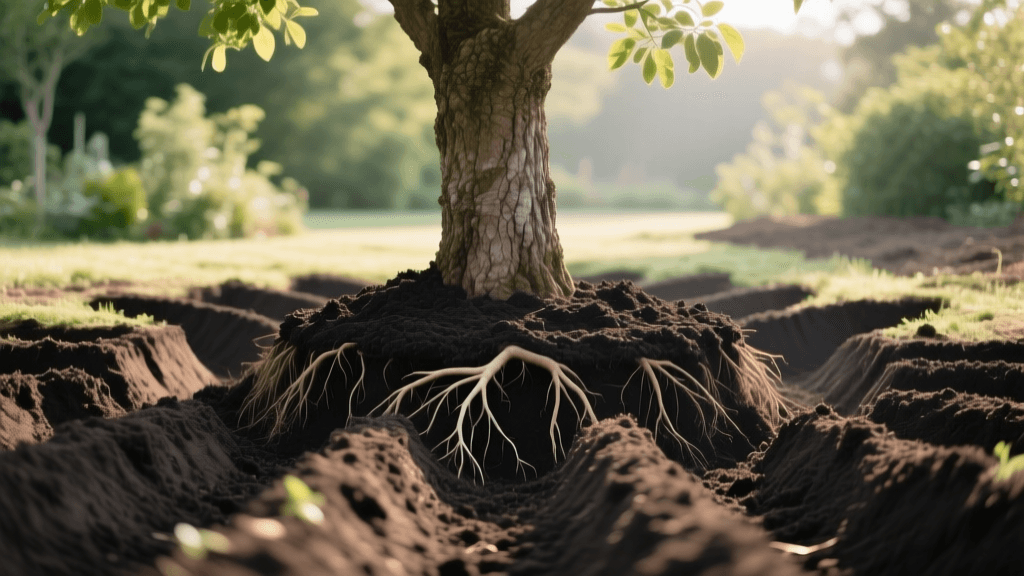
Compost is not merely a fertilizer; it is a soil conditioner. When applied to the root zone of a declining tree, compost acts as a biological catalyst. It introduces billions of beneficial microorganisms that help break up compacted clay particles and bind sandy soils together. This improves soil structure, allowing water to penetrate deeper and encouraging fine, fibrous feeder roots to expand.
Additionally, compost provides a slow, steady release of essential macro and micronutrients. Unlike synthetic fertilizers, which can cause rapid, weak flushes of growth that attract pests, compost feeds the soil food web. As earthworms and soil arthropods consume the compost, they create microscopic tunnels that further alleviate compaction and distribute nutrients directly to the root hairs.
Step-by-Step Guide: Compost Top-Dressing for Trees
Top-dressing is the simplest way to introduce organic matter into the tree's root zone. Follow these precise steps to ensure maximum benefit without risking trunk rot:
1. Define the Application Area
Identify the tree's dripline (the outer edge of the canopy). The goal is to treat the area from just outside the trunk to the dripline, and ideally extending a few feet beyond it, as tree roots often spread well past the canopy edge.
2. Clear the Base and Remove Competing Vegetation
Remove any grass, weeds, or excessive, piled-up mulch from the application area. Grass roots are aggressive and will intercept the nutrients and moisture meant for your tree. Crucially, expose the root flare at the base of the trunk. As noted by experts at The Morton Arboretum, keeping organic matter and mulch away from the direct base of the trunk prevents bark decay and discourages rodent damage.
3. Apply the Compost
Spread a 1 to 2-inch layer of high-quality, screened compost over the soil surface. Start the application at least 6 inches away from the trunk flare. Use a stiff leaf rake to gently work the compost into the top half-inch of the existing soil, being careful not to sever major structural roots.
4. Water Deeply
Immediately after application, water the area deeply using a soaker hose or a slow-running sprinkler. Apply at least 1 inch of water to help the compost settle and to activate the microbial life, washing the soluble nutrients down into the root zone.
Advanced Intervention: Vertical Mulching with Compost
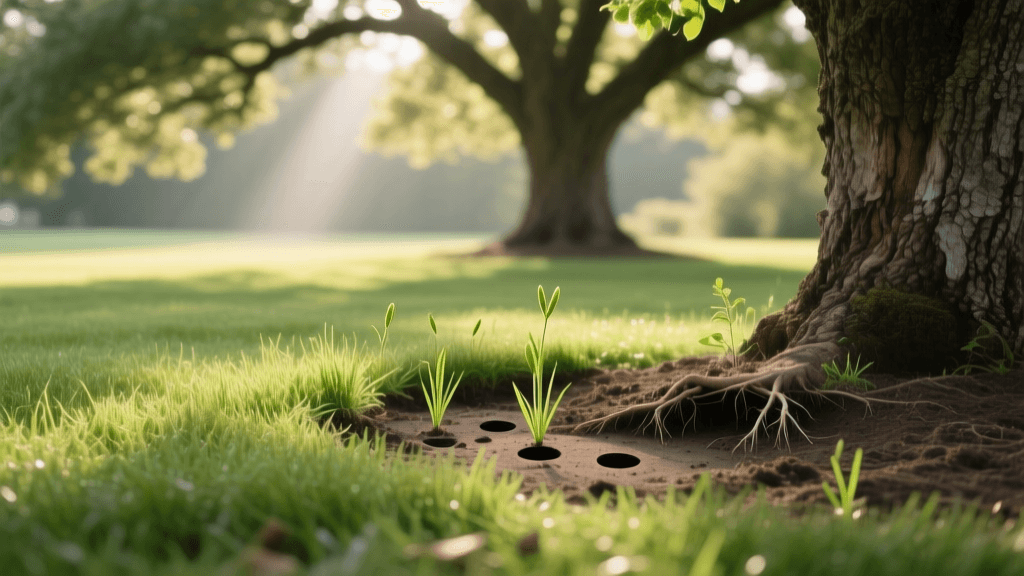
For severely compacted soils where top-dressing alone cannot penetrate, vertical mulching is a highly effective arboricultural technique. This process involves drilling holes into the soil within the CRZ and filling them with a porous, nutrient-rich mixture. When dealing with heavy clay soils, the physical act of removing soil cores and replacing them with organic matter is often the only way to break through the hardpan layer that suffocates deep roots.
Tools and Materials Needed
- A gas-powered or heavy-duty electric auger with a 2-inch to 3-inch wide drill bit.
- High-quality compost mixed with coarse materials like pine bark fines or horticultural biochar (to prevent the holes from collapsing and to maintain long-term aeration).
- Marking flags to ensure an even grid pattern.
The Vertical Mulching Process
Mark out a grid pattern starting 3 feet away from the trunk and extending to the dripline. Space your drill points approximately 3 to 4 feet apart. Drill holes to a depth of 12 to 18 inches. This depth targets the primary zone where fine feeder roots are actively seeking oxygen and nutrients.
Fill each hole with your compost-biochar blend, leaving the top 2 inches empty to cover with a standard organic mulch layer. The biochar acts as a permanent scaffold, ensuring that the aeration benefits of the vertical mulch holes do not disappear after a single season of heavy rain. According to research highlighted by the University of Minnesota Extension, combining deep soil aeration with organic amendments significantly improves root vitality in urban trees suffering from construction-related compaction. The holes act as vertical reservoirs for water and oxygen, drawing roots downward and making the tree more drought-resistant.
Choosing the Right Compost and Soil Amendments
Not all compost is created equal. The nutrient profile and biological activity of the compost you choose will dictate the success of your soil remediation efforts. Below is a comparison chart to help you select the right amendment for your specific tree care needs.
| Compost / Amendment Type | Nutrient Profile & Characteristics | Best Use Case for Trees | Estimated Cost (Per Cubic Yard) |
|---|---|---|---|
| Yard Waste Compost | Balanced N-P-K, high in diverse microbial life, excellent soil structure. | General top-dressing for established shade trees and ornamentals. | $25 - $40 |
| Manure-Based Compost | Higher nitrogen content, rich in organic matter, must be fully aged. | Fast-growing species or trees showing severe nitrogen deficiency (yellowing leaves). | $35 - $55 |
| Leaf Mold | Low nutrient content, exceptional water retention, highly fungal-dominant. | Forest understory trees (e.g., Dogwoods, Maples) that prefer fungal soil webs. | $30 - $45 |
| Horticultural Biochar | Not a nutrient source itself; acts as a permanent porous sponge for nutrients and water. | Mixing into vertical mulch holes to prevent soil collapse and retain compost tea. | $150 - $250 (Sold by the bag) |
Supplemental Soil Amendments
To supercharge your compost application, consider incorporating specific biological amendments. Adding a mycorrhizal fungi inoculant (such as MycoGrow or RootShield) directly to the compost before application helps establish the symbiotic relationship between the fungi and the tree roots. These fungi extend the root system's reach by up to 100 times, vastly improving phosphorus and water uptake. Additionally, a slow-release, organic fertilizer like Espoma Tree-tone (N-P-K ratio of 6-3-2) can be lightly broadcasted over the compost layer in early spring to provide a baseline of essential minerals while the compost biology breaks down.
Compost tea is another fantastic liquid amendment. By brewing aerated compost tea using a 5-gallon bucket, an air pump, and high-quality vermicompost, you can drench the root zone with a concentrated dose of soluble nutrients and beneficial bacteria. Apply the tea immediately after top-dressing to inoculate the newly applied organic matter and accelerate the integration process with the native soil.
Timing, Costs, and Long-Term Maintenance
Timing your soil remediation is critical for maximizing root uptake and minimizing stress. The optimal windows for compost application and vertical mulching are early fall (after the summer heat breaks but before the ground freezes) and early spring (just as the soil thaws and before the canopy fully leafs out). During these periods, trees are actively investing energy into root growth rather than canopy expansion.
From a cost perspective, DIY top-dressing is highly economical. A standard mature tree with a 30-foot canopy requires roughly 2 to 3 cubic yards of compost for a 1-inch top-dressing, costing between $50 and $120 in materials. Renting an auger for vertical mulching will add approximately $75 to $100 to your project cost for a weekend. Hiring a certified arborist to perform radial trenching or air-spade aeration with compost backfilling typically ranges from $500 to $1,500 per tree, depending on the size of the root zone and local labor rates.
For long-term maintenance, commit to an annual top-dressing of 1 inch of compost every fall. Over a period of three to five years, this consistent application will fundamentally transform the soil structure, turning compacted, lifeless dirt into a thriving, sponge-like ecosystem. Remember that soil remediation is a marathon, not a sprint. While you may see improved leaf color and size in the first growing season, the true structural benefits of compost integration take time to manifest as the soil food web re-establishes itself. By prioritizing soil health and composting, you are not just feeding the tree; you are rebuilding the foundation it relies on to withstand droughts, storms, and pest pressures for decades to come.