
Landscaping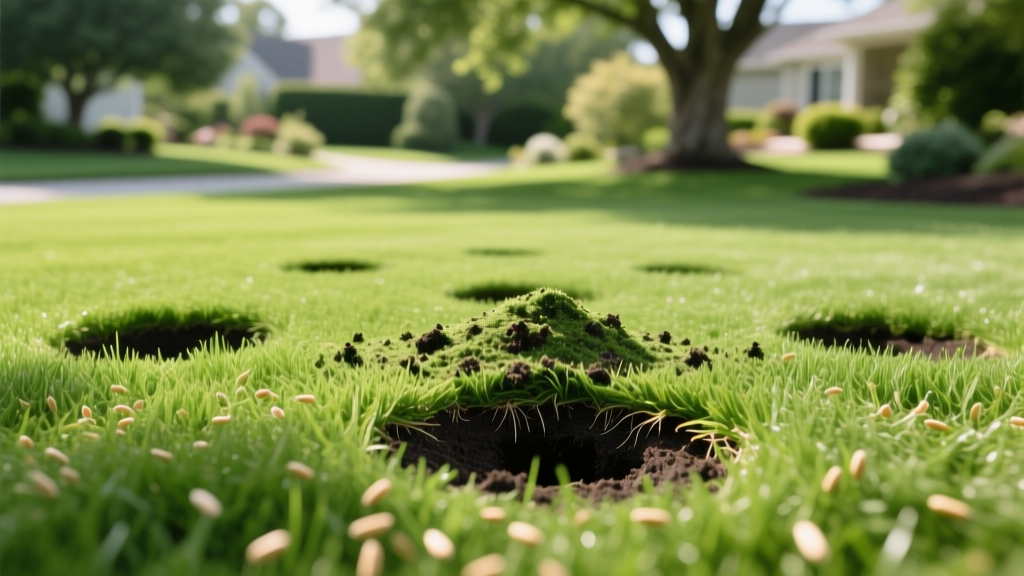
Revive Compacted Lawns: Aeration and Overseeding Guide
James MillerPublished
Introduction to Landscape Recovery
When designing or maintaining a comprehensive landscape, the lawn serves as the foundational canvas that ties together garden beds, hardscaping, and outdoor living spaces. However, heavy foot traffic, construction equipment, and natural weathering can lead to severe soil compaction. Compacted soil suffocates turf roots, prevents water infiltration, and creates an environment where weeds thrive over desirable grasses. Lawn renovation and recovery are critical landscaping practices that restore the health, aesthetics, and functionality of your outdoor space. This guide details the step-by-step process of reviving a damaged lawn through core aeration, strategic topdressing, and precision overseeding.
Assessing Lawn Damage and Soil Compaction
Before investing time and money into landscaping recovery, you must accurately diagnose the underlying issues. Soil compaction occurs when soil particles are pressed together, reducing the pore space necessary for air, water, and root growth. Clay-heavy soils are particularly susceptible, but even sandy loams can compact under heavy loads.
The Screwdriver Test
To test for compaction, take a standard six-inch flathead screwdriver and attempt to push it into the soil when the lawn is moderately moist. If you meet significant resistance before reaching the three-inch mark, your soil is severely compacted. Other visual indicators include:
- Water Pooling: Rainwater or irrigation runs off the surface rather than absorbing into the ground.
- Thinning Turf: Grass struggles to establish deep roots, leading to pale, sparse growth.
- Thatch Buildup: A spongy layer of dead organic matter exceeding half an inch thick, which blocks moisture and nutrients.
According to the Clemson University Home & Garden Information Center, alleviating this compaction is the mandatory first step in any successful lawn renovation project, as fertilizers and seeds cannot perform in impenetrable soil.
The Core Aeration Process
Aeration is the mechanical process of removing small plugs of soil from the lawn to relieve compaction and improve gas exchange. While spike aerators simply poke holes (which can actually increase compaction in the surrounding soil), core aerators extract actual plugs of earth, typically 2 to 3 inches long and 0.5 to 0.75 inches in diameter.
Timing and Equipment
Timing is everything in landscaping recovery. Cool-season grasses (like Tall Fescue and Kentucky Bluegrass) should be aerated in early fall, aligning with their peak growth cycle. Warm-season grasses (like Bermuda and Zoysia) recover best when aerated in late spring to early summer. Renting a walk-behind core aerator typically costs between $80 and $120 per day. For large properties, hiring a professional landscaping crew may cost $15 to $25 per 1,000 square feet but saves significant physical labor.
Execution Best Practices
Before aerating, always call your local utility locating service to mark underground lines. Flag all shallow sprinkler heads and valve boxes to prevent catastrophic damage to your irrigation system. Water the lawn deeply 24 hours prior to aeration to soften the soil, allowing the machine's hollow tines to penetrate deeply. Make two passes over the lawn: one in a north-south direction and a second in an east-west direction, ensuring a dense pattern of extraction holes spaced roughly 3 inches apart.
Topdressing and Soil Amendment
Once the cores are pulled, the lawn is primed for topdressing. Topdressing involves spreading a thin layer of organic or inorganic material over the turf to fill the aeration holes, level minor surface irregularities, and introduce beneficial microbes to the soil profile.
Selecting the Right Material
The choice of topdressing material depends on your native soil composition:
- For Heavy Clay Soils: Use a mix of screened compost and coarse sand. The organic matter improves structure, while the sand prevents the clay from binding back together.
- For Sandy Soils: Use pure, finely screened organic compost to increase water and nutrient retention.
Apply the topdressing at a rate of 1/4 to 1/2 inch thick. Use a landscaping rake or a specialized topdressing spreader to drag the material across the lawn, ensuring it falls deep into the aeration holes. This direct contact with the root zone accelerates the breakdown of thatch and improves the overall soil ecosystem.
Overseeding for Dense Turf Recovery
Overseeding is the process of planting new grass seed directly into existing turf without tearing up the soil entirely. It is the most effective way to introduce modern, disease-resistant, and drought-tolerant grass cultivars into an aging landscape. The University of Minnesota Extension emphasizes that overseeding, when combined with aeration, dramatically increases seed-to-soil contact, which is the single most critical factor for germination.
Seed Selection and Application
Choose a premium seed mix suited to your microclimate and sun exposure. Avoid cheap contractor-grade mixes that contain high percentages of annual ryegrass or weed seeds. Look for certified seed with a germination rate of 85% or higher and zero weed seed content. For cool-season lawns, a blend of Turf-Type Tall Fescue and a touch of Kentucky Bluegrass offers excellent wear tolerance and self-repairing capabilities.
Use a broadcast spreader to apply the seed at the recommended rate. Immediately after seeding, apply a high-quality starter fertilizer. Starter fertilizers are rich in phosphorus (the middle number in the N-P-K ratio, such as 18-24-12), which is essential for rapid root development in seedlings.
Renovation Data: Grass Types and Recovery Metrics
| Grass Type | Best Aeration Time | Overseeding Rate (per 1,000 sq ft) | Germination Time |
|---|---|---|---|
| Tall Fescue | Early Fall (Late Aug - Sept) | 5 - 6 lbs | 7 - 14 days |
| Kentucky Bluegrass | Early Fall | 2 - 3 lbs | 14 - 28 days |
| Perennial Ryegrass | Early Fall | 4 - 5 lbs | 5 - 10 days |
| Bermudagrass | Late Spring (May - June) | 1 - 2 lbs (Hulled) | 10 - 21 days |
| Zoysiagrass | Late Spring | 2 - 3 lbs | 14 - 21 days |
Post-Renovation Watering and Aftercare
The success of your landscaping recovery hinges entirely on the post-renovation watering schedule. New grass seed must never be allowed to dry out during the germination phase.
- Weeks 1-2: Water the lawn lightly 2 to 3 times per day for 5 to 10 minutes each session. The goal is to keep the top inch of soil consistently moist without creating puddles that will wash the seed away.
- Weeks 3-4: As seedlings emerge and establish, reduce watering frequency to once daily but increase the duration to 20-30 minutes to encourage deeper root growth.
- Week 5 and Beyond: Transition to a standard deep-and-infrequent watering schedule, aiming for 1 to 1.5 inches of water per week, including rainfall.
Delay your first mowing until the new grass reaches about 3.5 to 4 inches in height. Ensure your mower blades are freshly sharpened; dull blades will tear tender seedlings out of the ground by their fragile roots. Leave the grass clippings on the lawn to act as a natural mulch and return nitrogen to the soil.
Integrating the Recovered Lawn with Landscape Beds
A renovated lawn looks its best when framed by crisp, intentional landscaping borders. As the turf thickens, it will naturally attempt to creep into adjacent garden beds and hardscaping. To maintain a professional landscape design, install physical edging or cut deep trench edges.
A "spade-cut" edge involves using a flat landscaping spade to cut a 6-inch deep, V-shaped trench along the boundary of the lawn and the garden bed. This not only prevents aggressive grass rhizomes from invading your mulch and plantings but also creates a visual shadow line that dramatically enhances curb appeal. Alternatively, install steel or heavy-duty plastic landscape edging secured with steel stakes. Top the adjacent garden beds with 2 to 3 inches of premium hardwood mulch, ensuring the mulch does not touch the base of your shrubs or tree trunks to prevent rot. By synchronizing your lawn recovery with bed maintenance, you create a cohesive, vibrant outdoor environment that adds significant value to your property.

