Tree Care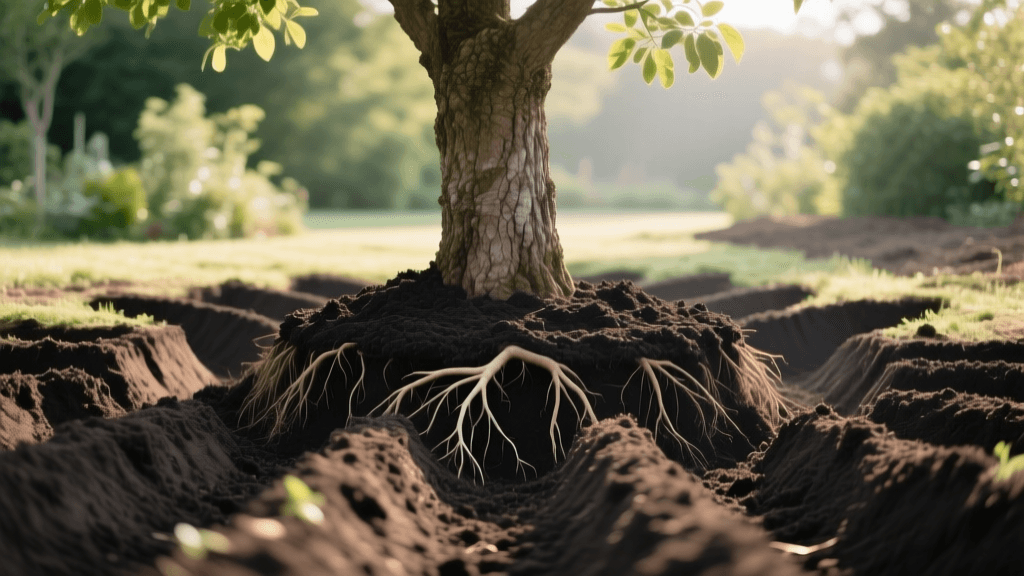
Revive Compacted Tree Soil With Compost and Radial Trenching
The Hidden Threat: Soil Compaction and Tree Health
When evaluating tree care, homeowners and landscapers often focus on visible issues like canopy dieback, pest infestations, or improper pruning. However, the most critical factor in a tree's long-term vitality lies hidden beneath the surface. In urban and suburban landscapes, soil compaction is the silent killer of mature trees. According to The Morton Arboretum, compacted soil lacks the macropores necessary for oxygen and water to reach the fine, absorbing roots of a tree. When soil particles are pressed tightly together by foot traffic, construction equipment, or heavy mowers, the soil bulk density increases, effectively suffocating the root system.
Traditional surface applications of fertilizer or water cannot penetrate heavily compacted clay or urban fill soils. To truly restore tree health, we must address the soil structure and biology directly. This is where the combination of high-quality compost and a technique known as radial trenching becomes a game-changer for arborists and dedicated gardeners alike.
The Science of Compost in Urban Soils
Compost is not merely a fertilizer; it is a profound soil amendment that alters both the physical structure and the biological activity of the earth. When incorporated into compacted soils, compost introduces organic matter that binds soil particles into aggregates. This aggregation creates vital macropores, improving drainage, aeration, and root penetration.
Furthermore, compost introduces a thriving ecosystem of beneficial microorganisms, including mycorrhizal fungi. These fungi form symbiotic relationships with tree roots, extending their reach and vastly improving their ability to uptake water and essential nutrients like phosphorus. To ensure you are using a product that meets rigorous biological and chemical standards, always look for compost that carries the Seal of Testing Assurance (STA) from the US Composting Council. STA-certified compost guarantees that the material has reached proper temperatures to eliminate pathogens and weed seeds, and that it possesses a stable carbon-to-nitrogen (C:N) ratio, typically between 15:1 and 25:1, which prevents nitrogen robbery from the surrounding soil.
Radial Trenching: A Step-by-Step Composting Technique
Simply top-dressing compacted soil with compost will yield minimal results, as the organic matter will not reach the active root zone. Radial trenching (sometimes called vertical mulching) is a proven arboricultural technique that involves digging spoke-like trenches radiating outward from the tree trunk and filling them with a compost-rich soil mix. This creates permanent highways for air, water, and roots to expand.
Step 1: Timing and Safety Assessment
The optimal time for radial trenching is during the tree's dormant season or periods of mild root growth—specifically late fall after leaf drop or early spring before bud break. This minimizes stress on the canopy while allowing roots to immediately colonize the new compost trenches. Before any digging begins, you must call your local utility notification center (such as 811 in the United States) to have underground gas, water, and electrical lines marked.
Step 2: Mapping the Critical Root Zone
Identify the tree's dripline, which is the outer edge of the canopy where water naturally drips to the ground. The critical root zone (CRZ) generally extends from just outside the trunk flare to slightly beyond the dripline. Your radial trenches should begin about 3 to 4 feet away from the base of the trunk to avoid severing major structural anchor roots, and extend outward to or slightly past the dripline.
Step 3: Excavating the Radial Trenches
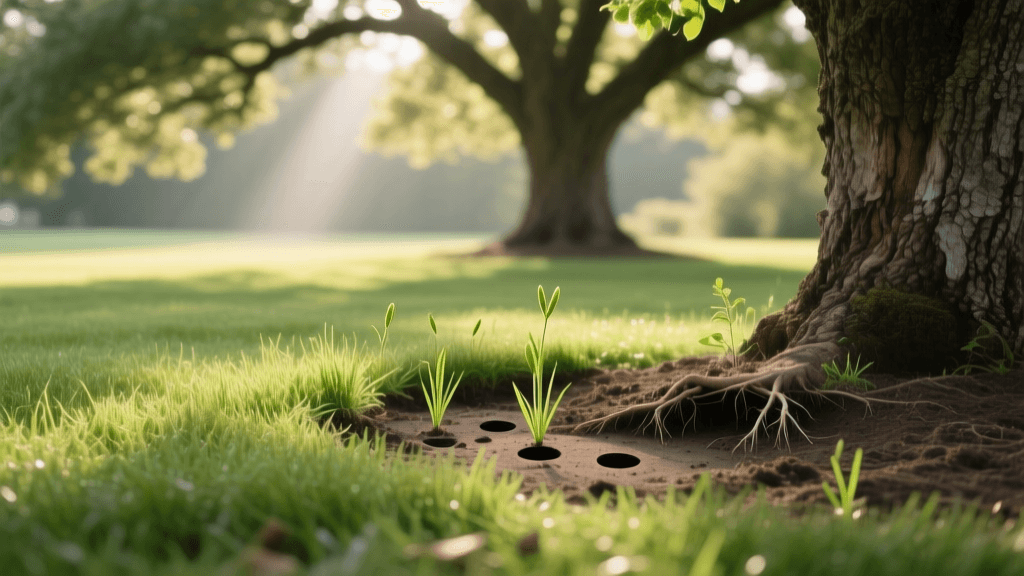
Using a narrow trenching shovel, a hand-held soil auger, or a pneumatic AirSpade, excavate trenches that are 2 to 4 inches wide and 8 to 12 inches deep. Most of a tree's fine, absorbing roots reside in the top 12 inches of soil. Space the trenches 2 to 3 feet apart, radiating outward like the spokes of a bicycle wheel. For a mature tree, this may involve digging anywhere from 6 to 12 individual trenches.
Step 4: Selecting and Mixing the Right Compost
Do not fill the trenches with 100% pure compost, as this can create a 'sponge effect' that holds too much water and discourages roots from venturing into the surrounding native soil. Instead, create a backfill mix consisting of 50% STA-certified compost and 50% native soil (or a high-quality topsoil if the native soil is pure clay or construction debris). For an added biological boost, you can incorporate a granular mycorrhizal inoculant into this mix at the manufacturer's recommended rate, typically about 1 cup per cubic yard of soil mix.
Step 5: Backfilling and Mulching
Fill the trenches with your compost-soil mixture, tamping it down lightly to eliminate large air pockets but avoiding heavy compaction. Once the trenches are filled, apply a uniform layer of compost over the entire critical root zone at a depth of no more than 1/4 inch. Finally, cap the entire area with a 2 to 3-inch layer of coarse, organic wood chip mulch to retain moisture and regulate soil temperature.
Compost Application and Trenching Specifications
The scale of your radial trenching project depends heavily on the size of the tree. The following table provides actionable specifications based on the tree's Diameter at Breast Height (DBH), measured 4.5 feet above the ground.
| Tree DBH (Inches) | Trench Start Distance | Number of Trenches | Compost Volume Needed |
|---|---|---|---|
| 10 - 15 inches | 3 feet from trunk | 4 to 6 trenches | 0.5 - 1.0 cubic yards |
| 16 - 24 inches | 4 feet from trunk | 6 to 8 trenches | 1.0 - 1.5 cubic yards |
| 25+ inches | 5 feet from trunk | 8 to 12 trenches | 1.5 - 2.5 cubic yards |
Tools, Costs, and Professional Considerations
For the DIY gardener, a manual 2-inch hand auger and a narrow trenching shovel can be purchased for under $50. Renting a motorized earth auger from a local hardware store typically costs between $75 and $120 per day. High-quality, STA-certified compost generally retails for $30 to $50 per cubic yard when delivered in bulk. Therefore, a DIY radial trenching project for a medium-sized tree can be completed for under $200 in materials and tool rentals.
However, for large, historic, or highly valuable trees, it is strongly recommended to hire an ISA Certified Arborist. Professionals utilize an AirSpade, a specialized pneumatic tool that uses supersonic air to excavate soil without cutting or damaging delicate root bark. Professional AirSpade services, combined with premium compost backfilling and mycorrhizal inoculation, typically range from $400 to $1,200 depending on the tree's size and site accessibility.
Long-Term Soil Health Maintenance
Radial trenching is not a one-time fix; it is the foundation of a long-term soil health management plan. To maintain the biological activity introduced by the compost, you must practice proper mulching techniques. Always adhere to the '3-3-3 Rule' for mulching: apply a 3-inch layer of organic mulch, extend it out to a 3-foot radius (or further to the dripline), and keep it 3 inches away from the tree trunk to prevent bark rot and rodent damage. Never pile mulch against the trunk in a 'volcano' shape, as this traps moisture and invites pathogenic fungi.
Additionally, avoid the use of broadleaf herbicides and synthetic, salt-based fertilizers over the critical root zone, as these can decimate the microbial life you have worked to establish. By feeding the soil biology with annual light top-dressings of compost and maintaining a thick layer of organic mulch, you ensure that the tree's root system remains vigorous, resilient, and capable of supporting a lush, healthy canopy for decades to come.