Tree Care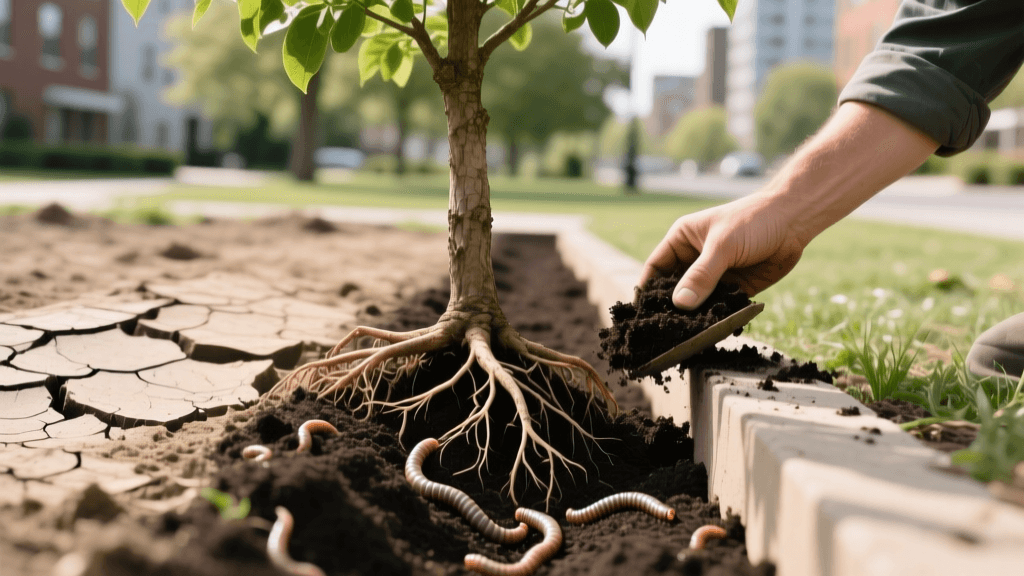
Reviving Compacted Tree Soils With Compost Applications
The Hidden Threat of Soil Compaction in Urban Landscapes
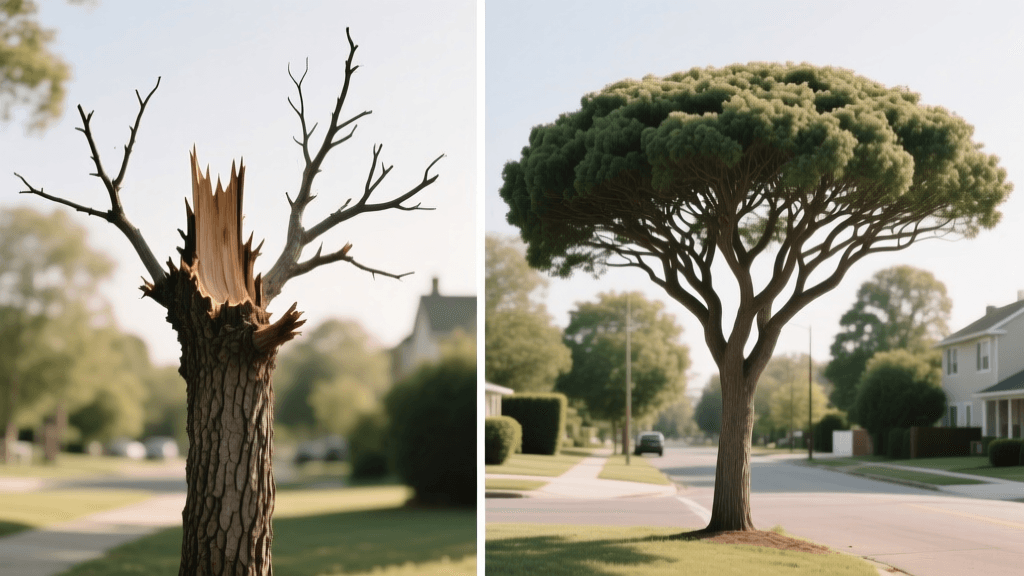
For many homeowners and landscape professionals, the decline of a majestic shade tree often begins long before the first yellowing leaf appears. The culprit is usually hiding beneath the surface: soil compaction. In urban and suburban environments, construction traffic, heavy machinery, routine foot traffic, and even the repetitive mowing patterns of heavy lawn equipment crush the delicate structure of the soil. According to tree health experts at The Morton Arboretum, soil compaction destroys the macropores—the essential microscopic air pockets that allow oxygen to reach the root system and water to drain effectively.
When soil bulk density increases and porosity decreases, tree roots suffocate. They are unable to expand, access vital nutrients, or support the symbiotic mycorrhizal fungi necessary for long-term health. Fortunately, the intersection of modern arboriculture and soil science has provided a highly effective, organic solution: strategic compost applications combined with mechanical aeration techniques.
Why Compost is the Ultimate Biological Antidote
Synthetic fertilizers might provide a temporary flush of nitrogen, but they do absolutely nothing to fix the physical structure of compacted soil. Compost, on the other hand, acts as a biological and physical amendment. The Cornell University Compost Resource highlights that mature compost introduces stable organic matter (humus) into the soil matrix. This humus acts like a sponge, binding tightly packed clay particles together into larger aggregates, effectively recreating the macropores that were lost to compaction.
Furthermore, compost introduces billions of beneficial microorganisms. These microbes produce glomalin, a sticky glycoprotein that glues soil particles together, maintaining soil structure and preventing future compaction. By integrating compost into the root zone, you are not just feeding the tree; you are rebuilding the soil ecosystem from the ground up.
Technique 1: Vertical Mulching (Radial Trenching)
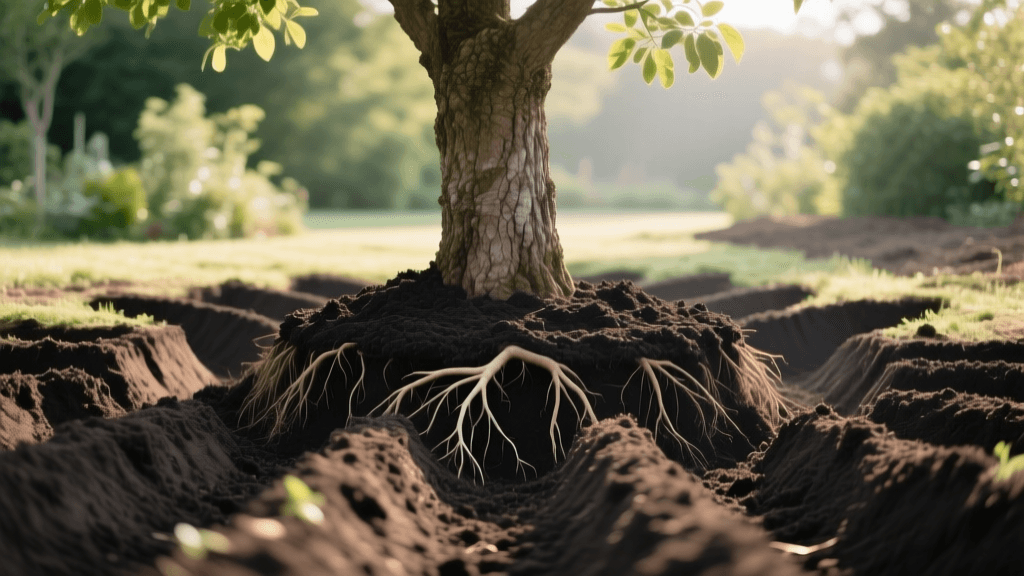
For severely compacted soils, simply spreading compost on the surface will not yield fast results because the dense soil prevents downward water and nutrient percolation. Vertical mulching bypasses this barrier by physically injecting compost directly into the root zone.
Step-by-Step Implementation
- Map the Root Zone: Identify the drip line of the tree (the outer edge of the canopy). The critical root zone extends from the trunk flare out to the drip line, and often beyond.
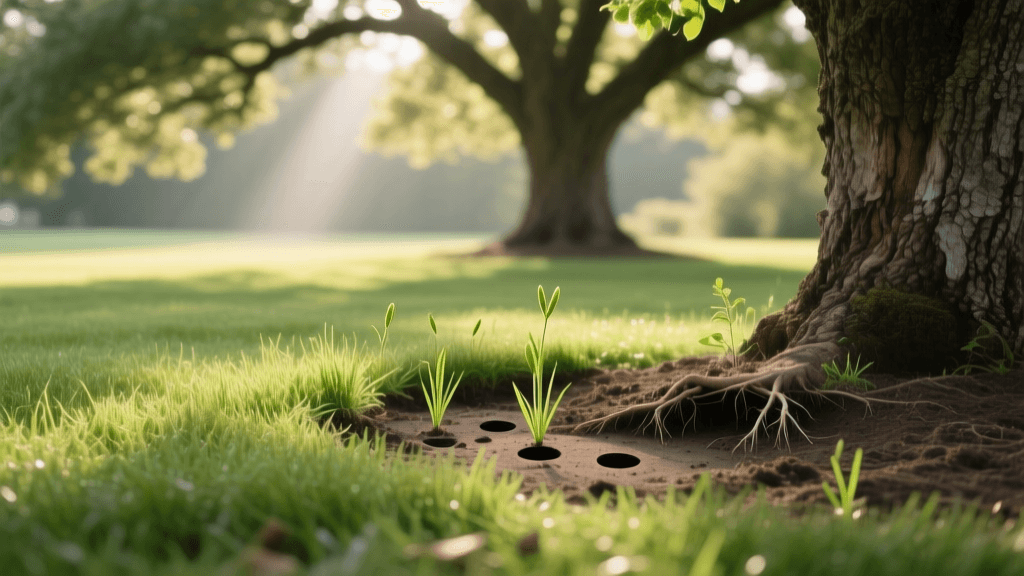
- Drill the Columns: Using a gas-powered 2-inch or 3-inch earth auger, drill holes 12 to 18 inches deep. Space these holes in a radial pattern, starting about 3 feet away from the trunk to avoid severing major structural roots, and stagger them outward toward the drip line.
- Mix the Amendment: Create a blend of 70% high-quality screened compost, 20% coarse biochar (to maintain permanent porosity), and 10% mycorrhizal inoculant.
- Backfill the Holes: Fill each augered hole with your compost blend. Do not pack it down tightly; allow it to remain loose to encourage lateral root growth into the columns.
This technique provides immediate oxygen to the deeper root profile and creates pathways for water infiltration. Roots will quickly colonize these nutrient-rich compost columns, effectively anchoring the tree and expanding its absorption capacity.
Technique 2: Compost Top-Dressing and the Donut Method
For trees suffering from mild compaction, or as an annual maintenance practice following vertical mulching, surface top-dressing is highly effective. However, improper application can lead to trunk rot and girdling roots.
Always employ the "Donut Method." Apply a 1/4-inch to 1/2-inch layer of finely screened compost over the entire root zone, starting 6 inches away from the trunk flare and extending out to the drip line. The trunk flare must remain completely exposed to the air. Never pile compost or mulch against the bark (a practice known as volcano mulching), as this traps moisture, invites pathogenic fungi, and encourages secondary roots to grow in circles around the trunk, eventually strangling the tree.
After applying the compost top-dressing, cover it with a 2-inch layer of coarse arborist wood chips. The compost feeds the soil biology, while the wood chips regulate soil temperature, retain moisture, and slowly break down to provide a continuous food source for the fungal network.
Soil Amendment Strategy Comparison
Choosing the right technique depends on the severity of the compaction, the age of the tree, and your budget. Below is a comparison chart to help you select the best approach for your landscape.
| Method | Best Application | Tools Required | Estimated Cost (DIY) | Time to See Results |
|---|---|---|---|---|
| Vertical Mulching | Severely compacted soils, declining mature trees, new transplants | Power auger, shovel, wheelbarrow | $50 - $90 (Compost + Auger rental) | 3 - 6 months |
| Surface Top-Dressing | Mild compaction, annual soil maintenance, lawn-to-bed conversions | Landscape rake, wheelbarrow | $25 - $45 (Bulk compost delivery) | 1 - 2 years |
| Air Spade Excavation | High-value heritage trees, severe grading issues, girdling root correction | Air spade, commercial air compressor | $350 - $700 (Professional arborist service) | 1 - 3 months |
Selecting the Right Compost for Tree Care
Not all compost is created equal. When sourcing compost for tree health, the origin and processing of the material are critical. According to soil health guidelines outlined by Penn State Extension, the carbon-to-nitrogen (C:N) ratio and the maturity of the compost dictate how it will interact with tree roots.
- Leaf Mold Compost: This is the gold standard for trees. Made primarily from decomposed deciduous leaves, it closely mimics the natural forest floor. It is slightly acidic to neutral, rich in fungal biomass, and less likely to burn delicate feeder roots.
- Manure-Based Compost: While high in nitrogen, manure composts can sometimes be too "hot" (high in soluble salts) for direct root contact if not fully aged. If using manure compost, ensure it has been cured for at least a year and mix it with native soil or biochar before application.
- OMRI Certification: Always look for compost that is certified by the Organic Materials Review Institute (OMRI). This ensures the product is free from persistent herbicides (like aminopyralid or clopyralid), which can survive the composting process and severely damage broadleaf trees and surrounding landscape plants.
The Role of Biochar as a Compost Amplifier
To maximize the longevity of your soil amendments, consider charging biochar with compost tea before application. Biochar is a highly porous form of charcoal created through pyrolysis. On its own, it is sterile, but its microscopic structure makes it the perfect permanent habitat for soil microbes. By soaking biochar in aerated compost tea for 48 hours before mixing it into your vertical mulch columns, you create a biological battery. The biochar holds onto the nutrients and microbes, preventing them from leaching away during heavy rains, and releasing them slowly to the tree roots over decades.
Long-Term Soil Health Maintenance
Reviving compacted soil is not a one-time event; it is the beginning of a long-term soil management strategy. Once you have opened up the soil profile with vertical mulching and inoculated it with high-quality compost, you must protect it. Eliminate heavy foot traffic over the critical root zone by installing physical barriers or decorative fencing. Transition away from synthetic, salt-based fertilizers, which can harm the delicate mycorrhizal networks you have worked so hard to establish.
By committing to an annual regimen of compost top-dressing and proper mulching, you will gradually lower the soil bulk density, increase the cation exchange capacity (CEC), and ensure your trees remain resilient against drought, pests, and environmental stressors for generations to come.