Lawn Care
Revive Your Drought-Damaged Lawn: Aeration and Overseeding Guide
Assessing the Damage: Is Your Lawn Dead or Dormant?
After a long, hot summer with minimal rainfall, many homeowners are left staring at a crispy, brown, and patchy yard. Before you panic and assume your turf is entirely dead, it is crucial to understand the difference between dormant and dead grass. Cool-season grasses like Kentucky Bluegrass and Tall Fescue have a natural survival mechanism: they will go dormant during extreme heat and drought to protect their crowns. To determine the true state of your lawn, perform the "tug test." Grab a handful of brown grass and pull gently. If it pulls up easily with zero root resistance and the roots are brittle, the grass is likely dead. However, if you feel resistance and the crown (the base of the grass blade near the soil) is still firm and white or pale green, your lawn is simply dormant and can be revived with proper lawn renovation techniques.
The Hidden Key to Recovery: Soil Testing and pH Adjustment
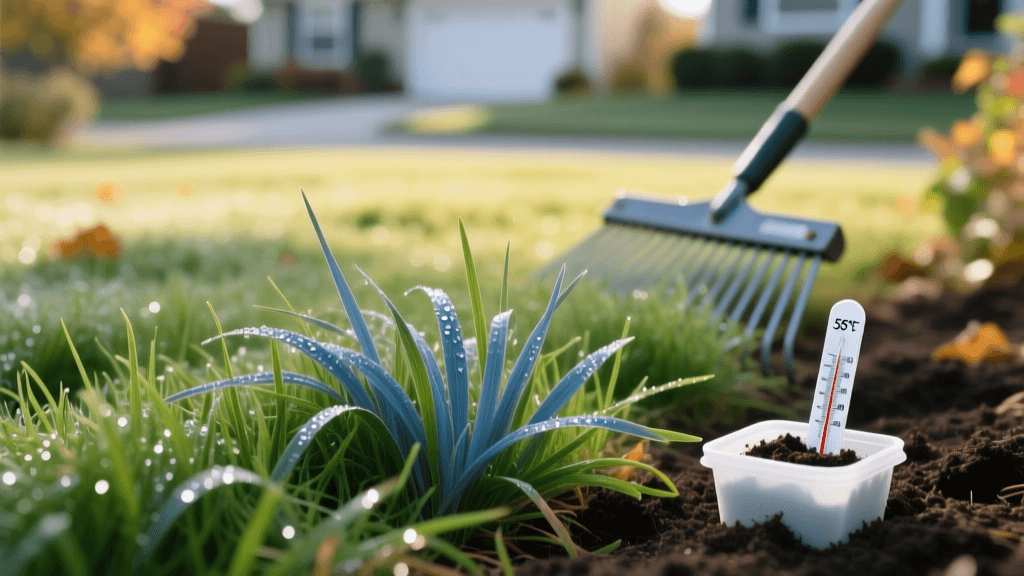
Successful lawn renovation begins beneath the surface. Drought-stressed lawns often suffer from compacted soil and nutrient lockout. Before buying seed or fertilizer, conduct a comprehensive soil test. You can purchase a mail-in soil test kit from your local university extension office or a reputable private lab. The ideal soil pH for most turfgrasses is between 6.0 and 7.0. If your soil is too acidic (below 6.0), you will need to apply pelletized lime. If it is too alkaline (above 7.5), elemental sulfur is required. Amending the soil pH ensures that the expensive starter fertilizers you apply later will actually be absorbed by the new root systems rather than washing away.
The 5-Step Lawn Renovation Process
Step 1: Mow Low and Remove Debris
To give new grass seed a fighting chance, you must eliminate competition from existing, struggling weeds and turf. Lower your mower deck to about 1.5 to 2 inches—significantly lower than your standard summer mowing height. This process, sometimes called "scalping," opens up the soil canopy to sunlight. Bag all the clippings and use a stiff thatch rake to remove dead organic matter. The goal is to expose as much bare dirt as possible to ensure maximum seed-to-soil contact.
Step 2: Core Aeration to Relieve Compaction
Drought conditions often harden the soil, making it nearly impossible for water and new roots to penetrate. Core aeration is the most effective way to combat this. A core aerator pulls 2-to-3-inch plugs of soil out of the ground, leaving them on the surface to break down and naturally topdress the lawn. This creates vital channels for oxygen, water, and nutrients. According to turfgrass experts at Penn State Extension, proper seed-to-soil contact achieved through aeration is the single most critical factor in successful overseeding and lawn recovery.
| Aeration Method | How It Works | Effectiveness for Renovation |
|---|---|---|
| Core Aeration | Removes 2-3 inch soil plugs from the lawn | High (Best for severe compaction and overseeding) |
| Spike Aeration | Pokes holes into the ground with solid tines | Low (Can actually increase soil compaction over time) |
| Liquid Aeration | Applies surfactants to loosen soil particles | Medium (Good for maintenance, but poor for heavy renovation) |
Step 3: Overseeding with Resilient Grass Varieties
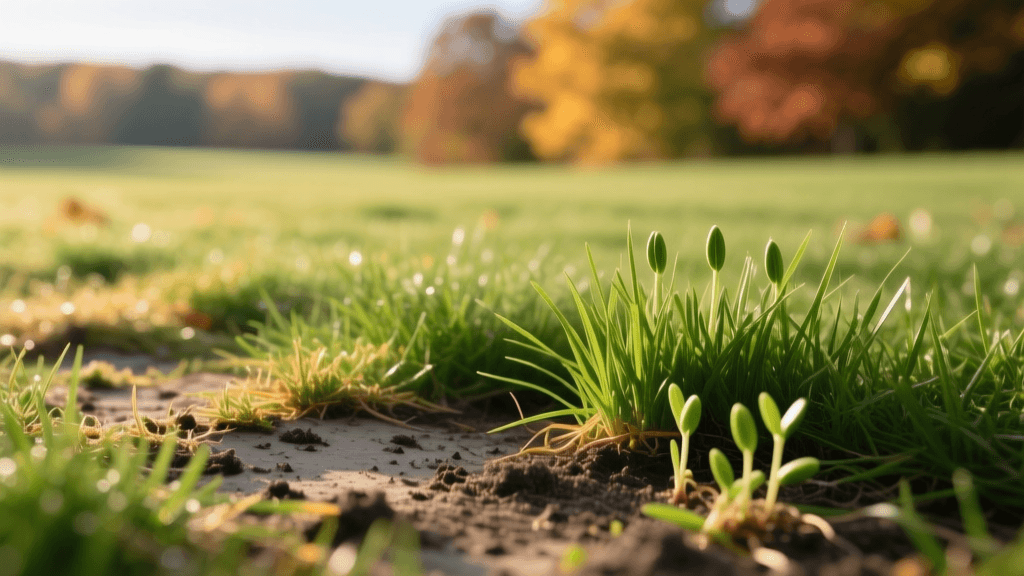
When recovering a drought-damaged lawn, do not simply replace it with the same vulnerable grass species. Upgrade to drought-tolerant varieties. For cool-season lawns, Turf-Type Tall Fescue (TTTF) is the gold standard. TTTF develops deep root systems that can reach up to 2 to 3 feet into the soil, allowing it to access moisture long after shallow-rooted grasses have turned brown. For overseeding an existing thin lawn, apply seed at a rate of 5 to 8 pounds per 1,000 square feet. Use a broadcast spreader for even coverage, and go over the lawn in two perpendicular directions to avoid striping.
Step 4: Targeted Fertilization and Topdressing
Newly planted grass seed requires a specific nutrient profile to establish roots quickly. Avoid high-nitrogen weed-and-feed products, which can inhibit seed germination. Instead, apply a high-phosphorus starter fertilizer (such as a 10-18-10 or 12-24-12 NPK ratio). Phosphorus is the primary driver of early root development. After seeding and fertilizing, consider a light topdressing of screened compost (about 1/8 to 1/4 inch thick). This compost layer acts as a moisture-retentive blanket, keeping the delicate seeds from drying out in the afternoon sun while providing a slow release of organic micronutrients.
Step 5: Strategic Irrigation for Seed Germination
Watering a newly renovated lawn requires a delicate balance. You must keep the top half-inch of soil consistently moist without drowning the seeds or causing them to wash away. This typically means watering lightly 2 to 3 times a day for 5 to 10 minutes per zone. As the seeds germinate and establish roots (usually within 10 to 14 days for fescue), gradually reduce the frequency of watering while increasing the duration. This encourages the roots to grow deeper into the soil profile in search of moisture, ultimately creating a more drought-resilient lawn. The Environmental Protection Agency (EPA) notes that landscape irrigation accounts for nearly one-third of all residential water use, making it vital to transition to deep, infrequent watering once the grass is established to conserve municipal water resources.
Timing Your Renovation: Cool-Season vs. Warm-Season Grasses
Timing is everything in lawn care. If you attempt a major renovation during the peak heat of summer, the stress will likely kill both the old and new grass. For cool-season grasses (Tall Fescue, Kentucky Bluegrass, Perennial Ryegrass), the absolute best time to renovate is early fall, roughly 45 days before your area's average first frost date. The soil is still warm enough to encourage rapid germination, but the air temperatures are cool enough to reduce heat stress and weed competition. Spring is the second-best option, though you will face heavy competition from crabgrass and summer weeds. For warm-season grasses (Bermuda, Zoysia, Centipede), schedule your renovation for late spring to early summer when the grass is actively growing and can quickly recover from the stress of aeration and dethatching.
Estimated Costs and Timeline for Lawn Recovery
Budgeting for a lawn renovation depends heavily on whether you choose the DIY route or hire a professional landscaping service. Below is a general cost breakdown for a standard 5,000-square-foot cool-season lawn.
| Renovation Task | DIY Cost (per 1,000 sq ft) | Professional Cost (per 1,000 sq ft) |
|---|---|---|
| Core Aeration (Rental vs. Service) | $15 - $25 | $45 - $75 |
| Overseeding (Premium TTTF Seed) | $12 - $20 | $25 - $40 |
| Starter Fertilizer Application | $5 - $10 | $10 - $15 |
| Compost Topdressing | $15 - $30 (Bulk delivery) | $50 - $80 |
A full DIY renovation will take a weekend of hard labor, while a professional crew can complete the aeration and seeding in a few hours. Expect to see initial germination within 7 to 14 days, but understand that full turf density and deep root establishment will take 6 to 8 weeks of consistent maintenance.
Conclusion
Reviving a drought-damaged lawn is not an overnight fix, but it is entirely possible with the right strategy. By accurately assessing the damage, relieving soil compaction through core aeration, upgrading to drought-tolerant seed varieties, and following a strict germination watering schedule, you can transform a brown, patchy yard into a lush, resilient landscape. Investing the time and effort into a proper fall or spring renovation will pay dividends for years to come, resulting in a lawn that can better withstand the environmental stresses of future summers.