Lawn Care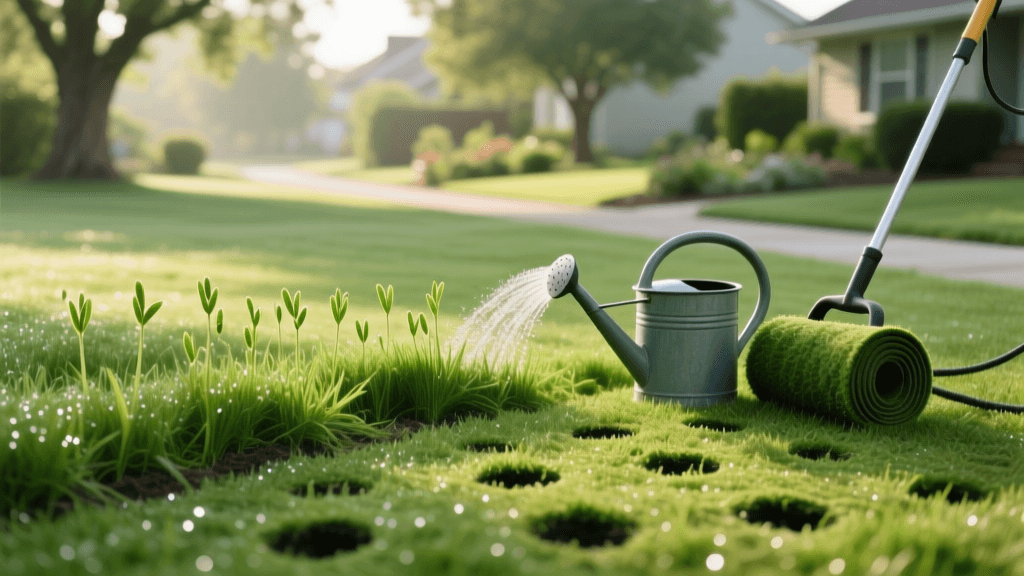
How to Revive a Drought-Damaged Lawn: Recovery Guide
Assessing the Damage: Is Your Lawn Dormant or Dead?
When extreme heat and prolonged lack of rainfall push your turf to the brink, the resulting brown, brittle landscape can be disheartening. Before you reach for the seed spreader or call a landscaping crew, it is crucial to determine whether your grass is merely dormant or completely dead. Cool-season grasses like Kentucky Bluegrass and Tall Fescue naturally enter a state of dormancy when soil temperatures exceed 85°F and moisture is scarce. This is a survival mechanism that allows the plant to conserve water and protect its crown.
To perform the 'tug test,' grab a handful of brown grass and pull gently. If the grass pulls out easily with little resistance, the roots have failed, and the grass is dead. If it holds firm to the soil, the root system is likely still alive, and the lawn is simply dormant. You can also inspect the crown of the plant at the soil line; a healthy, dormant crown will be firm and white or pale green, whereas a dead crown will be brown, mushy, or brittle. Understanding this distinction will dictate your entire recovery strategy, saving you time, money, and unnecessary labor.
Step 1: Soil Testing and Core Aeration
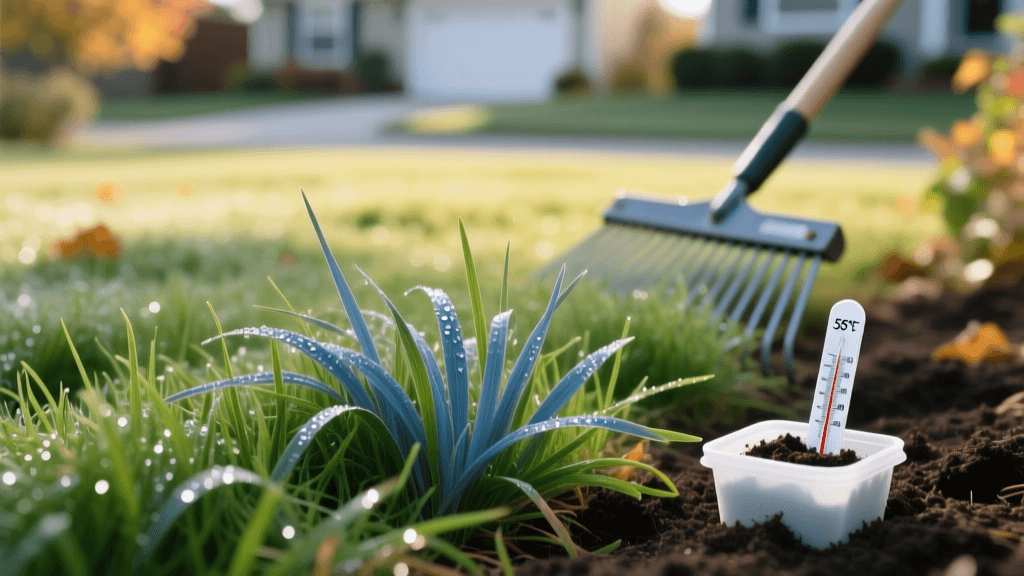
Drought conditions often lead to hydrophobic soil—a state where dry, compacted earth actively repels water. When the rains finally return or you turn on your irrigation system, the water pools on the surface or runs off into the street rather than penetrating the root zone. According to Penn State Extension, alleviating soil compaction is one of the most critical steps in any lawn renovation project.
Core aeration is the process of removing small plugs of soil and thatch from the lawn, typically 2 to 3 inches deep and spaced 2 to 4 inches apart. This process accomplishes three things:
- Breaks up hydrophobic layers: It allows water, oxygen, and nutrients to bypass the hardened surface crust.
- Reduces thatch buildup: Excessive thatch acts like a sponge on the surface, preventing moisture from reaching the soil.
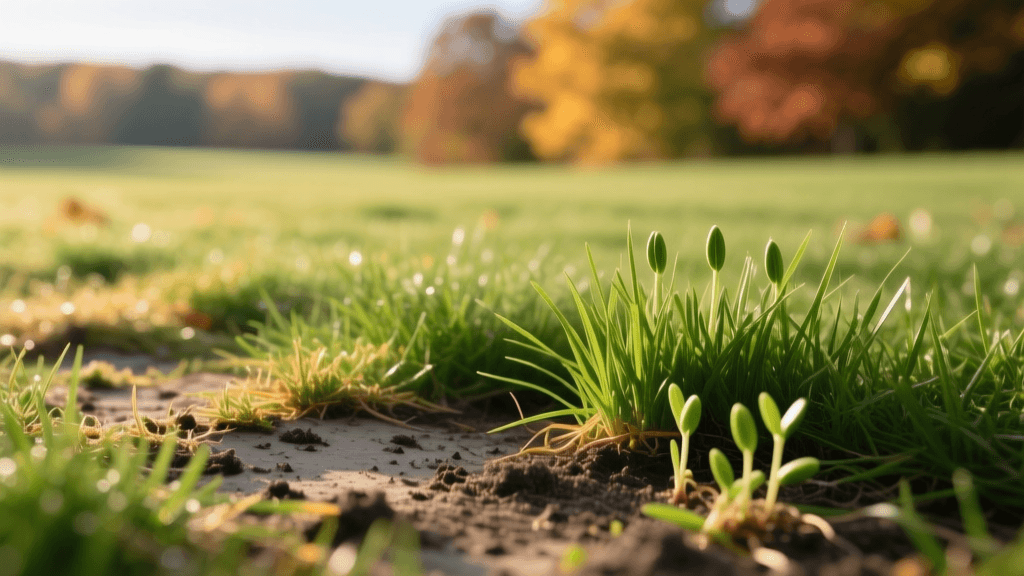
- Creates seed-to-soil contact: The holes left behind are perfect micro-environments for new grass seed to germinate and establish roots safely away from surface heat.
Pro Tip: Always aerate when the soil is slightly moist. If the ground is bone dry, water the lawn deeply 24 hours before aerating to ensure the machine tines can penetrate the soil effectively without damaging the equipment.
Step 2: Selecting Drought-Tolerant Grass Seed
If your lawn has suffered extensive death, or if you want to future-proof your turf against upcoming dry spells, overseeding with drought-tolerant cultivars is mandatory. The Turfgrass Water Conservation Alliance (TWCA) rigorously tests and certifies grass varieties that require significantly less water to maintain green coverage. When renovating, avoid generic 'contractor grade' seed mixes, which often contain cheap annual ryegrass or weedy fillers.
Drought-Tolerant Grass Comparison Chart
| Grass Type | Climate Zone | Drought Tolerance | Recovery Rate | Overseeding Rate |
|---|---|---|---|---|
| Tall Fescue (Turf-type) | Transition / Cool | High | Moderate | 6-8 lbs / 1,000 sq ft |
| Bermudagrass | Warm-Season | Very High | Fast | 1-2 lbs / 1,000 sq ft |
| Zoysiagrass | Warm / Transition | Very High | Slow | 1-2 lbs / 1,000 sq ft |
| Buffalograss | Warm / Arid | Extreme | Slow | 2-4 lbs / 1,000 sq ft |
| Kentucky Bluegrass | Cool-Season | Low-Moderate | Fast (Rhizomes) | 1-2 lbs / 1,000 sq ft |
Expert Insight: For cool-season lawns in the transition zone, turf-type Tall Fescue is widely considered the gold standard for drought recovery. Its deep root system can reach up to 2 to 3 feet into the soil profile, accessing moisture that shallow-rooted grasses simply cannot reach.
Step 3: Strategic Fertilization for Recovery
A starving lawn cannot recover from environmental stress. However, applying the wrong fertilizer during a drought recovery phase can burn the tender new shoots or force unsustainable top-growth at the expense of root development. For overseeded areas, a starter fertilizer is required. Starter fertilizers are uniquely formulated with higher levels of phosphorus (the middle number in the N-P-K ratio) to stimulate rapid root development and seedling establishment.
Look for a fertilizer with an N-P-K ratio similar to 10-18-10 or 16-20-10. Apply this at the time of seeding, following the exact application rates listed on the bag. For areas where the grass is merely dormant and not being overseeded, hold off on heavy nitrogen applications until the grass has fully greened up and the heat of the summer has broken. Applying high-nitrogen fertilizers to dormant, heat-stressed turf can lead to severe fertilizer burn and increase the lawn's susceptibility to fungal diseases like brown patch.
Step 4: The Recovery Watering Schedule
Watering a recovering lawn requires a delicate balance. The EPA WaterSense program emphasizes that efficient landscaping relies on deep, infrequent watering to encourage deep root growth. However, this rule changes drastically when you are trying to germinate new seed.
Phase 1: Germination (Days 1 to 21)
Newly planted seed must never be allowed to dry out. During the first three weeks, you must water the lawn lightly 2 to 3 times per day for about 5 to 10 minutes per zone. The goal is to keep the top half-inch of soil consistently moist without creating puddles that will wash the seed away or cause fungal rot. Early morning and late afternoon are the best times for this light watering.
Phase 2: Establishment (Days 22 to 60)
Once the new grass reaches about 1.5 inches in height, it is time to transition the watering schedule. Reduce the frequency to once a day, but increase the duration to encourage the roots to chase the moisture deeper into the soil. After 60 days, transition to the standard drought-mitigation watering schedule: 1 to 1.5 inches of water per week, applied in one or two deep soaking sessions. Deep watering trains the roots to grow downward, making the lawn vastly more resilient to future dry spells.
Long-Term Drought Mitigation Strategies
Once your lawn has successfully recovered, implementing long-term cultural practices will ensure it survives the next heatwave with minimal intervention. According to turfgrass experts at Texas A&M AgriLife Extension, mowing height is one of the most overlooked factors in drought tolerance.
Never scalp your lawn during the heat of summer. Raise your mower deck to the highest recommended setting for your grass type (usually 3 to 4 inches for cool-season grasses and 2 to 3 inches for warm-season varieties). Taller grass blades cast shade on the soil surface, drastically reducing evaporation rates and keeping soil temperatures cooler. Furthermore, adopt a 'mulch-mowing' approach. Leaving grass clippings on the lawn returns valuable moisture and nutrients to the soil, acting as a natural, biodegradable mulch that protects the root zone from the baking sun.
By combining core aeration, strategic overseeding with TWCA-certified seeds, precise fertilization, and intelligent watering schedules, you can transform a brown, drought-ravaged yard into a thick, vibrant, and resilient landscape capable of withstanding whatever nature throws at it.