Home & Garden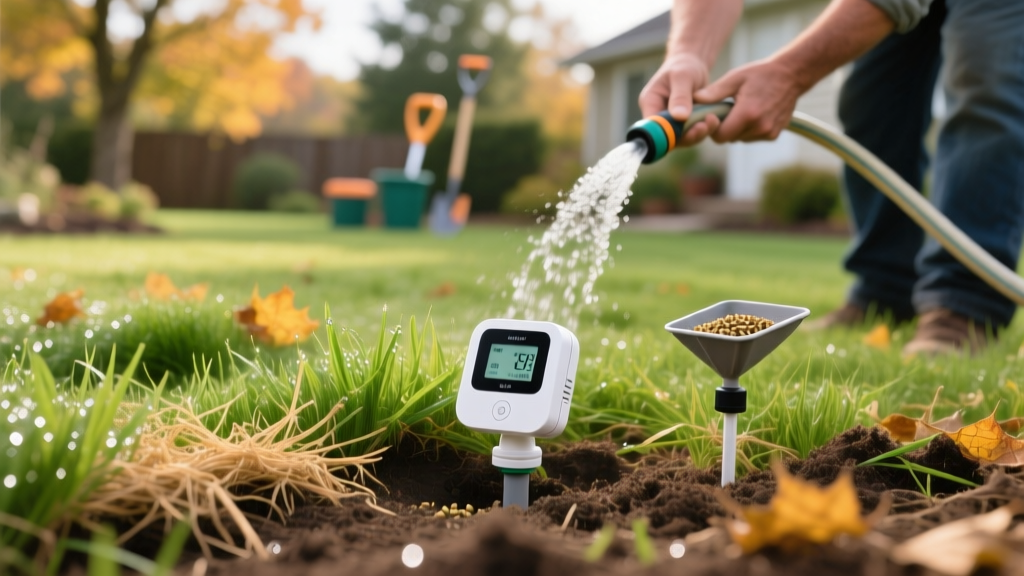
Revive Heat-Stressed Lawns: Smart Irrigation & Overseeding
Anna KowalskiPublished
When summer temperatures soar and rainfall becomes scarce, even the most meticulously maintained lawns can succumb to severe heat stress and drought damage. As the seasons transition, homeowners are often left staring at a patchy, brown landscape, wondering if their turf is salvageable. Bridging the gap between traditional lawn care and modern smart home technology offers a powerful pathway to recovery. By integrating smart irrigation systems with targeted renovation techniques like core aeration and overseeding, you can restore your lawn's vitality and build long-term climate resilience.
Assessing the Damage: Dormant vs. Dead Grass
Before investing time and money into lawn renovation, it is crucial to determine whether your brown grass is merely dormant or completely dead. Cool-season grasses like Kentucky Bluegrass and Tall Fescue have a natural survival mechanism: they go dormant during extreme heat and drought to conserve water and protect the crown, which is the growing point of the plant.
According to turfgrass experts at the University of Minnesota Extension, a dormant lawn can survive without water for up to a month, though it will lose its green color. To perform the tug test, grab a handful of brown grass and pull gently. If the grass resists and the roots hold firm in the soil, the crown is likely alive, and the grass is dormant. If the grass pulls up effortlessly with no root resistance, the turf has died and will require complete renovation or heavy overseeding.
The Role of Smart Irrigation in Lawn Recovery
Reviving a stressed lawn requires precise moisture management. Traditional timer-based sprinkler systems often fail to account for soil type, slope, and real-time weather conditions, leading to shallow watering, runoff, and fungal diseases. This is where smart home integration becomes a game-changer for outdoor landscaping.
Cycle and Soak Methodology
Compacted or clay-heavy soils cannot absorb water quickly. If you run your sprinklers for 30 continuous minutes, much of the water will run off into the street. Smart irrigation controllers utilize a cycle and soak method, breaking the watering duration into shorter intervals with resting periods in between. This allows water to penetrate deeply into the root zone, encouraging roots to grow downward rather than staying near the surface.
The University of California Statewide Integrated Pest Management Program emphasizes that deep, infrequent watering is the cornerstone of drought-tolerant lawn care. Aim to provide your lawn with 1 to 1.5 inches of water per week, including rainfall, applied in two or three deep sessions rather than daily light sprinklings.
Integrating Soil Moisture Sensors
For the ultimate precision, pair your smart controller with wireless soil moisture sensors. These probes are buried in the root zone, typically 4 to 6 inches deep, and transmit real-time volumetric water content data to your smartphone. This prevents the system from watering when the soil already holds adequate moisture, saving water and preventing root rot.
Step-by-Step Drought Recovery Protocol
Once you have established a smart watering baseline, follow this renovation sequence to thicken the turf and crowd out weeds.
Step 1: Dethatching and Core Aeration
If your lawn has a thatch layer thicker than half an inch, use a power rake or dethatching mower attachment before aerating. Thatch is a dense mat of dead stems and roots that prevents water, air, and nutrients from reaching the soil. Removing this barrier is essential for seed-to-soil contact. Next, rent a gas-powered core aerator or hire a professional to pull 3-inch deep soil plugs across the lawn. Leave the plugs on the surface to break down naturally; they contain beneficial microbes that will help decompose remaining thatch.
Step 2: Overseeding with Drought-Tolerant Varieties
Overseeding introduces new, resilient grass plants into the existing turf. For cool-season climates, Turf-Type Tall Fescue or Rhizomatous Tall Fescue are excellent choices due to their deep root systems and heat tolerance. Apply seed at a rate of 5 to 6 pounds per 1,000 square feet. Use a broadcast spreader, applying half the seed in a north-south direction and the other half east-west for even coverage.
Step 3: Topdressing and Starter Fertilizer
After seeding, apply a thin layer, about one-quarter inch, of screened compost or a specialized topdressing mix. This protects the seed, retains moisture, and improves soil structure. Follow up with a high-phosphorus starter fertilizer, such as a 10-18-10 NPK ratio, to promote rapid root development. Keep the top inch of soil consistently moist using your smart controller's temporary new seed schedule until germination occurs, typically 10 to 14 days for fescue.
Smart Irrigation Controller Comparison
Choosing the right smart controller depends on your existing setup, budget, and desire for smart home integration. Below is a comparison of top-rated models suitable for lawn recovery projects.
| Feature | Rachio 3 Smart Sprinkler | Hunter Hydrawise Pro-HC | Orbit B-hyve XR |
|---|---|---|---|
| Zones | 8 or 16 | 6 to 16 (expandable) | 8 or 16 |
| Weather Intelligence | Hyperlocal (Weather Intelligence Plus) | Predictive (Hydrawise software) | WeatherSense (local station data) |
| Soil Moisture Sensor Support | Yes (Wired and Wireless integrations) | Yes (Solar Sync and wired sensors) | Yes (Wired rain and freeze sensors) |
| Smart Home Integration | Alexa, Google, Apple HomeKit, IFTTT | Alexa, HomeKit (via bridge) | Alexa, Google, B-hyve App |
| Estimated Cost | $229 - $279 | $300 - $450 | $179 - $219 |
Long-Term Maintenance for Climate Resilience
Recovering a lawn is only half the battle; maintaining it through future seasonal extremes requires a shift in cultural practices. According to turfgrass researchers at Rutgers Cooperative Extension, proper mowing height is one of the most critical factors in drought survival.
Mowing too short reduces the plant's ability to photosynthesize and shades the soil less, leading to rapid moisture evaporation and increased weed seed germination. Always adhere to the one-third rule: never remove more than one-third of the grass blade in a single mowing.
During the peak of summer, raise your mower deck to 3.5 or 4 inches. Taller grass blades cast shadows on the soil, reducing surface temperature and water loss. Furthermore, leave the clippings on the lawn. Grass clippings are composed of 80 percent water and contain valuable nitrogen; returning them to the turf acts as a natural mulch and fertilizer.
Soil Testing and Smart Autumn Care
Before applying any winterizer or corrective fertilizers, conduct a comprehensive soil test through your local university extension office. A soil test will reveal your lawn's exact pH level and nutrient deficiencies. For instance, if your soil pH is below 6.0, the grass will struggle to absorb applied nutrients, and you will need to incorporate pelletized limestone to raise the alkalinity. Tailoring your nutrient applications to your soil's specific biological needs prevents fertilizer burn and minimizes nutrient runoff into local waterways.
As temperatures cool, adjust your smart irrigation controller to reduce watering frequency while maintaining deep soak durations. Autumn is also the ideal time to apply a slow-release, high-nitrogen winterizer fertilizer based on your soil test results. This provides the carbohydrates necessary for the grass to store energy in its roots, ensuring a rapid, vigorous green-up the following spring.
By combining the diagnostic precision of smart home irrigation technology with proven agronomic practices like aeration and overseeding, you can transform a parched, damaged lawn into a lush, resilient outdoor living space. Not only will this enhance your home's curb appeal, but it will also conserve water and reduce the long-term maintenance demands of your landscape.
