Gardening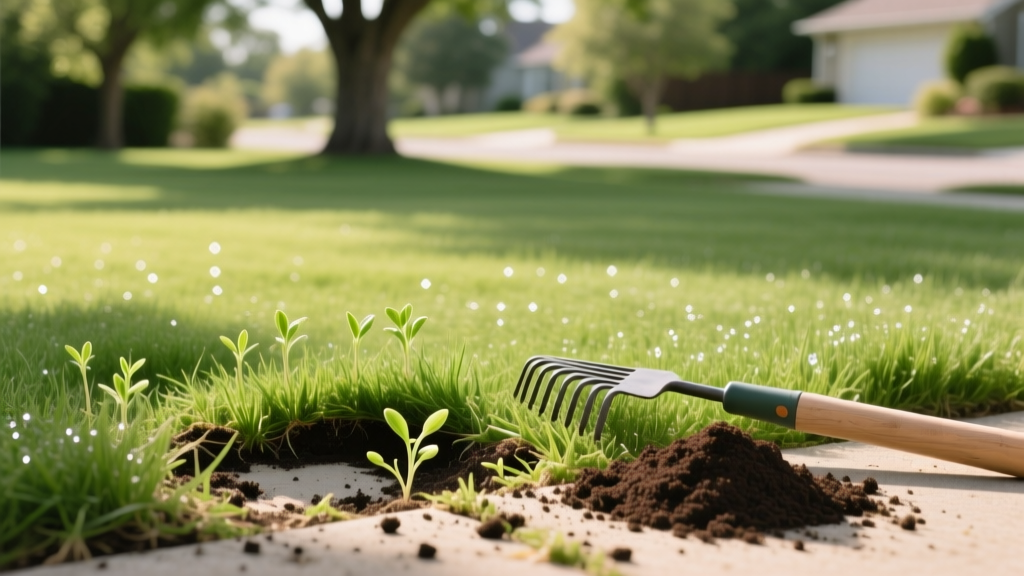
Reviving Dead Lawns: Compost Topdressing and Overseeding Guide
Mike RodriguezPublished
Introduction to Lawn Renovation and Recovery
A thriving, vibrant lawn is essentially a large, horizontal garden that requires the same foundational care as any prized vegetable patch or perennial flower bed. When a lawn becomes patchy, thin, or entirely dead, the instinct for many homeowners is to reach for synthetic fertilizers or chemical treatments. However, true lawn renovation and recovery must begin beneath the surface. Soil degradation, compaction, and the depletion of organic matter are the primary culprits behind failing turfgrass. By applying core gardening principles—specifically soil biology management, composting, and strategic overseeding—you can transform a barren yard into a resilient, lush landscape. This comprehensive guide will walk you through the precise steps, measurements, and timelines required to revive a damaged lawn using compost topdressing and targeted seed selection.
Diagnosing the Root Cause of Lawn Decline
Before purchasing seed or renting equipment, you must diagnose why your lawn is failing. Turfgrass decline rarely happens overnight; it is usually the result of cumulative stressors. The most common issue in residential landscapes is soil compaction caused by heavy foot traffic, mowing on wet soil, and a lack of organic matter. Compacted soil restricts the flow of oxygen, water, and nutrients to the root zone, effectively suffocating the grass.
To test for compaction, perform the screwdriver test. Take a standard six-inch screwdriver and attempt to push it into the soil. If you meet heavy resistance before reaching a depth of three to four inches, your soil is severely compacted. Additionally, you should conduct a comprehensive soil test to determine your pH levels and baseline nutrient profile. Turfgrass thrives in a slightly acidic to neutral pH range of 6.0 to 7.0. If your soil test reveals a pH below 5.5, you will need to apply pelletized lime; if it is above 7.5, elemental sulfur may be required to lower the alkalinity. Correcting the pH is a non-negotiable first step in the lawn recovery process, as nutrients remain locked up and unavailable to the grass roots in highly acidic or alkaline soils.
The Science of Compost Topdressing for Soil Recovery
Compost topdressing is the practice of applying a thin, even layer of screened organic compost over the surface of an existing lawn. This technique bridges the gap between traditional lawn care and advanced gardening soil preparation. According to the Environmental Protection Agency (EPA), composting enriches soil, helping retain moisture and reducing the need for chemical fertilizers. When applied to a lawn, compost introduces billions of beneficial microorganisms that break down thatch, improve soil structure, and facilitate deep root growth.
For lawn renovation, the quality and texture of the compost are paramount. You must use fully finished, aged compost that has been screened through a 1/4-inch mesh. Unsifted compost containing large wood chips or debris will smother the existing grass and create an uneven surface. The ideal topdressing compost should be dark, crumbly, and possess an earthy aroma, indicating a healthy population of aerobic bacteria and fungi. By applying a 1/4-inch to 1/2-inch layer of this premium compost, you are effectively rebuilding the topsoil profile that was lost to erosion, construction grading, or years of neglect.
Step-by-Step Lawn Recovery Action Plan
Successful lawn renovation requires precise timing and execution. The optimal windows for cool-season grass recovery are early fall (late August to mid-October) and early spring (April to May). Warm-season grasses should be renovated in late spring to early summer (May to July). Follow this actionable protocol for the best results:
Step 1: Mow Low and Remove Debris
Set your mower deck to its lowest setting, aiming for a grass height of about 1 to 1.5 inches. Bag the clippings to expose the soil surface and remove any existing thatch layer. Rake the lawn vigorously with a metal thatch rake to scratch the soil surface, which will improve seed-to-soil contact.
Step 2: Core Aeration
Rent a gas-powered core aerator from a local equipment supply store. Core aerators pull 2-to-3-inch plugs of soil from the ground, leaving them on the surface to break down. Make two passes over the lawn in perpendicular directions (e.g., north-south, then east-west) to ensure maximum soil fracturing. This process alleviates compaction and creates microscopic channels for water, compost, and seed to penetrate the soil profile.
Step 3: Apply the Compost Topdressing
Using a flat-headed shovel, drop small piles of screened compost across the lawn. Spread the compost using the back of a heavy landscaping rake or a specialized topdressing spreader. Your goal is a uniform 1/4-inch layer. Ensure that the tips of the existing grass blades are still poking through the compost; burying the existing crown of the grass will kill it. Sweep the compost into the aeration holes to create direct pathways for organic matter to reach the root zone.
Step 4: Overseed and Fertilize
Immediately after topdressing, broadcast your chosen grass seed using a rotary spreader. Follow the specific seeding rates outlined in the chart below. After seeding, apply a high-quality starter fertilizer with a balanced N-P-K ratio (such as 10-18-10) to provide the phosphorus necessary for rapid root development. Lightly drag a leaf rake or a piece of chain-link fence over the area to ensure the seed is pressed firmly into the compost layer.
Grass Seed Selection and Compost Pairing Chart
Choosing the correct seed is critical for long-term lawn recovery. The table below outlines the best grass types for renovation, their natural recovery mechanisms, and their specific compost requirements.
| Grass Type | Recovery Rate | Growth Habit | Ideal Compost Profile | Overseeding Rate (per 1,000 sq ft) |
|---|---|---|---|---|
| Kentucky Bluegrass | High | Rhizomatous (spreads laterally) | Rich, nitrogen-heavy compost with good moisture retention | 2 to 3 lbs |
| Tall Fescue | Moderate | Bunchgrass (requires overseeding) | Well-draining compost with balanced organic matter | 6 to 8 lbs |
| Perennial Ryegrass | Fast (Germination) | Bunchgrass (quick establishment) | Fine-textured, fully decomposed compost | 5 to 7 lbs |
| Fine Fescue | Slow | Bunchgrass (shade tolerant) | Low-nitrogen, sandy loam compost mix | 4 to 5 lbs |
| Bermudagrass | Very High | Stoloniferous and Rhizomatous | Sandy, fast-draining compost with lower organic density | 1 to 2 lbs |
Cost Breakdown for a 1,000 Square Foot Lawn
Budgeting is an essential part of any gardening or landscaping project. Below is an estimated cost breakdown for renovating a 1,000 square foot section of a damaged lawn using the compost topdressing method. Prices may vary based on your geographic location and local suppliers.
- Core Aerator Rental (4 hours): $60.00 - $90.00
- Screened Organic Compost (1 cubic yard): $35.00 - $50.00 (Covers approx. 1,000 sq ft at 1/4 inch depth)
- Premium Turfgrass Seed (5 lbs): $25.00 - $40.00
- Starter Fertilizer (5,000 sq ft bag): $15.00 - $25.00
- Thatch Rake and Basic Tools: $20.00 (Assuming you already own a shovel and standard rake)
- Total Estimated Project Cost: $155.00 - $225.00
While this represents an upfront investment, the cost of lawn recovery via compost and seed is significantly lower than the $1,500 to $3,000 required to hire a professional landscaping crew to install new sod.
Post-Renovation Watering and Maintenance
The first 21 days following lawn renovation are the most critical. Grass seed must remain consistently moist to germinate, and the compost topdressing will dry out quickly if exposed to direct sunlight and wind. According to turfgrass guidelines published by the University of Minnesota Extension, newly seeded lawns require light, frequent watering rather than deep, infrequent soakings.
For the first two weeks, set your sprinklers to run for 5 to 10 minutes, two to three times per day (morning, midday, and late afternoon). The goal is to keep the top inch of the compost and seed bed damp, but not waterlogged. Once the seedlings reach a height of 2 inches, gradually reduce the frequency of watering while increasing the duration. Transition to watering once a day for 20 minutes, and eventually move to the standard gardening practice of deep, infrequent watering (1 to 1.5 inches of water per week, applied in a single session) to encourage deep root penetration.
Do not mow the new lawn until the grass blades reach at least 3.5 inches in height. When you do make the first cut, ensure your mower blades are razor-sharp to prevent tearing the delicate new seedlings out of the loose compost bed.
Long-Term Soil Health and Gardening Integration
Lawn renovation is not a one-time event; it is the beginning of an ongoing soil management strategy. Integrating gardening practices into your lawn care routine ensures long-term resilience. The USDA Natural Resources Conservation Service (NRCS) emphasizes that maintaining soil health requires minimizing soil disturbance, maximizing soil cover, and maintaining living roots in the soil year-round. By leaving grass clippings on the lawn after mowing (mulching), you are returning vital nitrogen and organic matter back to the soil ecosystem, mimicking the natural decomposition processes found in forest floors and garden beds.
Consider establishing an annual topdressing routine. Applying a thin 1/8-inch layer of screened compost every autumn will continually feed the soil food web, suppress lawn diseases, and reduce the need for synthetic interventions. Furthermore, integrating micro-clover or creeping thyme into your turfgrass mix during future overseeding sessions can naturally fix nitrogen in the soil and provide drought tolerance. Ultimately, treating your lawn with the same biological respect and soil-centric focus as a high-yield vegetable garden is the ultimate secret to a permanent, lush, and resilient landscape.
