Pest Control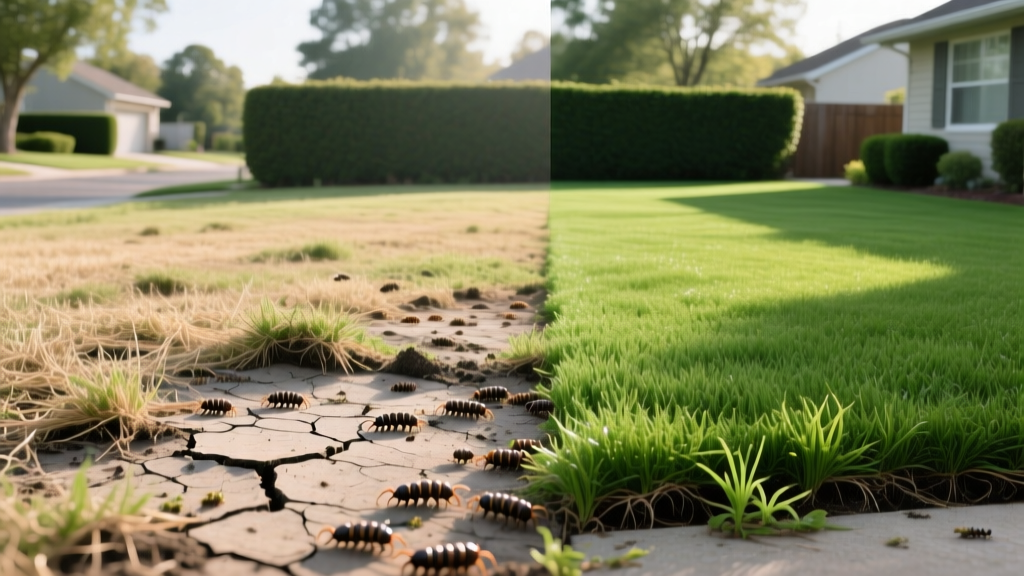
Before & After: Reviving a Lawn Devastated by Grub Worms
David ParkPublished
The Nightmare 'Before': Diagnosing a Grub-Wrecked Lawn
There are few sights more heartbreaking to a dedicated homeowner than walking out on a crisp autumn morning to find your once-lush, emerald lawn looking like a patchwork quilt of dead, brown straw. But the true horror of a grub infestation isn't just visual; it is tactile. When you step on grub-damaged turf, it feels spongy, loose, and completely detached from the soil beneath. In severe cases, you can grab a handful of dead grass and peel the entire lawn back like a freshly laid carpet. This is the 'Before' state of a grub-devastated lawn, a scenario that plagues thousands of properties every late summer and early fall.
White grubs—the larval stage of beetles like the Japanese beetle, June bug, and European chafer—are subterranean lawn destroyers. They feast on the root systems of turfgrass, severing the plant's ability to uptake water and nutrients. To make matters worse, the 'Before' stage often includes secondary damage from foraging wildlife. Skunks, raccoons, and crows will happily tear up your already weakened lawn to feast on the protein-rich grubs hiding just beneath the surface, leaving behind deep craters and shredded soil.
The Tug Test and the Square Foot Dig
Before you can plan your 'After' transformation, you must confirm the culprit. Perform the 'tug test': grab a handful of brown grass and pull gently. If it rolls up with zero resistance and you see no roots attached, grubs are likely the cause. To confirm, use a flat-edged spade to cut three sides of a one-foot square in the damaged area, about two to three inches deep. Peel back the turf and count the C-shaped, milky-white larvae. According to the University of California Statewide Integrated Pest Management Program, finding more than 10 to 15 grubs per square foot is the definitive threshold that requires immediate curative intervention to save the remaining turf.
The Turning Point: Curative vs. Preventative Treatment
The biggest mistake homeowners make when facing a 'Before' scenario is applying the wrong product at the wrong time. If your lawn is already peeling back in late August or September, preventative products will not work. You need a fast-acting curative insecticide, followed by a long-term Integrated Pest Management (IPM) strategy.
| Treatment Type | Active Ingredient | Best Application Window | Kill Time | Avg. Cost per 1,000 sq. ft. |
|---|---|---|---|---|
| Curative (Rescue) | Trichlorfon (e.g., Dylox 6.2G) | Late Summer / Early Fall (Active damage) | 3 to 7 Days | $15.00 - $20.00 |
| Preventative (Long-term) | Chlorantraniliprole (e.g., Scotts GrubEx) | Spring to Early Summer (May - June) | 60 to 90 Days (Systemic) | $10.00 - $12.00 |
| Organic / Biological | Heterorhabditis bacteriophora (Nematodes) | Late Summer (When soil is >60°F) | 7 to 14 Days | $25.00 - $35.00 |
As noted by Penn State Extension, understanding the life cycle of the Japanese beetle is crucial. The adults lay eggs in mid-summer, which hatch into root-munching grubs by late August. Curative chemicals like Trichlorfon degrade rapidly in the soil, which is why they must be applied exactly when the grubs are small and actively feeding near the surface.
The Transformation Process: Step-by-Step Recovery
Transforming a lawn from a grub-wasteland back to a neighborhood showpiece takes roughly 60 to 90 days. Here is the exact blueprint used by turf professionals to achieve a stunning 'After' result.
Phase 1: Eradication and Cleanup (Days 1-7)
Action: Apply a curative granular insecticide containing Trichlorfon (such as Dylox 6.2G) at a rate of roughly 3 lbs per 1,000 square feet using a broadcast spreader. Crucial Step: You must water the lawn immediately after application. Apply at least 0.5 inches of water to wash the chemical off the grass blades and into the top inch of the soil where the grubs are feeding. Without this activation step, the sun will degrade the product, and the grubs will survive. Day 7: Rake out all the dead, detached thatch and grass. This debris will only harbor fungal diseases and block new seed-to-soil contact.
Phase 2: Soil Aeration and Prep (Days 8-14)
Grub damage and the subsequent animal digging severely compact the soil. Rent a walk-behind core aerator (typically $45-$65 for a half-day rental). Run the aerator over the damaged areas in two perpendicular directions to pull hundreds of soil plugs to the surface. This relieves compaction, creates micro-trenches for new seed, and improves water infiltration. Follow aeration with a light topdressing of compost (about 1/4 inch thick) to introduce beneficial microbes back into the damaged soil ecosystem.
Phase 3: Reseeding and Fertilizing (Days 15-30)
Do not skimp on seed. For a durable, grub-resilient 'After' lawn, choose a deep-rooting grass species. Tall Fescue blends (like Jonathan Green Black Beauty) are highly recommended because their extensive root systems can tolerate minor grub feeding without the turf detaching. Apply seed at a rate of 8 to 10 lbs per 1,000 square feet for bare spots. Immediately follow with a high-phosphorus starter fertilizer (e.g., 10-18-10) to promote rapid root development. Keep the top inch of soil consistently moist with light, daily watering for the next 14 to 21 days until germination is complete.
The 'After' Reveal: 90 Days Later
Fast forward three months. The 'Before' spongy, brown wasteland is now a distant memory. The 'After' lawn features a dense, dark-green canopy of Tall Fescue. More importantly, when you perform the 'tug test' now, the grass holds fast. The deep roots have anchored firmly into the aerated, compost-enriched soil. The turf is resilient, drought-tolerant, and capable of withstanding the minor environmental stresses that once made it vulnerable.
'A true transformation isn't just about killing the pest; it is about altering the environment so the pest can no longer thrive. Healthy, deeply rooted turfgrass is the ultimate defense against white grubs.' — Principles of Integrated Pest Management (IPM)
Long-Term IPM: Keeping Grubs Away for Good
To ensure your 'After' lawn doesn't revert to a 'Before' lawn next year, you must adopt a preventative IPM strategy. The University of Minnesota Extension emphasizes that cultural controls are the first line of defense against turf insects.
- Adjust Irrigation: Japanese beetles prefer to lay their eggs in moist, irrigated soil during July. If possible, allow your lawn to go slightly dormant during peak summer heat, or water deeply and infrequently rather than daily shallow sprinklings.
- Mow High: Keep your mower deck set to 3.5 or 4 inches. Taller grass shades the soil, making it less inviting for egg-laying adult beetles, while simultaneously promoting deeper, more grub-resistant root systems.
- Biological Warfare: In late summer, apply beneficial nematodes (Heterorhabditis bacteriophora). These microscopic worms naturally hunt and destroy grub larvae in the soil without harming earthworms, pets, or humans. They are an excellent organic alternative to synthetic preventatives and help maintain a balanced soil food web.
- Spring Preventatives: If you prefer chemical prevention, apply Chlorantraniliprole (GrubEx) in late May or early June. This systemic insecticide is absorbed by the grass roots and will safely eliminate grubs as they hatch in late summer, long before they can cause visible damage.
Transforming a grub-destroyed lawn requires patience, precise timing, and a willingness to address both the pest and the underlying soil health. By following this before-and-after blueprint, you can reclaim your yard from subterranean invaders and enjoy a thick, resilient lawn for years to come.