Tree Care
Reviving Lawns Under Trees: Root Care and Shade Recovery
The Challenge of Lawn Renovation Under Trees
Renovating a lawn is a rewarding endeavor that can dramatically boost your curb appeal and property value. However, when your yard is dominated by mature trees, the renovation process becomes significantly more complex. Trees and turfgrass are naturally competitive, fighting for the same essential resources: sunlight, water, and soil nutrients. In nature, you rarely find dense turfgrass thriving directly beneath the heavy canopy of a mature forest tree. Instead, you find shade-tolerant groundcovers, ferns, and a thick layer of organic leaf litter. When we attempt to force a lush, carpet-like lawn into this environment, we often end up with thin, patchy, and disease-prone grass.
From a lawn renovation and recovery perspective, successfully establishing grass under trees requires a strategic compromise. You must carefully manage the tree's canopy to allow light penetration, protect the tree's critical root zone during soil preparation, and select specialized grass cultivars that can survive in resource-depleted environments. This comprehensive guide will walk you through the exact steps, products, and measurements needed to revive your shaded lawn without compromising the health of your valuable trees.
Evaluating the Canopy and Light Penetration
Before purchasing any seed or fertilizer, you must assess the amount of sunlight reaching the soil surface. Most standard turfgrasses, such as Kentucky Bluegrass and Bermudagrass, require a minimum of six to eight hours of direct, unfiltered sunlight to thrive. In shaded environments, light intensity is drastically reduced. According to research published by Penn State Extension, shade not only reduces the total quantity of light but also alters the light quality, which triggers grass plants to grow tall and spindly rather than producing dense tillers and deep roots.
To improve conditions for lawn recovery, selective pruning is essential. The goal is to increase light penetration and air circulation without stressing the tree. Follow these actionable pruning guidelines:
- Crown Thinning: Remove no more than 15% to 20% of the live canopy in a single season. Focus on removing crossing branches, deadwood, and inward-growing limbs to create small "windows" for sunlight to reach the ground.
- Crown Raising: Carefully prune the lower branches to elevate the canopy edge to at least 8 to 10 feet above the ground. This allows low-angle morning and late-afternoon sunlight to slip under the canopy.
- Timing: Prune deciduous trees in late winter while they are dormant to minimize disease transmission and stress. Prune spring-flowering trees immediately after their blooms fade.
Soil Preparation and Root Protection
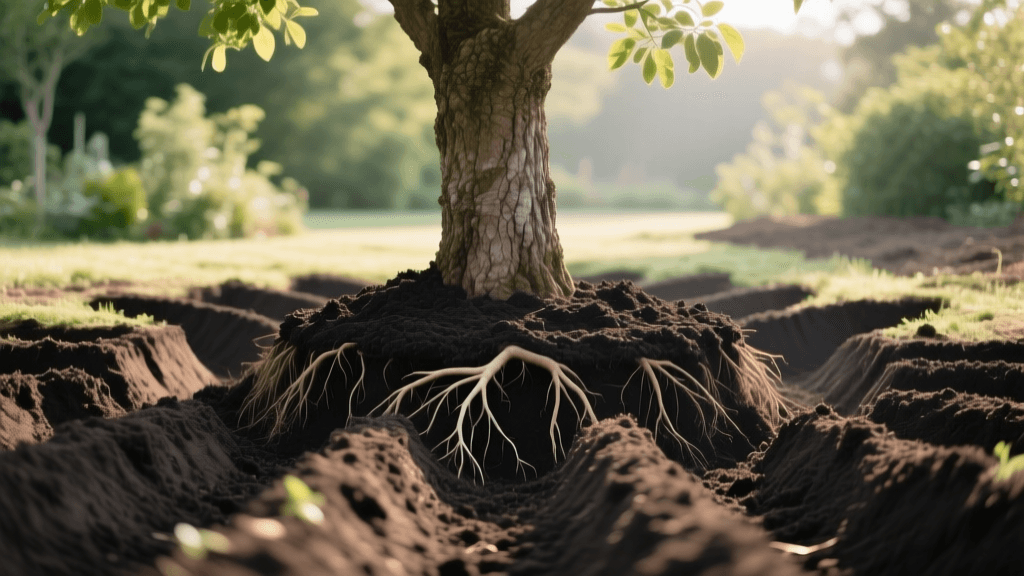
The most common mistake homeowners make during shaded lawn renovation is aggressively tilling or mechanically aerating the soil, which severely damages the tree's feeder roots. The majority of a tree's absorbing roots are located in the top 6 to 12 inches of soil, extending well beyond the drip line. This area is known as the Critical Root Zone (CRZ). A standard rule of thumb for calculating the CRZ is to allow one foot of radius for every one inch of trunk diameter measured at chest height.
Because mechanical core aeration pulls out plugs of soil and can sever vital roots, it is highly discouraged within the CRZ. Instead, utilize a liquid aeration strategy to break up compacted soil safely.
- Product Recommendation: Use a liquid soil loosener containing humic acid and fulvic acid, such as the Simple Lawn Solutions Liquid Aerating Soil Loosener (approximately $35 per 32 oz bottle, covering up to 3,200 square feet).
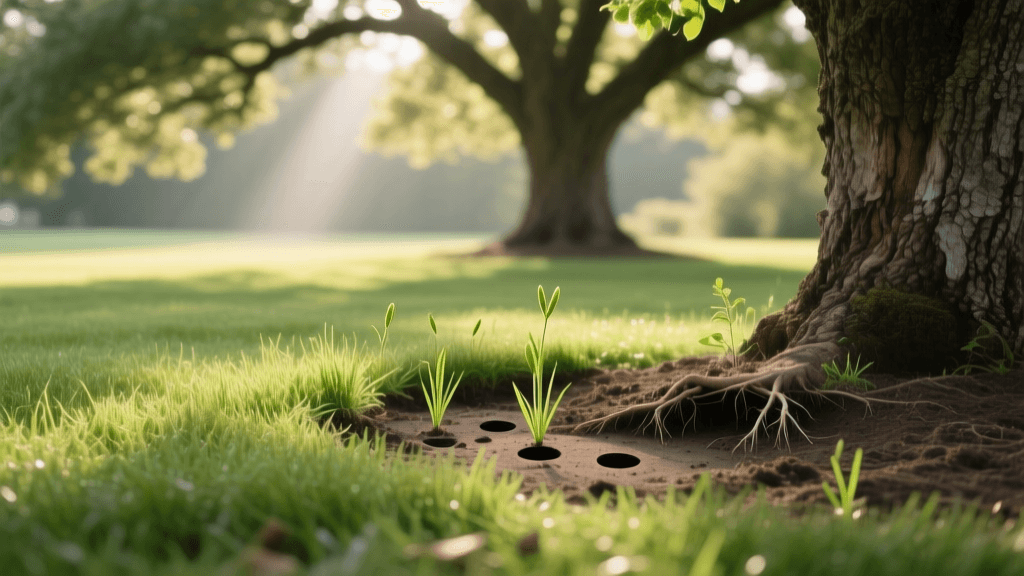
- Application: Apply the liquid aerator using a standard hose-end sprayer two weeks before seeding. This creates microscopic channels in the soil, improving oxygen and water infiltration without physical root damage.
Following liquid aeration, apply a thin layer of topdressing to provide a hospitable seedbed. Use finely screened, high-quality compost. Apply exactly 1/4 inch of compost over the existing soil. Do not exceed this measurement, as piling soil against the tree trunk (creating a "volcano mulch" effect) will lead to trunk rot and girdling roots. One cubic yard of screened compost costs roughly $40 to $60 and will cover approximately 1,000 square feet at a 1/4-inch depth.
Grass Selection and Seeding Strategy
Choosing the right seed is the single most important factor in shaded lawn recovery. Standard sun-loving mixes will quickly fail. You must select shade-tolerant species, primarily Fine Fescues (including creeping red fescue, chewings fescue, and hard fescue) or specific shade-adapted Tall Fescue cultivars.
For premium results, invest in specialized shade blends. Products like Pennington Smart Seed Dense Shade or Jonathan Green Black Beauty Ultra are engineered with endophytes and deep-rooting genetics that withstand tree root competition. Expect to pay between $45 and $65 for a 10-pound bag, which is sufficient to overseed 1,000 to 1,500 square feet.
Shade-Tolerant Grass Comparison Chart
| Grass Species | Shade Tolerance | Drought Resistance | Seeding Rate (per 1,000 sq ft) | Best Climate Zone |
|---|---|---|---|---|
| Fine Fescue Blend | Excellent | High | 5 - 6 lbs | Transition & Cool |
| Tall Fescue (Shade Cultivars) | Good | Moderate | 6 - 8 lbs | Transition & Cool |
| Rough Bluegrass (Poa trivialis) | Excellent | Low | 2 - 3 lbs | Cool, Wet Shaded Areas |
| Kentucky Bluegrass | Poor | Moderate | 2 - 3 lbs | Cool (Requires 6+ hrs sun) |
When seeding, use a broadcast spreader for even distribution. After dropping the seed, lightly rake the area with a flexible leaf rake to ensure seed-to-soil contact, but avoid digging into the tree roots. Keep the top inch of soil consistently moist until germination occurs, which typically takes 10 to 14 days for fescues.
Watering and Nutrient Management
Trees act as massive umbrellas, intercepting rainfall and preventing it from reaching the soil directly below. Furthermore, a mature tree can transpire hundreds of gallons of water on a hot summer day, leaving the surrounding turf severely dehydrated. During the lawn recovery phase, you must supplement natural rainfall with targeted irrigation.
Invest in a low-profile oscillating sprinkler or a soaker hose system. Water deeply and infrequently to encourage grass roots to grow downward. Aim to provide 1 to 1.5 inches of water per week, including rainfall. Place an empty tuna can in the sprinkler zone to measure the exact output; when the can is full, you have delivered roughly one inch of water.
Fertilization under trees requires a delicate balance. Excessive nitrogen forces grass to produce rapid, lush top growth at the expense of root development, making the turf highly susceptible to drought and disease. According to the Clemson University Home & Garden Information Center, shaded lawns require about 50% less nitrogen than lawns in full sun. Apply a slow-release, organic-based fertilizer (such as Milorganite or Espoma Organic All-Season Lawn Food) at half the standard rate in early fall. Avoid fertilizing in late spring or summer, as this promotes fungal diseases like powdery mildew and brown patch, which thrive in cool, damp, shaded environments.
Post-Renovation Maintenance for Recovery
Once your shaded lawn has successfully germinated and established, your maintenance practices must adapt to the unique microclimate created by the tree canopy. The most crucial adjustment is your mowing height.
In full sun, you might mow your lawn at 2.5 to 3 inches. Under trees, you must raise your mower deck to 3.5 or even 4 inches. Taller grass blades have more surface area to capture the limited available sunlight, allowing the plant to photosynthesize efficiently despite the shade. Never remove more than one-third of the grass blade in a single mowing session. If the grass grows to 6 inches, mow it down to 4 inches, then lower it to your target height a few days later.
Pro Tip for Autumn Recovery: Falling leaves can smother a newly renovated shaded lawn in a matter of days, blocking vital light and trapping moisture that breeds snow mold. Instead of raking aggressively, which can tear out young grass roots, use a mulching mower to finely chop the leaves into dime-sized pieces. These micro-clippings will filter down into the soil, providing free organic matter and protecting the tree's root zone.
Finally, minimize foot traffic on shaded lawns. Grass growing in the shade is inherently stressed and lacks the robust cellular structure needed to recover from heavy compaction. Consider installing stepping stones or a mulch pathway to direct traffic away from the most vulnerable, deeply shaded areas near the tree trunk. By respecting the biological needs of both the tree and the turf, you can achieve a beautiful, recovered lawn that coexists harmoniously with your landscape's majestic canopy.