Home & Garden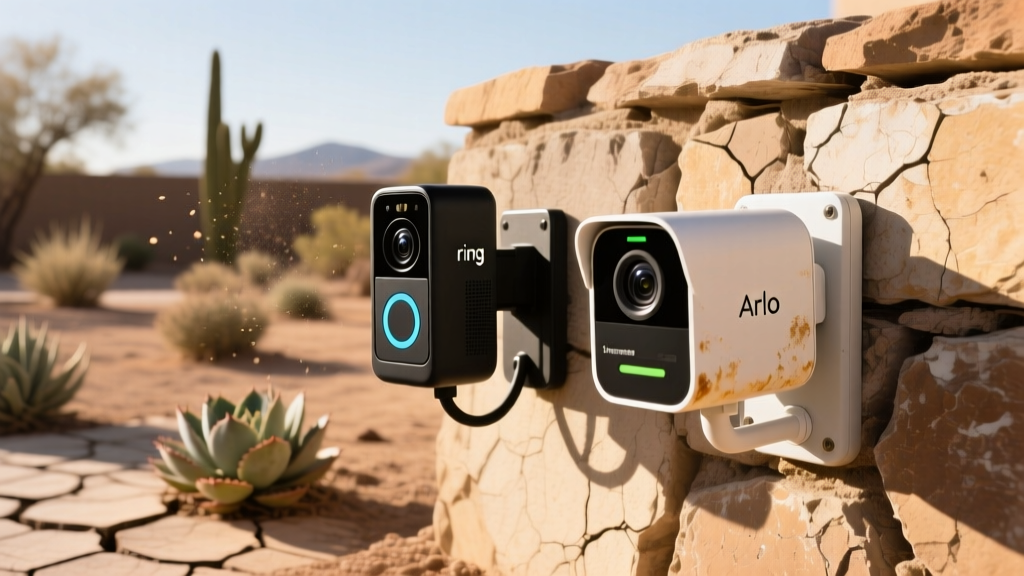
Ring vs Arlo Weatherproof Security Cameras Xeriscape 2026
David ParkPublished
The Unique Challenges of Xeriscape Environments
As we move through 2026, xeriscaping and low-water landscaping have transitioned from niche desert trends to mainstream necessities across the western and southern United States. Replacing thirsty turf with drought-tolerant agave, creeping thyme, and decomposed granite saves thousands of gallons of water annually. According to the EPA's WaterSense program, water-efficient landscaping can reduce outdoor water use by 20% to 50%. However, the very elements that define a xeriscape—intense solar exposure, reflective hardscaping, blowing dust, and drastic diurnal temperature shifts—create a remarkably hostile environment for outdoor electronics.
When securing a low-water landscape, homeowners face a critical decision: which outdoor security camera can actually survive the harsh microclimate of a xeriscape yard? In this comprehensive 2026 guide, we pit the industry giants, Ring and Arlo, against each other, evaluating their weatherproofing, dust resistance, and UV tolerance specifically through the lens of xeriscaping and low-water landscape design.
2026 Hardware Showdown: Ring vs. Arlo Specifications
To understand how these cameras perform in a low-water landscape, we must first look at their baseline weatherproofing specifications for their flagship 2026 outdoor models: the Ring Spotlight Cam Pro and the Arlo Pro 5S 2K. While both are marketed as "weather-resistant," the nuances in their Ingress Protection (IP) ratings reveal vastly different capabilities when faced with desert-like conditions.
| Feature | Ring Spotlight Cam Pro (2026) | Arlo Pro 5S 2K Outdoor (2026) |
|---|---|---|
| IP Rating | IP55 | IP65 |
| Operating Temperature | -5°F to 120°F (-20°C to 49°C) | -4°F to 113°F (-20°C to 45°C) |
| UV Resistance | Standard UV-treated plastic | Enhanced UV-blocking coating |
| Dust Ingress Protection | Protected (Limited ingress) | Dust Tight (No ingress) |
| Wind/Debris Tolerance | Moderate | High (Sealed acoustic ports) |
Dust, Sand, and Decomposed Granite Ingress
The most critical differentiator for xeriscape environments is the first digit of the IP rating, which dictates solid particle and dust protection. Xeriscapes heavily utilize decomposed granite (DG), pea gravel, and crushed rock as ground cover. During dry spells or seasonal wind events, these materials kick up fine, abrasive dust that coats everything in the yard.
The Ring Spotlight Cam Pro carries an IP55 rating. The "5" means it is dust-protected; while dust cannot enter in quantities that immediately short-circuit the device, it is not entirely sealed. Over a few seasons in a DG-heavy yard, fine particulate matter will inevitably infiltrate the camera's speaker grilles and microphone ports, leading to muffled two-way audio and degraded motion sensor performance.
Conversely, the Arlo Pro 5S boasts an IP65 rating. The "6" signifies that the device is completely dust-tight. Arlo achieves this through specialized acoustic membranes that allow sound to pass through while blocking microscopic silica and dust particles. For homeowners with expansive gravel pathways or those living in areas prone to seasonal haboobs and sandstorms, Arlo's dust-tight seal makes it the undisputed champion of low-water landscape security.
UV Degradation and Extreme Heat Tolerance
Traditional lawns provide a cooling effect through evapotranspiration. Xeriscapes, by design, eliminate this cooling mechanism, often replacing grass with heat-absorbing boulders and reflective gravel. This creates a localized heat island effect. The U.S. Department of Energy notes that strategic landscaping is vital for managing home microclimates, but in a pure xeriscape, ambient temperatures at ground level can easily exceed 110°F on a mid-July afternoon, with direct surface temperatures on dark objects pushing much higher.
Both cameras operate safely up to their mid-110s and low-120s Fahrenheit thresholds. However, continuous UV bombardment is the true enemy of outdoor camera housings. Ring's standard UV-treated plastics tend to chalk and become brittle after three to four years of relentless, unshaded desert sun. Arlo's 2026 models feature an advanced UV-blocking matte coating that not only resists structural degradation but also reduces solar heat absorption. If your xeriscape lacks the canopy shade of mature mesquite or palo verde trees, Arlo's superior thermal and UV management will yield a significantly longer hardware lifespan.
Night Vision Glare in Reflective Hardscapes
A frequently overlooked aspect of xeriscape security is how infrared (IR) night vision interacts with low-water hardscaping. Xeriscapes often feature light-colored gravel, polished river rock, and large limestone boulders. When a security camera's IR LEDs hit these highly reflective surfaces at close range, it causes "IR washout" or glare, blinding the camera to movement in the mid-ground.
Ring's 3D Motion Detection with radar is impressive, but its IR illumination can easily bounce off nearby white DG, creating a washed-out image. Arlo's color night vision and superior HDR (High Dynamic Range) processing handle high-contrast reflective environments much better. By relying on ambient starlight and low-lux color sensors rather than blasting the yard with IR, Arlo prevents the blinding glare that plagues Ring cameras in rock-heavy landscapes.
Mounting Without Ruining Your Landscape Design
Xeriscaping requires careful soil management and the protection of shallow, widespread root systems typical of succulents and native desert shrubs. Running hardwired power or drilling into landscape boulders to mount a camera can disrupt the delicate drainage gradients and root zones you have carefully cultivated.
- Avoid Boulder Drilling: Never drill into decorative xeriscape boulders to mount a Ring or Arlo camera. The vibration can fracture the stone, and the silicone sealants used to waterproof the mount will trap moisture against the rock, accelerating moss or mineral staining.
- Utilize Fascia and Stucco: Mount cameras under the eaves or on stucco walls. This keeps the devices out of the direct midday sun and away from blowing dust, mitigating the IP-rating disparities mentioned earlier.
- Freestanding Pole Mounts: If you need to monitor a detached desert garden or a dry creek bed, use a freestanding, weighted pole mount placed on top of the gravel. This avoids trenching wires through your meticulously raked zen garden or damaging the impermeable weed barriers beneath the gravel.
Smart Home Integration for Low-Water Yards
Modern xeriscaping relies heavily on smart technology to maximize efficiency. The USDA's water conservation initiatives highlight the importance of precision irrigation, which is where smart home integration becomes vital. Both Ring and Arlo integrate seamlessly with platforms like Amazon Alexa and Apple HomeKit, but their utility in a low-water garden differs.
By linking your Arlo or Ring cameras to a smart drip-irrigation controller (like Rachio or B-hyve), you can create automated routines. For example, if the camera's motion sensor detects a javalina or coyote digging near your prized agave, it can trigger a smart valve to shut off the drip line to that specific zone, preventing the animal from exploiting the moisture. Furthermore, integrating camera motion triggers with low-voltage LED pathway lights ensures that your xeriscape is illuminated only when necessary, preserving the dark-sky compliance required in many desert municipalities while saving energy.
Final Verdict for 2026
When evaluating outdoor security cameras strictly through the lens of xeriscaping and low-water landscaping in 2026, the environment demands more than just rain resistance. It demands dust-tight seals, extreme UV tolerance, and advanced optical sensors capable of handling reflective hardscapes.
While the Ring Spotlight Cam Pro remains an excellent, budget-friendly choice for shaded, traditional yards, it falls short in the abrasive, sun-baked reality of a true xeriscape. The Arlo Pro 5S 2K, with its IP65 dust-tight rating, enhanced UV coating, and superior color night vision, is the definitive choice for desert climates and low-water landscapes. Investing in Arlo ensures your security infrastructure will endure the harsh, beautiful realities of xeriscaping for years to come, protecting both your home and your water-wise investment.
