Lawn Care
The Ultimate Seasonal Timing Guide For Overseeding Lawns
Why Seasonal Timing is the Secret to Overseeding Success
Overseeding is the process of planting grass seed directly into an existing turf without tearing up the soil or the lawn. It is the single most effective practice for filling in bare spots, improving turf density, and introducing improved, disease-resistant grass varieties to your yard. However, the success of this investment hinges almost entirely on seasonal timing and planting schedules. Dropping seed at the wrong time of year is a common and costly mistake that leads to poor germination, seedling death, and aggressive weed competition.
The primary reason timing matters so much is the relationship between soil temperature, air temperature, and moisture levels. Grass seeds require specific soil temperature ranges to break dormancy and germinate. Furthermore, young seedlings are highly vulnerable to extreme heat, freezing frosts, and drought stress. By aligning your planting schedule with the natural seasonal rhythms of your specific grass type, you give the new turf the best possible environment to establish deep root systems before facing environmental stressors.
Soil Testing: The Crucial First Step Before Planting
Before you purchase seed or mark your calendar for planting day, you must understand the chemistry of your soil. According to the University of Minnesota Extension, conducting a soil test at least four to six weeks before your planned overseeding date is critical for long-term lawn health. Grass seed struggles to germinate and establish in highly acidic or overly alkaline soils.
Most turfgrasses thrive in a soil pH range of 6.0 to 7.0. If your soil test reveals a pH below 6.0, you will need to apply pelletized limestone to raise the pH. Because lime takes several weeks to break down and alter soil chemistry, applying it well in advance of your seasonal planting window is essential. Additionally, your soil test will reveal phosphorus levels. Phosphorus is vital for early root development in seedlings, and many starter fertilizers are formulated specifically to address these needs right at the time of seeding.
Cool-Season Grasses: The Fall Planting Schedule
Cool-season grasses, including Tall Fescue, Kentucky Bluegrass, and Perennial Ryegrass, dominate the northern two-thirds of the United States. These grasses experience their most vigorous growth during the cool, moist days of spring and fall. While spring overseeding is possible, late summer to early fall is universally recognized by turfgrass experts as the absolute optimal window for planting cool-season seeds.
Optimal Timing and Soil Temperatures
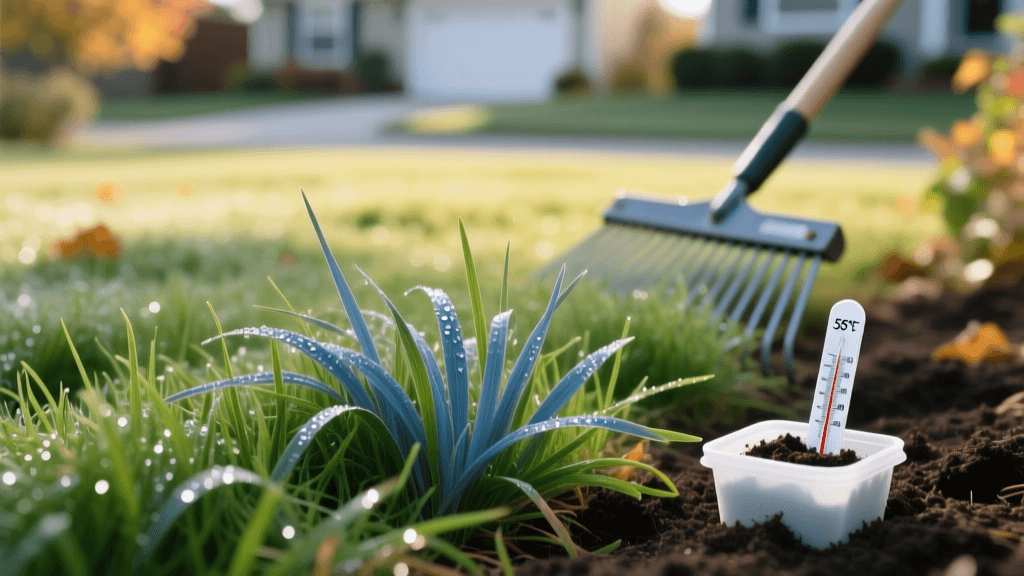
The ideal seasonal window for overseeding cool-season lawns is between mid-August and mid-September, depending on your specific hardiness zone. During this period, the soil is still warm from the summer sun—typically hovering between 50°F and 65°F—which is the exact temperature range required for rapid seed germination. Meanwhile, the air temperatures are beginning to cool, reducing the heat stress on tender new seedlings. Furthermore, fall planting drastically reduces competition from aggressive summer annual weeds like crabgrass, which begin to die off as autumn approaches.
Step-by-Step Fall Action Plan
To maximize your fall overseeding schedule, follow this actionable timeline:
- 4 Weeks Before Seeding: Perform core aeration to relieve soil compaction and create direct seed-to-soil contact channels.
- 2 Weeks Before Seeding: Apply any necessary soil amendments, such as lime or sulfur, based on your soil test results.
- Seeding Day: Mow the existing lawn short (about 1.5 to 2 inches) and bag the clippings. Use a broadcast spreader to apply seed at the recommended rate, followed immediately by a high-phosphorus starter fertilizer (e.g., a 10-18-10 NPK ratio).
- Post-Seeding: Apply a thin layer (1/4 inch) of peat moss or compost over the seed to retain moisture and protect against birds.
Warm-Season Grasses: The Spring and Early Summer Schedule
If you reside in the southern United States, your lawn likely consists of warm-season grasses such as Bermudagrass, Zoysiagrass, Centipedegrass, or St. Augustinegrass. Unlike their cool-season counterparts, warm-season grasses thrive in the heat and go dormant (turning brown) during the winter months. Therefore, their planting and overseeding schedules are entirely reversed.
Optimal Timing and Soil Temperatures
Warm-season grasses must be planted in late spring to early summer, typically from late May through early July. The University of California Agriculture and Natural Resources department emphasizes that warm-season seeds require consistently warm soil temperatures between 65°F and 75°F to germinate successfully. Planting too early in the spring, when the soil is still cold and damp, will result in seed rot and total failure. You want to time your planting so that the new grass has at least 90 days of active, hot summer growth to establish a deep root system before the first autumn frost triggers dormancy.
Winter Overseeding for Year-Round Color
Many southern homeowners and golf courses utilize a secondary seasonal schedule known as winter overseeding. This involves planting a cool-season annual, usually Annual or Perennial Ryegrass, over a dormant warm-season lawn in early to mid-fall (October). The ryegrass provides a lush, green carpet throughout the winter and naturally dies out the following spring just as the underlying Bermudagrass or Zoysia wakes up and begins to green again. According to Penn State Extension, proper seed-to-soil contact and aggressive mowing of the dormant base grass are critical to the success of this transitional seasonal schedule.
Seed Selection, Application Rates, and Timing Chart
Choosing the right seed and applying it at the correct density is just as important as the seasonal timing. Over-seeding too heavily can lead to fungal diseases and resource competition, while under-seeding leaves the lawn vulnerable to weed invasion. Refer to the chart below for precise measurements and schedules.
| Grass Type | Classification | Optimal Planting Window | Target Soil Temp | Seeding Rate (lbs/1,000 sq ft) |
|---|---|---|---|---|
| Tall Fescue | Cool-Season | Mid-August to Mid-September | 50°F - 65°F | 6 - 8 lbs |
| Kentucky Bluegrass | Cool-Season | Mid-August to Mid-September | 50°F - 60°F | 2 - 3 lbs |
| Perennial Ryegrass | Cool-Season | Late August to Early October | 50°F - 65°F | 5 - 7 lbs |
| Bermudagrass | Warm-Season | Late May to Early July | 65°F - 75°F | 1 - 2 lbs (hulled) |
| Zoysiagrass | Warm-Season | Late May to Early July | 65°F - 75°F | 2 - 3 lbs |
| Centipedegrass | Warm-Season | May to June | 70°F - 80°F | 0.5 - 1 lb |
Post-Planting Irrigation and Maintenance Schedules
Once the seed is in the ground according to your seasonal schedule, your irrigation routine must shift dramatically. New grass seed lacks the root structure to access deep soil moisture, meaning the top inch of soil must remain consistently moist until germination is complete.
Weeks 1-3: The Germination Phase
During the first two to three weeks, you must water the lawn lightly two to three times per day. Set your sprinklers to run for just 5 to 10 minutes per zone in the early morning, midday, and late afternoon. The goal is not to flood the soil, but to prevent the seed and the top layer of dirt from drying out. If the seed dries out even once during the germination process, the sprout will die.
Weeks 4-8: The Establishment Phase
Once the new grass reaches a height of about 2 inches, you must begin weaning it off shallow, frequent waterings. Transition to watering deeply but less frequently—about 1 inch of water per week, applied in one or two sessions. This forces the new roots to grow deeper into the soil profile in search of moisture, creating a drought-tolerant, resilient lawn. Hold off on applying broadleaf weed killers until the new grass has been mowed at least three times, as early herbicide application will severely damage or kill young seedlings.
Budgeting Your Seasonal Overseeding Project
Understanding the costs associated with your planting schedule helps in planning a successful DIY renovation. For an average 5,000-square-foot lawn, expect to spend between $250 and $450. High-quality, weed-free seed (such as Jonathan Green Black Beauty or Scotts Turf Builder) will cost roughly $60 to $120. Renting a core aerator for a day typically runs $80 to $110. A 40-pound bag of starter fertilizer and a few bales of peat moss for top-dressing will add another $60 to $90. While this is a significant weekend investment, it is a fraction of the $2,500 to $4,000 you would pay a professional landscaping company to perform a full lawn renovation.
Common Seasonal Mistakes to Avoid
Even with the best intentions, homeowners frequently derail their overseeding efforts by ignoring seasonal cues. Avoid these critical errors:
- Ignoring Pre-Emergent Herbicide Timelines: If you apply a crabgrass pre-emergent in the spring, it will also prevent your new grass seed from germinating. You must wait at least 6 to 8 weeks after a pre-emergent application to seed, or skip the pre-emergent entirely in favor of fall overseeding.
- Planting Too Late in the Fall: Seeding cool-season grasses in late October or November often results in seedlings that are too young to survive freezing winter temperatures, leading to winter kill.
- Overwatering Warm-Season Seeds: While warm-season seeds need moisture, planting them in heavy, poorly draining clay soils during the humid peak of summer can lead to Pythium blight and other devastating fungal diseases.
By strictly adhering to the seasonal timing and planting schedules outlined above, you ensure that your grass seed is working in harmony with nature, resulting in a dense, vibrant, and highly resilient lawn.