Lawn Care
Optimal Overseeding Schedule for Cool and Warm Lawns
The Critical Role of Soil Temperature in Lawn Seeding
When it comes to overseeding or establishing a new lawn, timing is not just a suggestion; it is the absolute foundation of your success. Many homeowners make the costly mistake of looking at the air temperature or the calendar date to decide when to drop grass seed. However, turfgrass experts universally agree that soil temperature is the true metric that dictates seed germination, root establishment, and long-term survival. Grass seeds contain biological triggers that require specific soil thermal ranges to break dormancy. If the soil is too cold, the seed will rot in the ground or fall prey to fungal diseases like damping-off. If the soil is too hot, cool-season seeds will remain dormant or scorch upon germination.
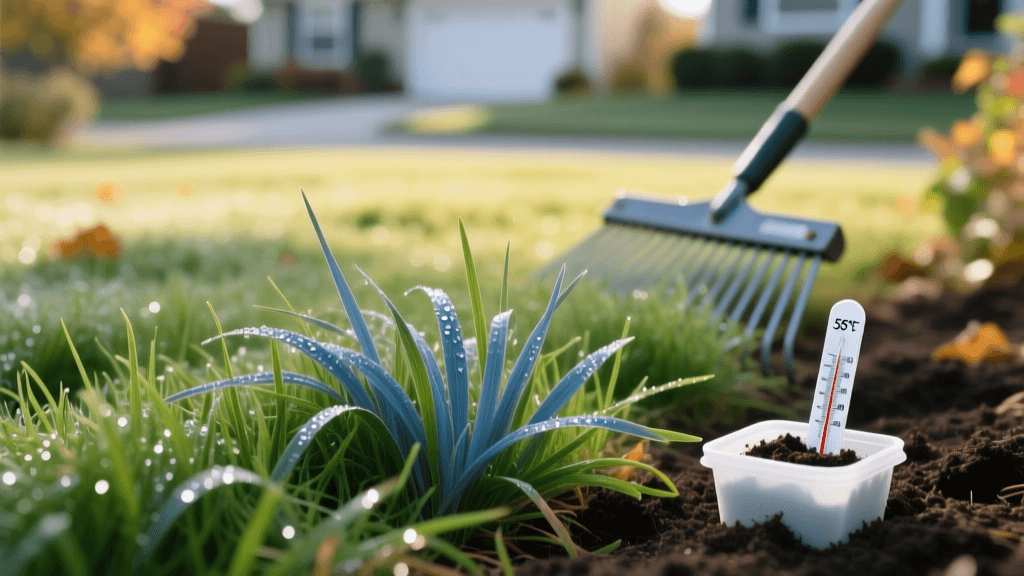
To accurately track this, invest in a standard soil thermometer and measure the temperature at a depth of two inches in the early morning. According to the University of Minnesota Extension, synchronizing your seeding schedule with optimal soil temperatures ensures that the grass develops a deep root system before facing environmental stressors like summer drought or winter freezes.
Cool-Season Grass Overseeding Schedule
Ideal Timing and Grass Types
Cool-season grasses, which dominate the northern two-thirds of the United States, thrive in temperatures between 60°F and 75°F. The most common varieties include Kentucky Bluegrass, Tall Fescue, Fine Fescue, and Perennial Ryegrass. The absolute best time to overseed these lawns is in the early fall, typically from late August to mid-October, depending on your specific hardiness zone.
Fall planting offers a unique combination of ideal conditions: the soil is still warm from the summer (which speeds up germination), the air temperatures are cooling down (which reduces heat stress on tender seedlings), and autumn rains provide natural irrigation. Furthermore, fall overseeding drastically reduces competition from aggressive summer annual weeds like crabgrass, which naturally die off as temperatures drop.
According to the Penn State Extension, the single most common cause of overseeding failure is planting too late in the fall, which leaves young seedlings vulnerable to winter kill and frost heave before their root systems can anchor into the soil.
You should aim to plant your cool-season seed at least 45 days before your area's average first killing frost. This gives the grass enough time to germinate, tiller, and establish a root system capable of surviving the winter.
Warm-Season Grass Planting and Overseeding
Spring Planting vs. Fall Winter-Color Overseeding
Warm-season grasses, such as Bermudagrass, Zoysiagrass, Centipedegrass, and St. Augustinegrass, are prevalent in the southern United States. These grasses thrive in heat and go dormant, turning brown, when soil temperatures drop below 55°F. Because of their unique growth cycle, their planting and overseeding schedules are entirely different from cool-season lawns.
If you are establishing or repairing a warm-season base lawn, the optimal planting window is late spring to early summer (May through June). The soil must be consistently warm—between 65°F and 75°F—to trigger germination. Planting warm-season seeds too early in the spring invites rot and weed competition.
However, many southern homeowners practice a different type of overseeding in the fall to maintain a green lawn during the winter months. This involves overseeding a dormant warm-season lawn (usually Bermudagrass) with a cool-season grass like Perennial Ryegrass in October. The ryegrass provides vibrant winter color and then naturally dies out when the summer heat returns, allowing the base Bermudagrass to green up again without permanent competition.
Seasonal Timing and Soil Temperature Chart
Use the following chart to align your grass type with the correct seasonal window and soil temperature requirements.
| Grass Type | Classification | Best Planting Window | Target Soil Temp |
|---|---|---|---|
| Kentucky Bluegrass | Cool-Season | Late Aug - Mid Sep | 50°F - 65°F |
| Tall Fescue | Cool-Season | Late Aug - Early Oct | 50°F - 65°F |
| Perennial Ryegrass | Cool-Season | Late Aug - Mid Sep | 50°F - 65°F |
| Bermudagrass | Warm-Season | Mid May - Mid Jun | 65°F - 75°F |
| Zoysiagrass | Warm-Season | Mid May - Mid Jun | 65°F - 75°F |
| Centipedegrass | Warm-Season | Mid May - Late Jun | 70°F - 80°F |
Seed Selection and Application Rates
Applying the correct amount of seed is crucial. Over-seeding (applying too much seed) leads to overcrowding, poor air circulation, and fungal diseases. Under-seeding leaves bare patches vulnerable to weed invasion. The Clemson University Home & Garden Information Center recommends the following application rates for standard lawn renovations:
- Tall Fescue: 6 to 9 lbs per 1,000 sq. ft.
- Kentucky Bluegrass: 2 to 3 lbs per 1,000 sq. ft. (Note: KBG seeds are very small, so mixing with a carrier like milorganite or sand helps ensure even distribution).
- Perennial Ryegrass: 5 to 10 lbs per 1,000 sq. ft.
- Bermudagrass (Hulled Seed): 2 to 3 lbs per 1,000 sq. ft.
- Bermudagrass (Unhulled Seed): 3 to 5 lbs per 1,000 sq. ft.
The 6-Week Pre-Planting Preparation Timeline
Successful overseeding requires more than just scattering seed on the dirt. Follow this timeline to prepare your lawn for maximum seed-to-soil contact.
6 Weeks Prior: Soil Testing and Amendment
Order a soil test from your local university extension office. Grass seed requires a soil pH between 6.0 and 7.0 to access nutrients. If your soil is too acidic, apply pelletized limestone now, as it takes several weeks to alter the soil chemistry.
2 to 3 Weeks Prior: Core Aeration and Dethatching
Grass seed must physically touch the soil to germinate. If your lawn has a thatch layer thicker than 1/2 inch, rent a power dethatcher to remove it. Follow up with core aeration, pulling 3-inch soil plugs to relieve compaction and create micro-pockets for seed and water to settle. Leave the soil plugs on the lawn; they will break down and top-dress the seed.
Day of Planting: Seeding and Starter Fertilizer
Mow the existing lawn as short as possible (around 1.5 inches) to allow sunlight to reach the new seedlings. Spread your seed evenly using a broadcast spreader, making two passes in perpendicular directions. Immediately follow up with a high-phosphorus starter fertilizer (e.g., a 10-18-10 NPK ratio) to stimulate rapid root development.
Navigating Weed Control and Pre-Emergents
One of the most frustrating mistakes homeowners make is applying a standard pre-emergent herbicide in the spring or early fall and then trying to overseed. Standard pre-emergents like prodiamine or dithiopyr work by creating a chemical barrier in the top layer of soil that stops cell division in germinating seeds. They do not differentiate between crabgrass seeds and your expensive turfgrass seed.
If you must control weeds while overseeding, you have two options. First, you can use a pre-emergent containing the active ingredient mesotrione (commonly sold under the brand name Tenacity). Mesotrione is unique because it prevents weed seedlings from developing chlorophyll, causing them to bleach and die, but it is safe for most cool-season grass seeds at the time of planting. Always read the product label carefully to ensure it is safe for your specific grass variety.
Post-Planting Irrigation and Maintenance
The first 21 days after planting are the most critical. Grass seed must never be allowed to dry out completely during the germination phase, but it also should not sit in pooling water, which causes rot.
- Weeks 1 and 2: Water the lawn lightly 3 to 4 times a day for 5 to 10 minutes per zone. The goal is to keep the top 1/2 inch of soil consistently moist.
- Week 3: As seedlings emerge and establish initial roots, reduce watering frequency to once a day, but increase the duration to 15 to 20 minutes to encourage deeper root growth.
- Week 4 and Beyond: Transition to a standard deep and infrequent watering schedule, providing about 1 inch of water per week, including rainfall.
Wait to mow the new grass until it reaches about 3.5 inches in height. Ensure your mower blades are razor-sharp to avoid tearing the delicate new seedlings out of the ground. By adhering strictly to these seasonal timing and planting schedules, you will transform a thin, weedy lawn into a dense, resilient turf that can withstand the stresses of the changing seasons.