Pest Control
Seasonal Pest Control: Timing Plantings to Avoid Garden Insects
The Science of Phenology and Pest Life Cycles
Successful pest control in the home garden and lawn edge does not always require reaching for chemical sprays. One of the most effective, yet frequently overlooked, strategies in Integrated Pest Management (IPM) is manipulating your seasonal planting schedules to desynchronize your crops from the life cycles of destructive insects. This practice is rooted in phenology—the study of cyclic and seasonal natural phenomena, especially in relation to climate and plant and animal life.
Insects are cold-blooded, meaning their development, emergence, and reproduction are directly tied to environmental temperatures. Entomologists use Growing Degree Days (GDD) to predict when specific pests will emerge from the soil or hatch from eggs. By tracking local soil temperatures and GDD, gardeners can adjust their planting dates to ensure that vulnerable seedling stages do not coincide with peak pest pressure. When combined with physical barriers, trap crops, and biological controls, seasonal timing becomes a powerful, proactive pest control tool.
Spring Planting Strategies: Evading Early Pests
Spring is a critical window for gardeners, but it is also the time when overwintering pests awaken. A prime example is the flea beetle, a notorious pest of brassicas (like arugula, kale, and radishes) and nightshades (like eggplant). Flea beetles overwinter as adults in garden debris and emerge when soil temperatures consistently reach 50°F.
If you direct-sow your spring brassicas exactly when the soil hits 50°F, your tender seedlings will emerge at the exact moment hungry flea beetles are looking for their first meal. According to the University of Minnesota Extension, flea beetles cause the most damage to young plants with fewer than four true leaves. To avoid this, alter your planting schedule:
- Start Indoors: Sow brassicas and eggplants indoors 4 to 6 weeks before your last frost date. Transplant them into the garden only after they have developed 4 to 5 true leaves, making them robust enough to withstand minor beetle feeding.
- Delay Direct Sowing: If you prefer direct sowing, delay planting your spring radishes and arugula until early summer when flea beetle populations naturally dip, or plant them in late summer for a fall harvest.
- Physical Timing Barriers: If you must plant early, cover the beds immediately after sowing with lightweight floating row covers (0.5 oz/sq yd fabric, typically costing $25-$40 per 100-foot roll). Seal the edges with soil or landscape staples to prevent beetles from crawling underneath.
Summer Timing: Outsmarting the Squash Vine Borer
The Squash Vine Borer (SVB) is a devastating pest that targets summer squash, zucchini, and pumpkins. The adult moth emerges from the soil and lays eggs at the base of cucurbit stems. Once the larvae hatch, they bore into the vine, severing the plant's vascular system and causing sudden, fatal wilting.
SVB emergence is highly predictable, typically occurring around 1,000 Growing Degree Days (base 50°F), which often coincides with the blooming of chicory or wild black locust trees. The Old Farmer's Almanac notes that this window usually lasts only 4 to 6 weeks in early to mid-summer. You can use this narrow window to your advantage through strategic succession planting:
The Early Harvest Strategy
Plant your first succession of summer squash indoors 3 weeks before your last frost, and transplant early. Choose fast-maturing varieties (45-50 days to harvest). By the time the SVB moths emerge and lay eggs, your plants will already be mature, heavily producing, and nearing the end of their natural lifespan. You can pull and destroy the vines before the larvae cause collapse.
The Late Planting Strategy
Hold off on planting your second succession of zucchini and summer squash until mid-to-late July (depending on your hardiness zone). By this time, the adult moths have died off, and the egg-laying window has completely closed. Your late-summer squash will grow entirely free of SVB pressure, providing a massive harvest into early autumn.
Data Table: Seasonal Planting Schedule for Pest Avoidance
Use the following chart to adjust your garden calendar and avoid peak pest emergences.
| Pest | Target Crop | Peak Emergence Trigger | Planting Strategy | Actionable Tactic & Cost |
|---|---|---|---|---|
| Flea Beetles | Brassicas, Eggplant | Soil temps reach 50°F | Delay planting or start indoors | Use 0.5 oz/sq yd row covers ($30/roll) until plants have 4 true leaves. |
| Squash Vine Borer | Summer Squash, Zucchini | 1,000 GDD (Early Summer) | Early or Late Succession | Plant early to harvest before emergence, or sow mid-July after moths die. |
| Cabbage Loopers | Kale, Cabbage, Broccoli | Late Summer / Early Fall | Delayed Fall Planting | Sow seeds 3 weeks later than standard guides; apply Bt kurstaki ($15/bottle) if needed. |
| Colorado Potato Beetle | Potatoes, Tomatoes | Spring emergence (soil 52°F) | Straw Mulch & Trenching | Plant in trenches, cover with thick straw; adults fall in and cannot climb out. |
Late Summer and Fall: Managing Cool-Season Pests
As the heat of summer breaks, many gardeners eagerly plant cool-season crops like kale, broccoli, and cabbage. However, late summer is also the peak breeding season for the Cabbage Looper and the Imported Cabbageworm. These caterpillars can decimate a young fall brassica planting in a matter of days.
To avoid this, delay your fall planting schedule by 2 to 3 weeks compared to traditional gardening almanacs. Wait until the intense heat breaks and the first generations of late-summer moths have finished their life cycles. If you must plant during peak looper season, utilize Bacillus thuringiensis var. kurstaki (Btk), an organic, naturally occurring soil bacterium. When ingested by caterpillars, Btk disrupts their digestive system. It costs roughly $15 to $20 per bottle and is completely safe for beneficial insects, earthworms, and humans.
Integrating Trap Crops into Your Planting Schedule
A trap crop is a sacrificial plant grown specifically to lure pests away from your primary cash crops. However, for a trap crop to be effective, timing is everything. The trap crop must be planted and established before the main crop, ensuring it is larger, more fragrant, and more attractive to pests when they emerge.
According to guidelines from Cornell University's New York State Integrated Pest Management program, trap cropping requires careful scheduling:
- For Squash Vine Borers: Plant a highly attractive variety, such as 'Blue Hubbard' squash, two to three weeks before planting your main crop of zucchini. The SVB moths will preferentially lay eggs on the large, established Blue Hubbard vines. Once the trap crop is infested, you can destroy it, saving your main harvest.
- For Aphids and Flea Beetles: Plant a perimeter of nasturtiums or radishes 14 days before transplanting your brassicas or peppers. The pests will congregate on the trap crop, which can then be treated with an organic insecticidal soap or pulled and composted.
Soil Temperature and Beneficial Nematode Timing
Biological control is a cornerstone of IPM, but applying beneficial organisms at the wrong time of year is a waste of money. Beneficial nematodes are microscopic, unsegmented worms that hunt down soil-dwelling pests like fungus gnat larvae, grubs, and flea beetle larvae. However, they are highly sensitive to soil temperature and UV light.
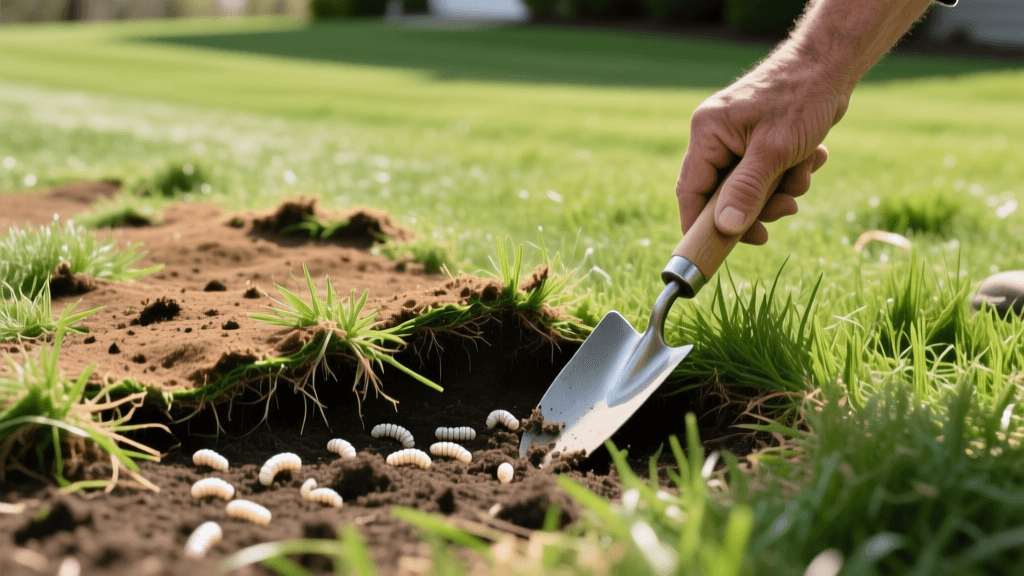
For grub control in lawn edges and garden borders, you must time your nematode application to coincide with the vulnerable larval stages of the pest, while ensuring the soil temperature is between 60°F and 85°F. Applying Heterorhabditis bacteriophora (Hb) nematodes in early spring when the soil is below 55°F will result in total failure, as the nematodes will become dormant and die. Wait until late spring or early autumn when soil temperatures are optimal. Expect to spend between $35 and $50 per million nematodes, enough to treat roughly 2,000 square feet. Always apply them in the late evening or on an overcast day, and water the area immediately to wash them into the soil profile before UV radiation can harm them.
Conclusion
Pest control is not just about what you apply to your plants; it is about when you plant them. By observing local phenology, tracking soil temperatures, and adjusting your seasonal planting schedules, you can effectively hide your crops from the pests that seek to destroy them. Combine these timing strategies with physical barriers, trap crops, and targeted biological controls, and you will cultivate a thriving, resilient garden with minimal reliance on disruptive chemical interventions.