Tree Care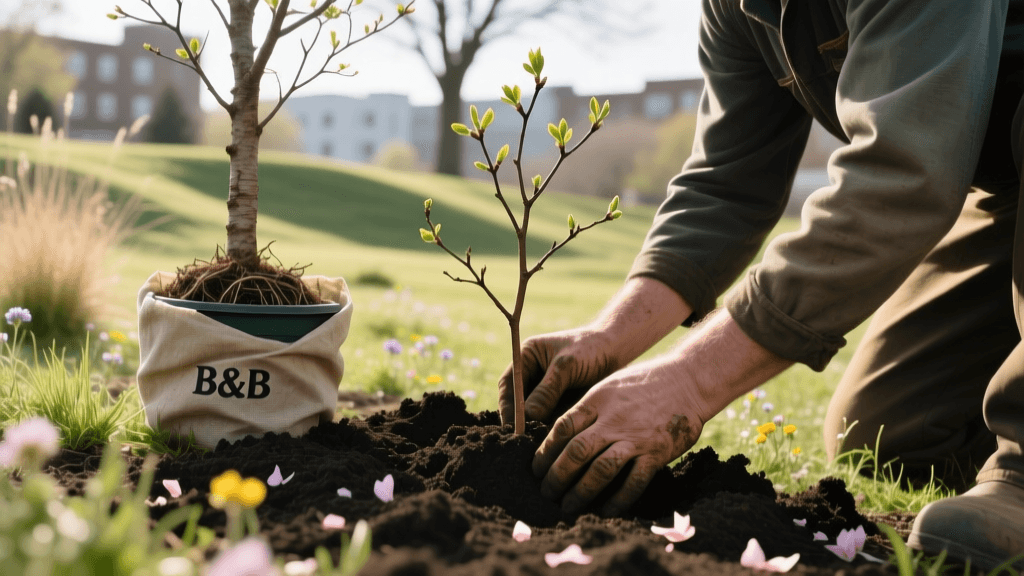
Seasonal Tree Planting Guide: Optimal Timing and Schedules
Mastering Seasonal Tree Planting: When and How to Plant for Maximum Survival
Planting a tree is a long-term investment in your landscape, providing shade, increasing property value, and supporting local ecosystems. However, the success of this investment hinges almost entirely on seasonal timing and proper planting schedules. Planting a tree at the wrong time of year can lead to severe transplant shock, stunted root development, and eventual mortality. According to the University of Minnesota Extension, aligning your planting schedule with natural tree dormancy cycles and regional soil temperatures is the single most critical factor in ensuring high survival rates.
This comprehensive guide breaks down the science of seasonal tree planting, providing actionable schedules based on tree type, USDA Hardiness Zones, and specific post-planting care protocols.
Understanding Tree Dormancy and Soil Temperatures
Trees experience two primary growth phases: top-growth (canopy and foliage) and root-growth. When you transplant a tree, it suffers root loss and needs energy to regenerate its root system. If you plant during peak summer, the tree is forced to support its canopy while simultaneously trying to grow new roots in hot, dry soil, leading to fatal moisture stress.
The ideal planting window occurs when the tree is dormant (or entering/exiting dormancy) and the soil temperature is between 40°F and 65°F (4.5°C to 18°C). At these temperatures, root growth is highly active, but the demand from the canopy is minimal. This allows the tree to establish a robust anchor and water-absorption system before the stress of summer heat or winter freezes.
Tree Types and Their Optimal Planting Windows
The nursery production method dictates the tree's root structure and its ideal planting season. Here is a breakdown of the three main tree types, their average costs, and optimal timing.
- Bare-Root Trees ($15 - $40): Sold without soil around their roots. These must be planted in early spring before bud break or in late fall after leaf drop. They are highly susceptible to drying out and require immediate planting upon arrival.
- Balled and Burlapped (B&B) ($150 - $500+): Dug from the field with a soil ball wrapped in burlap. Best planted in early fall or early spring. The heavy root ball requires careful handling to prevent the burlap from tearing and the soil from cracking.
- Container-Grown ($50 - $150): Grown in plastic pots with a soilless mix. These offer the most flexible planting schedule and can be planted spring through fall, though avoiding the peak heat of July and August is still recommended.
Seasonal Planting Comparison Chart
| Tree Type | Optimal Season | Soil Temp Requirement | Key Advantage | Primary Risk |
|---|---|---|---|---|
| Bare-Root | Early Spring | 40°F - 50°F (Thawed) | Cost-effective, wide root spread | Root desiccation before planting |
| Balled & Burlapped | Early Fall / Early Spring | 45°F - 65°F | Established root ball, immediate impact | Heavy weight, planting too deep |
| Container-Grown | Fall / Spring | 50°F - 75°F | Zero root disturbance, flexible timing | Circling/girdling roots in pot |
Regional Planting Schedules by USDA Hardiness Zone
Because climate dictates soil temperature and frost dates, your specific USDA Hardiness Zone determines whether spring or fall is the superior planting season. The Clemson University Cooperative Extension emphasizes that regional adaptations are necessary to avoid frost heaving in the north and drought stress in the south.
Zones 3 to 5 (Cold / Northern Climates)
Best Time: Early Spring (April to May).
Why: In northern regions, fall-planted trees are highly vulnerable to "frost heaving," where the freezing and thawing of soil pushes the shallow, unanchored root ball out of the ground, exposing roots to lethal winter winds. Planting in spring gives the tree the entire summer and fall to anchor itself before the ground freezes.
Zones 6 to 7 (Moderate / Transitional Climates)
Best Time: Early Fall (September to October).
Why: Fall is the undisputed champion for moderate zones. The soil retains summer warmth, promoting rapid root growth, while the cool autumn air reduces canopy transpiration. Trees planted in September will have 6 to 8 weeks of root growth before the ground freezes.
Zones 8 to 10 (Warm / Southern Climates)
Best Time: Late Fall to Mid-Winter (November to January).
Why: In the deep south, the ground rarely freezes. Planting in late fall or winter allows the tree to establish its root system during the mild, rainy winter months, preparing it to handle the intense, punishing heat of the southern summer.
The Step-by-Step Seasonal Planting Protocol
Timing is only half the battle; execution is the other. Follow these precise measurements and steps to ensure your seasonally timed planting is successful.
1. Locate the Root Flare
The root flare (or trunk flare) is the area where the trunk widens and transitions into the structural roots. This flare must be visible above the soil line after planting. Use a hand trowel to gently brush away nursery soil from the top of the root ball until you find the first lateral root. Planting a tree even two inches too deep can lead to stem girdling roots and trunk rot.
2. Dig the Proper Hole
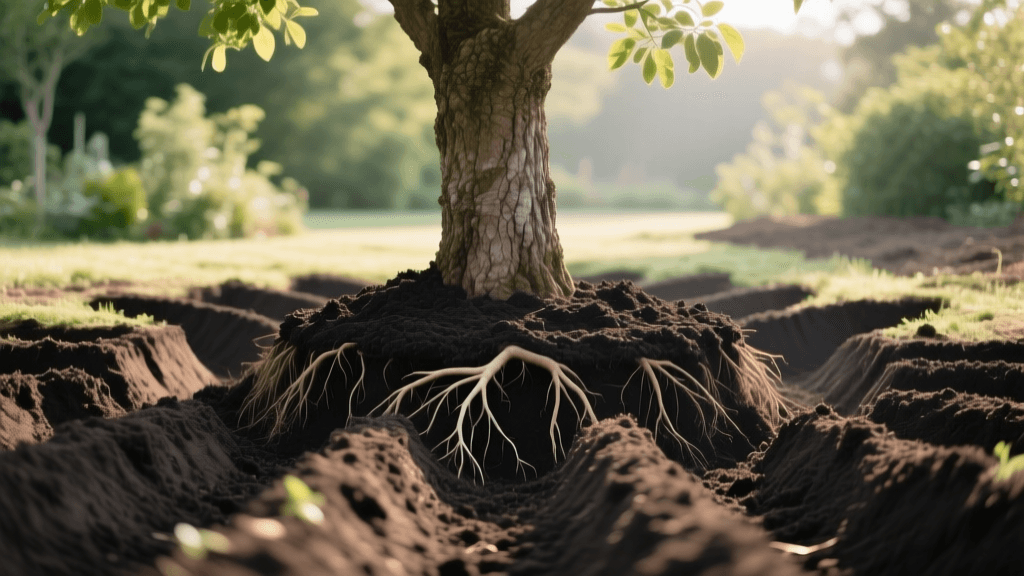
Measure the height of the root ball from the root flare to the bottom. Dig your hole exactly as deep as the root ball, but 2 to 3 times as wide. A wide hole breaks up compacted soil, allowing tender new roots to spread horizontally. Never amend the backfill soil with heavy compost or fertilizers; use the native soil you dug out to encourage the roots to adapt to the local environment.
3. Root Preparation
For container-grown trees, use a sterilized pruning saw or knife to make four vertical slices (about 1/2 inch deep) down the sides of the root ball, and slice an "X" across the bottom. This severs circling roots that would otherwise strangle the tree (girdling) years later. For B&B trees, cut away all synthetic burlap and wire baskets once the tree is situated in the hole.
Post-Planting Seasonal Care: Watering and Mulching
According to Penn State Extension, post-planting irrigation is the most critical maintenance task during the first two years. The watering schedule changes depending on your planting season.
Seasonal Watering Schedules
- Spring-Planted Trees: You must carry the tree through its first summer. Water deeply 2 to 3 times per week during the first month, then transition to 1 deep soaking per week. Use a slow-release watering bag (like the Treegator Original, which holds 20 gallons) to ensure water penetrates deeply rather than running off the surface.
- Fall-Planted Trees: Water thoroughly immediately after planting, and continue to water once a week until the ground completely freezes. Evergreens planted in fall require special attention, as they lose moisture through their needles all winter; apply an anti-desiccant spray like Wilt Pruf in late November to lock in moisture.
- The Measurement Rule: Apply 1 to 1.5 gallons of water per inch of trunk caliper (measured 6 inches above the soil line) per watering session. A tree with a 2-inch caliper needs 2 to 3 gallons of slow-applied water per session.
The 3-3-3 Mulching Rule
Mulch acts as a seasonal insulator, keeping soil cool in summer and retaining moisture in winter. Apply organic arborist wood chips or shredded bark in a donut shape around the tree. Follow the 3-3-3 rule: Apply a 3-inch deep layer of mulch, in a 3-foot wide radius around the trunk, but keep it 3 inches away from the actual bark of the trunk. Piling mulch against the trunk (volcano mulching) invites fungal pathogens and rodent damage.
Common Seasonal Planting Mistakes to Avoid
- Fertilizing at Planting: Do not apply high-nitrogen synthetic fertilizers to a newly planted tree. The salts can burn the severed roots. Wait until the tree has completed one full seasonal growth cycle before fertilizing. You may, however, use a mycorrhizal fungal inoculant (like Myke) at planting to encourage symbiotic root growth.
- Over-Staking: Trees need to sway in the wind to develop trunk taper and strength. Only stake trees if they are in exceptionally windy sites or have top-heavy canopies. If staking is required, use wide, flexible canvas straps (e.g., ArborTie) and remove them after exactly one year to prevent girdling.
- Ignoring Drainage: Before planting, dig a test hole and fill it with water. If it takes more than 24 hours to drain, you have heavy clay or a high water table. In these cases, plant the tree slightly higher (elevating the root ball 2-3 inches above grade) and mound the backfill soil up to the flare to prevent root suffocation.
Conclusion
Aligning your tree planting schedule with the natural rhythms of the seasons and your specific regional climate is the foundation of successful arboriculture. By respecting soil temperatures, choosing the right planting window for your specific tree type, and adhering to strict post-planting watering protocols, you ensure your trees not only survive their critical first year but thrive for generations to come.