Tree Care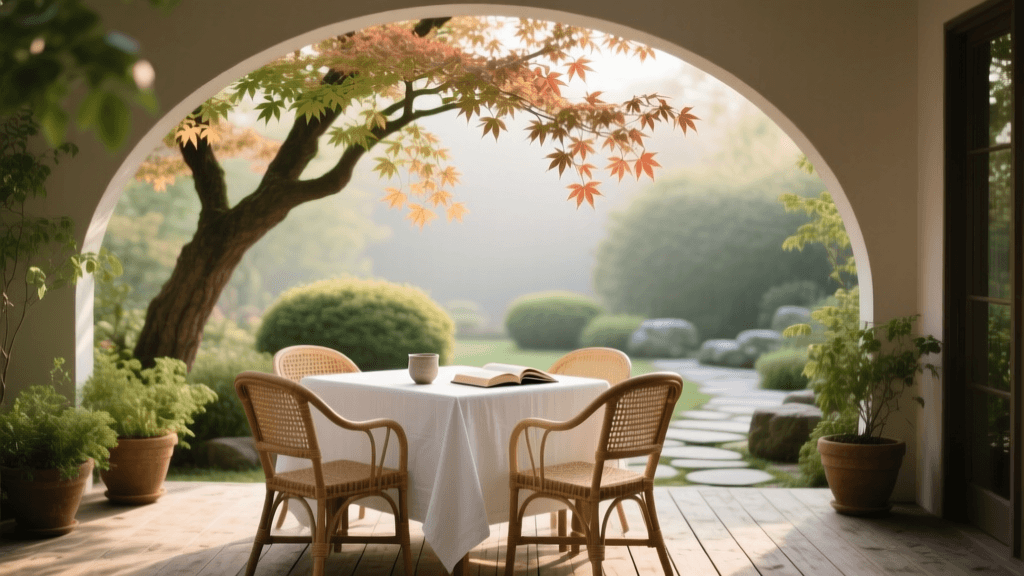
Best Shade Trees For Patios And Outdoor Entertaining
The Intersection of Curb Appeal and Outdoor Living
When designing the ultimate outdoor entertaining space, hardscaping and furniture often steal the spotlight. However, the true anchor of any stunning patio or outdoor dining area is the landscape canopy. A well-chosen shade tree not only provides essential relief from the summer sun but also frames your property, drastically boosting curb appeal and creating an intimate, resort-like atmosphere for your guests. According to the USDA Forest Service, properly placed urban and suburban trees can reduce local air temperatures and provide natural cooling, making your patio significantly more comfortable during peak afternoon hours.
Yet, not all trees are suited for spaces where people gather. The wrong tree can drop messy sap onto your dining table, heave your expensive paver patio with aggressive roots, or attract stinging insects. To achieve the perfect balance of beauty, shade, and low maintenance, you must select species that offer structural integrity, seasonal interest, and a low 'mess factor.' This guide explores the best shade trees for outdoor entertaining, complete with planting distances, maintenance tips, and lighting strategies to elevate your evening garden parties.
Essential Criteria for Entertaining-Space Trees
Before selecting a tree for your patio, evaluate it against these four critical criteria:
- Canopy Architecture: Look for broad, vase-shaped, or umbrella-like canopies that cast wide, dense shade without drooping too close to the ground.
- Root System Behavior: Avoid trees with shallow, aggressive surface roots (like Silver Maples or Willows) that will crack concrete, lift pavers, or create tripping hazards in high-traffic entertaining zones.
- Litter and Mess Factor: Steer clear of trees that drop large, sticky seed pods, excessive sap (honeydew), or messy berries that can stain patio furniture and outdoor rugs.
- Pest Resistance: Trees prone to aphids or scale insects will drip sticky honeydew onto your guests and dining areas, attracting wasps and ants.
Top 5 Shade Trees for Patios and Dining Areas
1. Ginkgo Biloba (Male Cultivars like 'Autumn Gold')
The Ginkgo tree is a living fossil that offers unparalleled curb appeal with its unique fan-shaped leaves. For entertaining spaces, it is imperative to select a male cultivar like 'Autumn Gold' to avoid the notoriously foul-smelling fruit produced by female trees. Male Ginkgos are exceptionally clean, drought-tolerant, and virtually pest-free. In the fall, the canopy erupts into a brilliant, uniform golden-yellow, providing a stunning backdrop for autumn dinner parties. Expect to pay between $150 and $300 for a 15-gallon nursery specimen.
2. Crape Myrtle (Lagerstroemia 'Natchez' or 'Muskogee')
Often considered the 'lilac of the South,' Crape Myrtles are phenomenal for evening entertaining due to their long-lasting summer blooms and beautiful exfoliating bark. The 'Natchez' cultivar offers pure white flowers that reflect beautifully under landscape lighting, while 'Muskogee' provides soft lavender blooms. They are highly drought-tolerant once established and have relatively non-invasive root systems, making them safe to plant closer to retaining walls and patio edges.
3. Japanese Maple (Acer palmatum 'Bloodgood')
For smaller, intimate patios or courtyard dining areas, the Japanese Maple is unmatched in elegance. The 'Bloodgood' variety features deep burgundy foliage that provides dappled shade and striking visual contrast against green lawns and stone hardscaping. Because they are understory trees, they prefer protection from harsh late-afternoon sun, making them ideal for patios situated on the east side of your home or shaded by larger perimeter trees.
4. Red Maple (Acer rubrum 'Red Sunset')
If you need rapid shade for a large, open deck or expansive patio, the 'Red Sunset' Red Maple is a premier choice. It grows faster than many ornamental trees, eventually reaching 40 to 50 feet in height with a broad, oval canopy. It offers brilliant scarlet and orange fall colors. To protect your hardscape, ensure you plant this larger species at least 20 feet away from your patio foundation to accommodate its mature trunk flare and structural roots.
5. Eastern Redbud (Cercis canadensis)
The Eastern Redbud is a spring showstopper, erupting in vibrant magenta-pink blossoms before its heart-shaped leaves even emerge. It is an excellent choice for perimeter planting around outdoor kitchens and seating areas. Its relatively small stature (20 to 30 feet) ensures it won't overwhelm the space, and its branching structure allows for easy uplighting to create dramatic evening shadows.
Comparison Chart: Shade Trees for Patios
| Tree Species | Mature Height | Canopy Spread | Mess Factor | Best Feature for Entertaining |
|---|---|---|---|---|
| Ginkgo 'Autumn Gold' | 40-50 ft | 25-30 ft | Very Low | Stunning, uniform golden fall color |
| Crape Myrtle 'Natchez' | 20-30 ft | 15-20 ft | Low | Summer blooms and striking bark |
| Japanese Maple 'Bloodgood' | 15-20 ft | 15-20 ft | Low | Elegant dappled shade for small patios |
| Red Maple 'Red Sunset' | 40-50 ft | 30-40 ft | Moderate | Fast-growing, expansive shade canopy |
| Eastern Redbud | 20-30 ft | 25-35 ft | Moderate | Spectacular early spring floral display |
Planting Distances and Hardscape Protection
One of the most costly mistakes homeowners make is planting trees too close to their newly installed patios, walkways, or foundations. Tree roots seek oxygen and water, and the compacted soil beneath hardscapes forces roots to the surface, leading to cracked concrete and heaved pavers.
The Spacing Rule of Thumb
- Small Trees (Under 25 ft): Plant at least 8 to 10 feet from patio edges.
- Medium Trees (25-40 ft): Plant at least 12 to 15 feet from hardscapes.
- Large Trees (Over 40 ft): Plant a minimum of 20 feet away from any structural or paved surface.
Root Barriers and Deep Watering
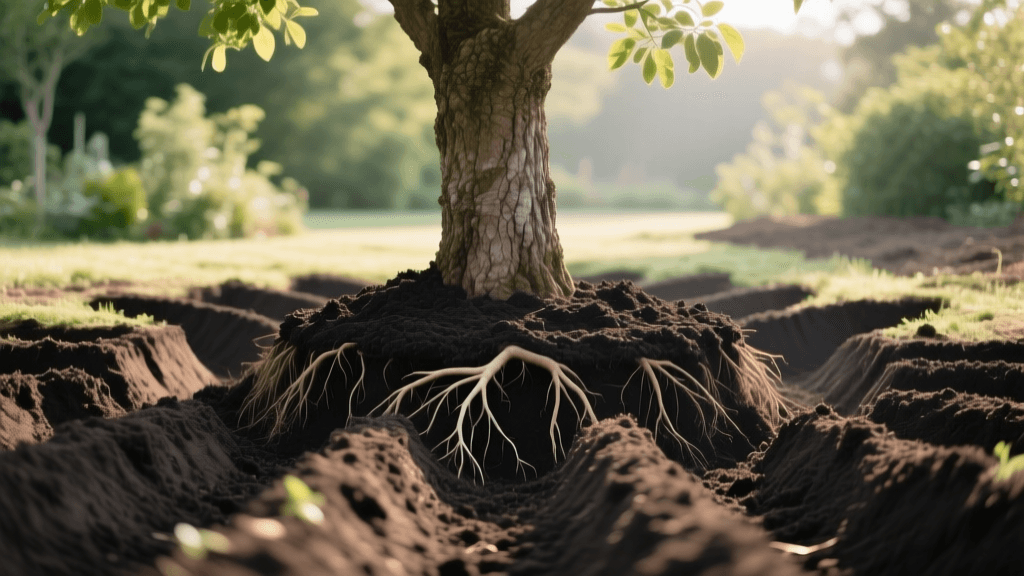
If you must plant a medium-to-large tree closer to an entertaining space, install a mechanical root barrier. Products like DeepRoot tree root barriers cost approximately $15 to $25 per linear foot installed. Trench a 24-inch deep barrier between the tree and the patio to deflect roots downward. Additionally, use deep root watering stakes (such as the Tree Watering Stake by Treegator) during the first two years. By delivering water 12 to 18 inches below the surface, you train the roots to grow deep rather than spreading horizontally just beneath the patio pavers.
Pruning for Pedestrian Clearance and Lighting
A tree in an entertaining space must accommodate human traffic. According to the Arbor Day Foundation, proper pruning not only maintains tree health but also ensures safety and accessibility in the landscape.
Canopy Elevation
To allow guests to walk comfortably beneath the canopy without ducking, practice 'crown raising' or 'limbing up.' Elevate the lowest branches to a clearance height of 7 to 8 feet above the patio or walkway. Always make clean cuts just outside the branch collar to promote rapid healing and prevent decay-causing pathogens from entering the trunk.
Landscape Lighting for Evening Ambiance
Trees are the ultimate canvas for outdoor lighting, extending the usability of your entertaining space well into the night.
- Moonlighting: Mount a soft, warm LED fixture (2700K to 3000K color temperature) 20 to 30 feet up in the canopy, pointing downward through the branches. This mimics natural moonlight and casts beautiful, dappled shadows over your dining table.
- Uplighting: Place a brass or copper well-light at the base of trees with striking bark, like the Crape Myrtle or Japanese Maple. Aim the beam to graze the trunk, highlighting the texture and creating a dramatic focal point visible from the street, thereby enhancing nighttime curb appeal.
Seasonal Maintenance for Guest Comfort
To keep your outdoor space party-ready, timing your maintenance is crucial. Prune deciduous trees in late winter while they are dormant; this prevents the spread of disease and allows you to see the branch structure clearly before spring foliage emerges. In early spring, apply a 2-to-3-inch layer of premium hardwood mulch around the base of the tree, keeping it a few inches away from the trunk to prevent rot. This mulch ring not only retains moisture but also provides a clean, manicured transition between the tree and your lawn or hardscape.
For detailed cultivar selections and regional adaptability, the University of Florida IFAS Environmental Horticulture database remains an invaluable resource for matching tree traits to specific landscape functions and local hardiness zones.
'The best outdoor entertaining spaces feel like natural extensions of the home. By selecting the right shade trees, you are not just planting a landscape feature; you are building a living, breathing canopy that will host your family's memories for decades to come.'