Tree Care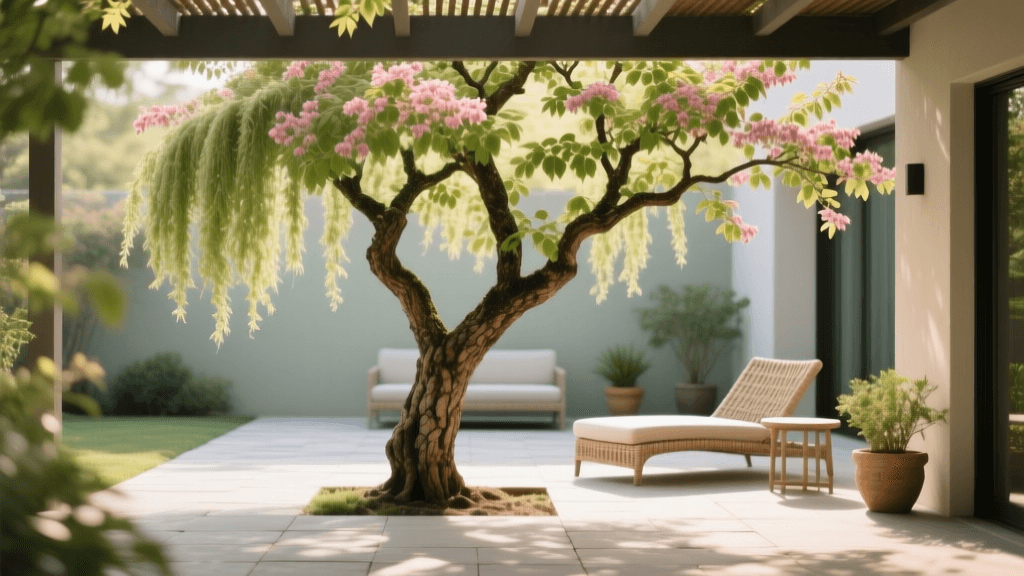
Best Shade Trees for Patios: Pruning and Care for Entertaining
Designing the Ultimate Patio Oasis: The Role of Shade Trees
When envisioning the perfect outdoor entertaining space, homeowners often focus on high-end patio furniture, built-in kitchens, and fire pits. However, the most crucial element for both curb appeal and guest comfort is often overlooked: the strategic selection and pruning of shade trees. A well-placed, properly pruned tree not only lowers the ambient temperature of your patio by up to 15 degrees but also serves as a stunning architectural focal point that elevates your property's overall aesthetic.
Transitioning a standard backyard tree into a patio-ready centerpiece requires a shift in perspective. You must balance the tree's biological needs with the practical demands of outdoor entertaining, such as unobstructed sightlines, minimal litter, and safe clearance for string lights and guests. This guide explores the best tree species for patio environments and details the specific arboricultural techniques required to maintain them.
Selecting the Right Trees for Entertaining Spaces
Not all trees are created equal when it comes to hardscaping and entertaining. Trees planted near patios, decks, and outdoor dining areas must possess specific traits: deep, non-invasive root systems that won't heave pavers; low litter production to keep dining tables clean; and a naturally broad canopy for optimal shade. According to the Morton Arboretum, selecting the right tree for the right location is the single most important factor in long-term landscape health and minimizing infrastructure damage.
Top Shade Trees for Patios and Decks
| Tree Species | Mature Height | Litter Level | Root Invasiveness | Best Feature for Entertaining |
|---|---|---|---|---|
| Japanese Zelkova (Zelkova serrata) | 50-80 ft | Low | Low | Vase-shaped canopy provides high clearance without blocking views. |
| Crape Myrtle (Lagerstroemia) | 15-25 ft | Low | Very Low | Stunning summer blooms and beautiful exfoliating bark for uplighting. |
| Serviceberry (Amelanchier) | 15-25 ft | Moderate | Low | Multi-stemmed structure creates intimate, dappled shade for cozy seating. |
| Red Maple (Acer rubrum) | 40-60 ft | Moderate | Moderate | Brilliant fall foliage creates a dramatic backdrop for autumn gatherings. |
Note: Avoid planting species like Silver Maples, Willows, or Sweetgums near patios, as their aggressive surface roots will destroy hardscaping, and their heavy seed or fruit drop will ruin outdoor meals.
Canopy Raising: The Secret to Unobstructed Patio Views
One of the most common complaints regarding patio trees is that their lower branches obstruct views, block pathways, and create a claustrophobic feeling for seated guests. The solution is a pruning technique known as crown raising or canopy raising. This involves the selective removal of the lower branches to elevate the bottom of the tree's canopy.
For outdoor entertaining spaces, the ideal clearance height is typically between 8 and 10 feet. This allows guests to walk comfortably underneath the tree, keeps branches out of the way of tall patio umbrellas, and maintains an open sightline across the yard. The Arbor Day Foundation emphasizes that when raising a canopy, you should never remove more than 25% of a tree's living foliage in a single season, as this can stress the tree and trigger a flush of weak, unsightly water sprouts.
How to Execute a Proper Crown Raise
- Assess the Branch Collar: Always make your cuts just outside the branch collar (the swollen area where the branch meets the trunk). Never flush-cut the trunk, as this prevents the tree from properly compartmentalizing the wound.
- Use the Three-Cut Method: For branches larger than 2 inches in diameter, use a three-cut method to prevent the heavy limb from tearing the bark down the trunk as it falls.
- Balance the Canopy: Ensure that the remaining lower branches are distributed evenly around the trunk to maintain structural balance, especially important in areas prone to high winds during summer storms.
Crown Thinning for Airflow and String Light Installation
A dense tree canopy can trap humidity and block the evening breeze, making a patio feel stifling during mid-summer barbecues. Furthermore, dense foliage makes it nearly impossible to weave bistro lights or hang lanterns without damaging the tree's delicate twigs. Crown thinning is the selective removal of smaller, weaker, or crossing branches throughout the canopy to increase light penetration and air movement.
When preparing a tree for outdoor lighting, thinning allows you to identify the primary, structural branches capable of supporting the weight of commercial-grade LED string lights. Avoid wrapping wire or rope tightly around branches; instead, use specialized tree-friendly light clips or zip ties with a buffer (like a piece of rubber hose) to allow for future trunk and branch growth. According to pruning guidelines endorsed by the International Society of Arboriculture (ISA), thinning should focus on removing dead, diseased, or rubbing branches first, before selectively removing live wood to open up the canopy.
Uplighting Techniques to Maximize Curb Appeal at Night
Outdoor entertaining frequently extends well into the evening, making landscape lighting a vital component of patio design. Uplighting a carefully pruned tree not only enhances safety by illuminating walkways but also dramatically boosts your home's curb appeal. When positioning well lights at the base of a tree, aim the fixture at a 30-degree angle toward the trunk to highlight the bark's texture. For trees with exfoliating bark, like the Crape Myrtle, this technique creates striking visual interest. Ensure that your pruning strategy leaves the inner trunk visible from key vantage points on the patio. If the lower canopy is too dense, the light will simply reflect off the underside of the leaves, creating a harsh glare rather than a soft, inviting ambiance. By combining strategic crown thinning with low-voltage LED uplighting (typically 3 to 5 watts per fixture for medium-sized trees), you transform your patio trees into glowing architectural pillars that anchor your nighttime landscape design.
Protecting Tree Roots During Hardscaping and Entertaining
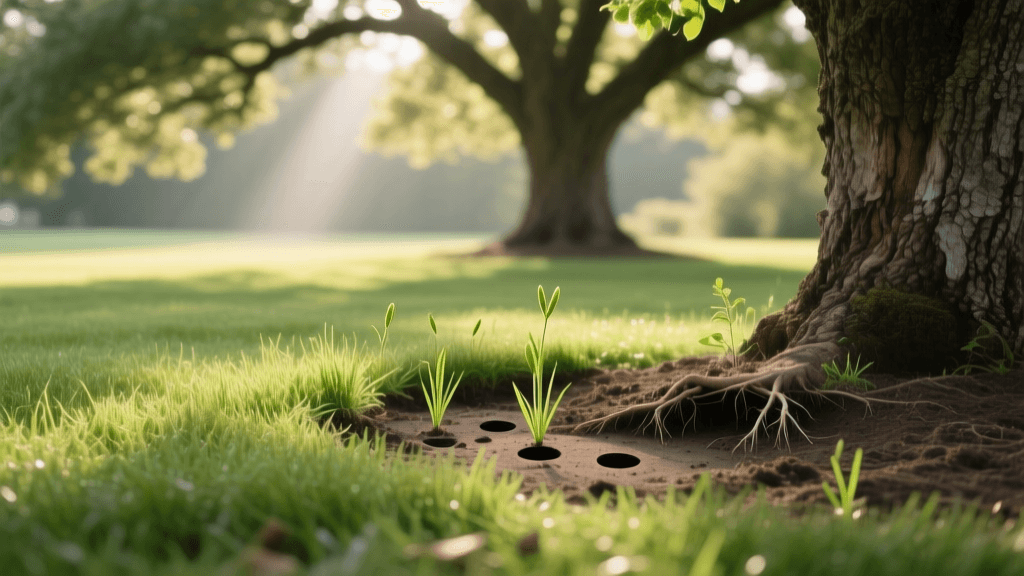
The lifeblood of your patio tree lies beneath the soil. The Critical Root Zone (CRZ) is generally defined as a circle on the ground corresponding to the tree's dripline (the outer edge of the canopy). When hosting large gatherings, the combination of heavy foot traffic, patio furniture, and the construction of the patio itself can lead to severe soil compaction. Compacted soil lacks the pore space necessary for oxygen and water to reach the roots, slowly suffocating the tree and leading to canopy dieback.
Actionable Root Protection Strategies
- Permeable Pavers: If you are building or renovating your patio within a tree's dripline, opt for permeable pavers set in a gravel base rather than pouring a solid concrete slab. This allows rainwater to infiltrate the soil. Expect to pay between $10 and $20 per square foot for permeable hardscaping materials and installation.
- Mulch Rings: Maintain a 3-inch layer of organic hardwood mulch around the base of the tree, extending out to the dripline if possible. Keep the mulch at least 3 inches away from the trunk flare to prevent rot. Mulch acts as a shock absorber against foot traffic and regulates soil temperature.
- Avoid Soil Grade Changes: Never add soil or build retaining walls over a tree's root zone. Even adding just two inches of soil can suffocate a mature tree's shallow feeder roots.
Seasonal Maintenance Schedule for Patio Trees
To keep your entertaining space pristine year-round, adhere to this seasonal maintenance schedule:
- Early Spring: Apply a 2-inch layer of fresh compost and mulch. Inspect the canopy for any winter storm damage and prune dead wood before the spring growth flush.
- Late Spring: Deep water the tree if rainfall is scarce, providing roughly 1 inch of water per week. Install outdoor lighting using the tree-friendly methods mentioned above.
- Summer: Monitor for pests like aphids or scale, which can drop sticky honeydew onto your patio furniture. Treat with horticultural oil or insecticidal soap if necessary.
- Autumn: Rake fallen leaves promptly to prevent them from staining pavers or clogging patio drains. Schedule any major structural pruning for late autumn or winter when the tree is dormant.
By thoughtfully selecting the right species and employing targeted pruning techniques, your trees will transition from mere background elements to the defining feature of your outdoor entertaining space. A well-managed canopy provides the perfect blend of dappled shade, ambient lighting, and structural elegance, ensuring your patio remains the ultimate destination for curb appeal and guest comfort.