
Landscaping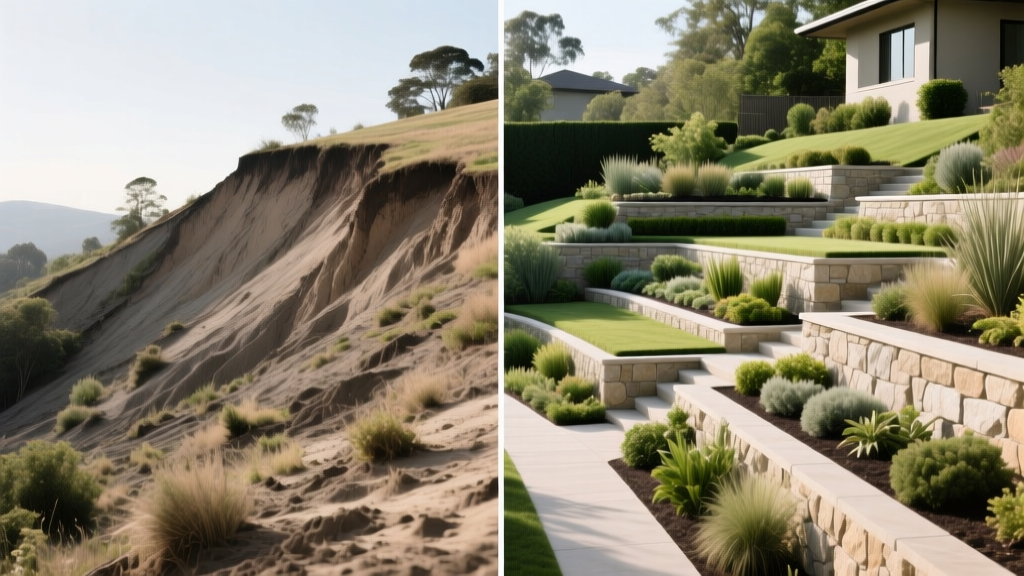
Before & After: Sloped Yard Retaining Wall Transformation
Lisa ThompsonPublished
The Challenge: A Steep, Unusable Backyard
For many homeowners, a sloped backyard is less of a landscaping feature and more of a recurring maintenance nightmare. This was precisely the case for a recent DIY landscape transformation project we documented. The 'before' state of the property featured a steep, 30-degree incline that was practically unusable. Every heavy rainstorm resulted in severe topsoil erosion, sending muddy runoff cascading down onto the lower concrete patio. Mowing the patchy, weed-choked slope was a dangerous endeavor, and the sheer gradient made any attempt at gardening or outdoor entertaining impossible.
According to the USGS Water Science School, surface runoff is a primary driver of soil erosion in residential areas, especially when vegetation is sparse and the ground is compacted or improperly graded. The goal of this project was clear: halt the erosion, create functional flat spaces, and dramatically improve the property's curb appeal through a complete before and after landscape transformation.
The Vision: Designing a Three-Tiered Terrace
The master plan involved carving the single, steep slope into three distinct, level terraces using retaining walls. This tiered approach would not only solve the drainage and erosion issues but also create distinct 'outdoor rooms' for planting, dining, and relaxing. We opted for a wall height of 2 feet per tier, with each wall spanning 15 feet in length. This resulted in three flat garden beds, each roughly 15 feet by 8 feet, providing ample space for deep-rooted, erosion-controlling plants and decorative hardscaping.
Material Selection and Tools Required
To achieve a natural, timeless look that complemented the home's stone exterior, we selected Belgard Weston Stone Retaining Wall Blocks in the Ashler blend. These tumbled concrete blocks offer the aesthetic of natural stone with the structural integrity and uniform sizing of engineered concrete.
Before breaking ground, we gathered the necessary heavy-duty tools and materials:
- Tools: Skid-steer loader (rented for excavation), gas-powered plate compactor, laser level, masonry saw with a diamond blade, shovels, and tampers.
- Base Materials: 3/4-inch minus crushed gravel for the foundation base, and 3/4-inch clear washed gravel for drainage backfill.
- Drainage: 4-inch perforated corrugated drainage pipe and non-woven geotextile landscape fabric.
- Adhesives: Loctite PL Premium Polyurethane Construction Adhesive for securing the capstones.
The Transformation: Step-by-Step Execution
Step 1: Excavation and Base Preparation
The most critical phase of any retaining wall project is the base. A retaining wall is only as strong as the ground it sits on. We excavated a trench 24 inches wide and 12 inches deep for each of the three wall footprints. The first 6 inches were filled with 3/4-inch minus crushed gravel, which was meticulously leveled and compacted using a mechanical plate compactor. This created a frost-resistant, load-bearing foundation that prevents the wall from heaving during freeze-thaw cycles.
Step 2: Laying the First Course and Drainage
The first course of Belgard blocks was laid directly onto the compacted base, with the front lip buried slightly below grade to lock the wall into the earth. We used a laser level to ensure perfect alignment across the 15-foot span. Once the first course was set, we addressed hydrostatic pressure—the buildup of water behind the wall that causes bulging and collapse. We lined the back of the trench with geotextile fabric, laid a 4-inch perforated drainage pipe, and covered it with clear washed gravel. This French drain system ensures that groundwater is safely routed away from the wall and out through designated weep holes at the lowest elevation.
Step 3: Stacking, Backfilling, and Capping
Subsequent courses were stacked using the blocks' built-in rear lip system, which automatically sets the proper setback (batter) angle for structural stability. As we stacked, we continuously backfilled the space behind the blocks with clear gravel, compacting it in 8-inch lifts. After reaching the final 2-foot height, we applied a generous bead of polyurethane construction adhesive to the top course and secured the matching capstones, giving the wall a finished, professional appearance.
Common Mistakes to Avoid During Construction
If you are planning a similar before and after transformation, avoid these frequent DIY pitfalls:
- Skipping the Geotextile Fabric: Without fabric separating the native soil from the drainage gravel, fine dirt particles will eventually wash into the gravel, clogging the French drain and causing the wall to fail.
- Ignoring the Setback: Walls must lean slightly into the hill (batter). Building a perfectly vertical retaining wall guarantees it will eventually tip forward under the weight of saturated soil.
- Using the Wrong Gravel: Never use 'crusher run' or gravel with stone dust for backfill drainage. Stone dust holds water like a sponge; only clear, washed gravel allows water to flow freely to the drain pipe.
Before & After: Cost and Timeline Breakdown
Transforming a landscape requires a significant investment of time and capital. Below is a detailed breakdown of the costs and timeline for this specific 45-linear-foot, three-tiered retaining wall project. Note that costs reflect a DIY approach where the homeowners rented heavy machinery but performed the manual labor themselves.
| Project Phase | Materials & Equipment | Estimated Cost | Time Invested |
|---|---|---|---|
| Excavation & Earthmoving | Skid-steer rental, dump fees | $450 | 12 Hours |
| Base & Drainage Prep | Crushed gravel, drain pipe, fabric, compactor rental | $680 | 16 Hours |
| Wall Blocks & Capstones | Belgard Weston Stone blocks, caps, adhesive | $2,150 | 24 Hours |
| Topsoil & Finishing | Enriched topsoil, mulch, basic plants | $320 | 12 Hours |
| TOTAL DIY PROJECT | All materials and rentals | $3,600 | 64 Hours |
Note: Hiring a professional landscaping contractor for a project of this scale and complexity typically ranges from $10,000 to $15,000, depending on regional labor rates and site accessibility.
The 'After': Sustainable Planting for Erosion Control
With the hardscaping complete, the newly created flat terraces needed to be planted to finalize the 'after' aesthetic and provide long-term ecological stability. The EPA Green Infrastructure guidelines highly recommend utilizing deep-rooted native vegetation to manage stormwater, stabilize soil, and reduce the burden on municipal drainage systems.
We amended the newly delivered topsoil with organic compost to improve water retention and nutrient density. For the planting palette, we selected a mix of ornamental and functional species known for their robust root systems:
- Creeping Juniper (Juniperus horizontalis): Planted along the edges of the top tier to cascade slightly over the retaining wall caps, softening the hardscape lines while anchoring the soil.
- Switchgrass (Panicum virgatum): Positioned in the middle tier. Its roots can reach depths of up to 10 feet, acting as a subterranean net that holds the earth firmly in place.
- Stella de Oro Daylilies: Used as a dense, low-maintenance ground cover in the lowest tier to absorb excess water draining from the upper tiers.
The importance of these root structures cannot be overstated. As noted by the USDA Natural Resources Conservation Service, maintaining continuous vegetative cover and promoting deep root growth are among the most effective, long-term strategies for preventing topsoil loss and maintaining watershed health in residential landscapes.
Final Thoughts: The ROI of Landscape Transformations
The before and after results of this sloped yard transformation are nothing short of spectacular. What was once a muddy, hazardous slope that threatened the home's foundation and patio is now a stunning, multi-level outdoor living space. The retaining walls successfully halted the erosion, while the strategic drainage system ensures that heavy rains are managed quietly and efficiently.
Beyond the functional benefits, the return on investment for this type of landscaping project is substantial. Curb appeal is dramatically elevated, and the creation of usable outdoor square footage significantly boosts overall property value. Whether you choose to tackle the excavation and block-laying yourself or hire a seasoned landscaping crew, terracing a sloped yard is a transformative project that pays dividends in both enjoyment and property equity for decades to come.

