Pest Control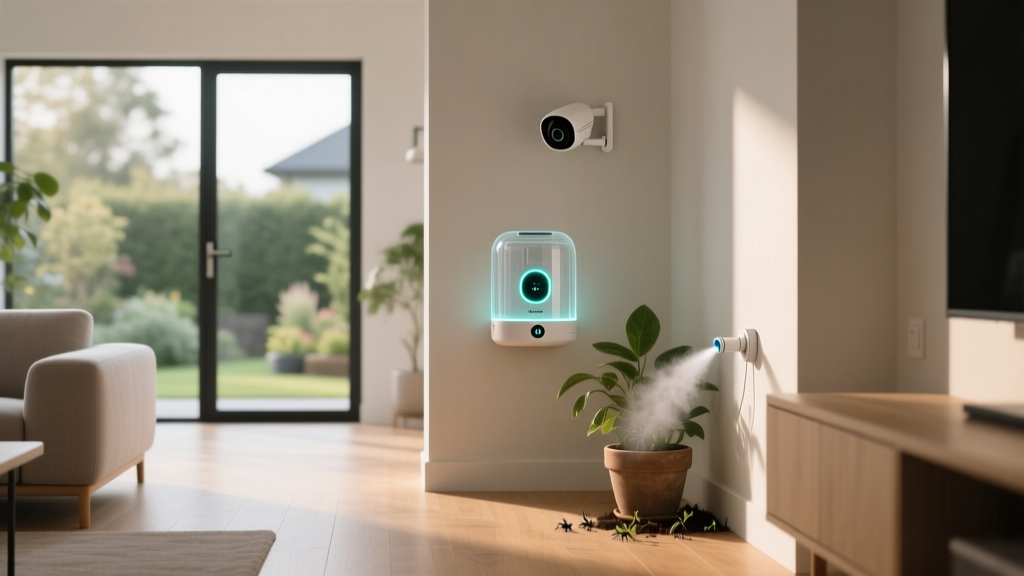
Smart Home Pest Control: Automating Traps and Irrigation
Robert HayesPublished
The Intersection of Smart Home Tech and Integrated Pest Management
Traditional lawn and garden pest control often relies on reactive measures, such as blanket chemical spraying after an infestation has already taken root. However, the modern approach to yard care embraces Integrated Pest Management (IPM), a strategy that focuses on long-term prevention and environmental balance. According to the Environmental Protection Agency (EPA), IPM involves monitoring pest life cycles, modifying the environment to make it inhospitable, and using targeted treatments only when necessary.
By integrating smart home automation and Internet of Things (IoT) devices into your yard care routine, you can elevate your IPM strategy to a fully proactive, data-driven system. Smart home technology allows you to monitor nocturnal wildlife, automate moisture control to eliminate breeding grounds, and deploy intelligent traps that notify your smartphone the moment a pest is caught. This guide explores how to build a comprehensive, automated pest defense system for your lawn and garden.
AI-Powered Outdoor Cameras for Nocturnal Pest Monitoring
Many of the most destructive lawn pests, including raccoons, deer, skunks, and rats, are nocturnal. Identifying the specific culprit tearing up your sod or eating your garden vegetables is the first step in effective pest management. AI-powered outdoor security cameras have revolutionized this process by utilizing machine learning to differentiate between humans, vehicles, and various types of animals.
Optimal Camera Placement and Configuration
To effectively monitor pest activity without triggering false alarms from swaying tree branches or passing cars, proper setup is critical. Devices like the Wyze Cam v3 or Ring Stick Up Cam Battery offer excellent night vision and customizable motion zones.
- Mounting Height: Install cameras 6 to 8 feet off the ground. This height provides a wide field of view while keeping the device out of reach of curious wildlife and potential vandals.
- Angle and Tilt: Tilt the camera downward at a 15-degree angle. This ensures the infrared night vision illuminates the ground clearly without being washed out by ambient streetlights.
- Motion Zones: Use the companion app to draw custom motion detection zones. Exclude areas with heavy foliage that moves in the wind, and focus strictly on garden beds, compost bins, and known entry points along fence lines.
- AI Sensitivity: Adjust the AI detection settings to prioritize 'Animal' or 'Pet' alerts. This ensures you receive a push notification at 2:00 AM when a raccoon enters your yard, allowing you to activate floodlights or sprinklers remotely to scare them off.
Smart Irrigation Controllers to Eliminate Moisture Pests
Overwatering is one of the leading causes of pest infestations in residential lawns. Excess moisture creates the perfect breeding ground for mosquitoes, fungus gnats, and sod webworms. The Centers for Disease Control and Prevention (CDC) notes that mosquitoes require as little as half an inch of standing water to complete their life cycle, which can easily occur in over-irrigated soil depressions or poorly drained lawn zones.
Upgrading to a smart irrigation controller, such as the Rachio 3 or Orbit B-hyve, replaces dumb timers with intelligent, weather-aware watering schedules. The EPA WaterSense program highlights that smart controllers use local weather data and soil moisture sensors to apply water only when the landscape truly needs it.
Automating Moisture Control for Pest Prevention
- Weather Intelligence: Enable 'Rain Skip' and 'Freeze Skip' features. If local forecasts predict 0.25 inches of rain, the smart controller will automatically cancel the scheduled watering, preventing the soil from becoming waterlogged.
- Soil Moisture Sensors: Pair your smart controller with wireless soil moisture sensors placed in shaded areas of your lawn. Shaded zones retain water longer and are highly susceptible to fungus gnats. The sensor will override the schedule if the volumetric water content (VWC) exceeds 30%.
- Cycle and Soak: Program your smart valves to use the 'Cycle and Soak' method. Instead of running a zone for 20 continuous minutes (which leads to runoff and puddling), the system runs for 5 minutes, waits 30 minutes for absorption, and repeats. This eliminates the standing water that attracts mosquitoes.
Wi-Fi Enabled Smart Traps for Rodent Control
When environmental modifications are not enough to keep rodents out of your garden and shed, smart traps offer a highly effective, non-toxic solution. Traditional snap traps require daily physical inspection, which can be unpleasant and time-consuming. Wi-Fi enabled traps, such as the Victor Smart-Kill Wi-Fi Rat Trap, connect directly to your home's 2.4GHz wireless network.
These traps utilize high-voltage shock technology to eliminate rodents quickly and humanely. When the circuit is completed by the rodent entering the kill chamber, the trap instantly sends a push notification to your smartphone. This immediate alert is crucial for two reasons: it allows you to dispose of the pest before it begins to decompose and attract secondary pests like flies, and it lets you know the trap is empty and ready to be rebaited. For optimal results, place these traps flush against walls or fence lines, as rodents suffer from poor eyesight and rely on tactile navigation along vertical surfaces.
Smart Lighting and Automated Deterrents
Lighting plays a massive role in pest behavior. Standard white or blue-toned LED bulbs attract thousands of moths, beetles, and flying insects, which in turn attract insectivorous pests like spiders and bats to your home's exterior. By automating your outdoor lighting with smart bulbs (like Philips Hue) or smart switches, you can dynamically control your yard's light spectrum and timing.
- Spectrum Shifting: Program your smart exterior lights to shift to a warm, yellow or amber hue (around 2700K or lower) after dusk. Insects are highly attracted to UV and blue light spectrums but are virtually blind to warm yellow light, drastically reducing the insect swarm around your patio.
- Motion-Triggered Deterrence: Link your outdoor AI cameras to your smart floodlights. If the camera detects a large animal (like a deer or raccoon) entering a restricted garden zone, the automation can instantly trigger a 1000-lumen floodlight to startle and deter the intruder.
- Smart Plug Ultrasonic Repellents: Plug ultrasonic pest repellents into smart outdoor plugs. Pests can habituate to constant high-frequency noise. Use your smart home app to schedule the repellent to cycle on for 30 minutes and off for 15 minutes, keeping the pests off-balance and preventing them from getting used to the sound.
Comparison Chart: Smart Pest Control Devices
| Device Category | Top Product Example | Average Cost | Primary Target Pest | Key Smart Feature |
|---|---|---|---|---|
| AI Outdoor Camera | Wyze Cam v3 | $35 - $50 | Raccoons, Deer, Rodents | AI Animal Detection & Custom Motion Zones |
| Smart Irrigation | Rachio 3 Controller | $150 - $230 | Mosquitoes, Fungus Gnats | Weather-Based Skip & Cycle/Soak Routines |
| Wi-Fi Trap | Victor Smart-Kill | $60 - $80 | Rats, Mice, Squirrels | Instant Kill Alerts via Smartphone App |
| Smart Lighting | Philips Hue Outdoor | $40 - $100 | Moths, Beetles, Spiders | Automated Spectrum Shifting to Amber/Yellow |
| Smart Plug | Kasa Outdoor Smart Plug | $15 - $25 | Various (via Deterrents) | Schedules & IFTTT Integration for Repellents |
Building Automated Pest Defense Routines
The true power of smart home pest control is unlocked when you connect these individual devices into cohesive, automated routines using platforms like IFTTT (If This Then That), Amazon Alexa, or Apple HomeKit. By creating conditional logic, your yard can defend itself without any manual intervention.
Pro-Tip Automation Routine: Create a 'Nighttime Garden Defender' routine. IF your outdoor AI camera detects an 'Animal' between 10:00 PM and 5:00 AM, THEN turn on the smart floodlights to 100% brightness for exactly 3 minutes, AND trigger the smart plug connected to your ultrasonic deterrent. AFTER 3 minutes, turn the lights back to a dim, warm amber to avoid attracting flying insects.
This multi-sensory approach—combining sudden bright light with high-frequency sound—creates an overwhelming environment for nocturnal foragers, encouraging them to move on to a less hostile neighborhood. Furthermore, because the system automatically resets, you maintain a secure perimeter every single night without having to remember to flip a switch.
Conclusion
Transitioning to a smart home automated pest control system represents a significant upgrade in how we manage our outdoor spaces. By leveraging AI cameras for precise identification, smart irrigation to eliminate moisture-based breeding grounds, and Wi-Fi traps for targeted removal, homeowners can drastically reduce their reliance on broad-spectrum chemical pesticides. This tech-forward approach not only protects your lawn, garden, and family but also aligns perfectly with the ecological goals of Integrated Pest Management, ensuring your yard remains a vibrant, healthy, and pest-resistant ecosystem.