Home & Garden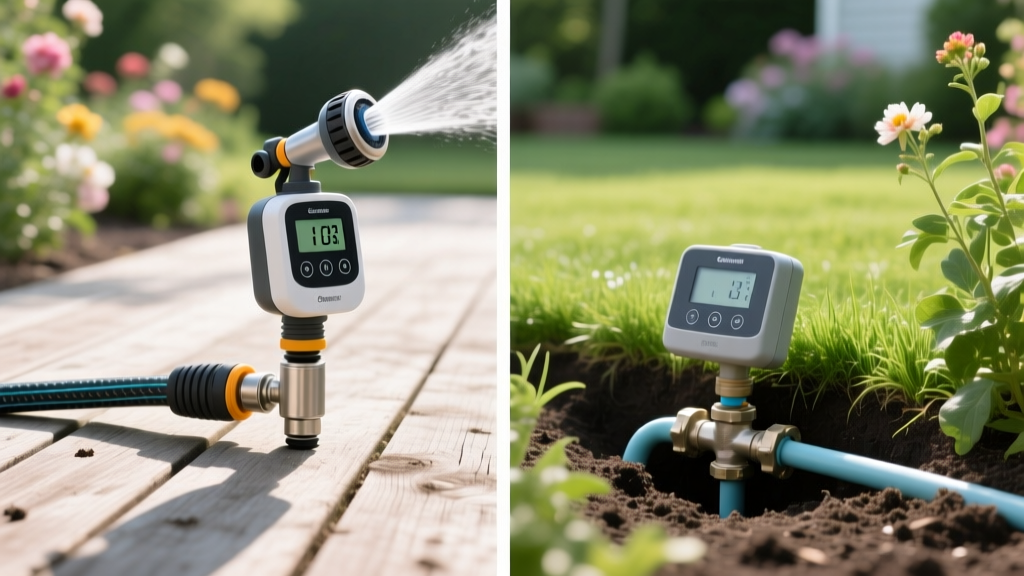
Smart Hose Timers vs Irrigation Controllers: Buying Guide
Anna KowalskiPublished
The Evolution of Automated Lawn and Garden Watering
Maintaining a lush, vibrant landscape requires consistent hydration, but manual watering is both time-consuming and notoriously inefficient. As homeowners increasingly seek to bridge the gap between outdoor landscaping and smart home integration, automated watering equipment has become a cornerstone of modern garden care. However, choosing the right tool for your specific yard layout can be confusing. The two primary contenders in the consumer market are smart hose timers and smart in-ground irrigation controllers. While both aim to automate your watering schedule and conserve water, they serve entirely different infrastructures and budgets.
According to the EPA WaterSense outdoor water use fact sheet, the average American family uses 320 gallons of water per day, with nearly 30 percent dedicated to outdoor uses. Inefficient watering methods lead to massive runoff and evaporation. Upgrading to smart watering equipment is one of the most impactful seasonal home maintenance tasks you can undertake to improve energy-efficient landscaping and lower your utility bills.
Understanding Smart Hose Timers
A smart hose timer is a compact, battery-operated device that screws directly onto your standard outdoor water spigot (hose bib). It acts as an automated gatekeeper, releasing water to whatever is attached to the other end—be it a standard garden hose, an above-ground oscillating sprinkler, or a raised bed drip irrigation system.
Key Features and Capabilities
- Connectivity: Modern units connect via Bluetooth or Wi-Fi to your smartphone, allowing you to adjust schedules from anywhere.
- Weather Delays: Wi-Fi-enabled models pull local weather data to automatically skip watering if rain is in the forecast.
- Flow Meters: Premium models track exact gallon usage, helping you monitor your garden-to-table crop water consumption.
- Multiple Outlets: Many feature two to four independent outlets, allowing you to water the front yard drip lines and the backyard sprinkler on different schedules from a single spigot.
Top Models to Consider
The Orbit B-hyve XR is a favorite for its robust Wi-Fi connectivity and ability to handle up to 8 zones via a manifold setup. For simpler needs, the Melnor AquaTimer offers reliable Bluetooth scheduling at a lower price point. Generally, you can expect to spend between $50 and $120 for a high-quality smart hose timer.
Understanding Smart Irrigation Controllers
A smart irrigation controller (often called a smart sprinkler timer) is the brain of an in-ground sprinkler or sub-surface drip system. It replaces the outdated, dial-based 'clock' timers mounted in your garage or on the side of your house. Instead of blindly watering for 20 minutes every Tuesday, these controllers use complex algorithms to determine exactly how much water your lawn needs based on real-time environmental data.
Key Features and Capabilities
- Evapotranspiration (ET) Data: These controllers calculate the rate at which water evaporates from the soil and transpires from plants, adjusting run times daily to replace only what was lost.
- Soil Moisture Sensor Integration: They can pair with physical probes buried in your lawn to halt watering if the soil is already saturated.
- Zone-Specific Customization: You can input the exact soil type, plant type, sprinkler head model, and sun exposure for every individual zone in your yard.
- Smart Home Integration: Most integrate seamlessly with platforms like Amazon Alexa, Google Home, and Apple HomeKit.
Top Models to Consider
The Rachio 3 Smart Sprinkler Controller is widely considered the gold standard for residential use, offering an intuitive app and excellent weather intelligence. The Hunter Hydrawise Pro-HC is favored by landscaping professionals for its heavy-duty build and advanced flow-metering capabilities. Prices for these units typically range from $150 to $250, excluding installation costs.
Head-to-Head Equipment Comparison
To help you decide which tool fits your landscape architecture, review the comparison chart below:
| Feature | Smart Hose Timer | Smart Irrigation Controller |
|---|---|---|
| Average Cost | $50 - $120 | $150 - $250+ |
| Installation Difficulty | Very Easy (Screws onto spigot) | Moderate (Requires low-voltage wiring) |
| Infrastructure Needed | Standard outdoor faucet & hoses | In-ground PVC piping & sprinkler valves |
| Max Zone Capacity | 2 to 4 outlets (typically) | 8 to 16+ independent zones |
| Water Savings | Moderate (Relies on schedule & basic weather skips) | High (Uses ET data & soil sensors) |
| Best Suited For | Renters, small yards, raised beds, container gardens | Homeowners, large lawns, complex landscapes |
How to Choose the Right Equipment for Your Yard
Choosing between a hose timer and an irrigation controller comes down to your existing landscape infrastructure and your long-term property goals.
Choose a Smart Hose Timer If:
- You are renting: You need a non-permanent solution that you can easily unscrew and take with you when you move.
- You rely on above-ground watering: Your garden consists of soaker hoses woven through flower beds, drip lines in raised vegetable patches, or a standard impact sprinkler you move around the lawn.
- You have a small footprint: Your total irrigated area is under 2,500 square feet, making the cost of trenching and installing an in-ground system prohibitive.
Choose a Smart Irrigation Controller If:
- You own your home: You are looking to increase property value and invest in permanent, energy-efficient landscaping infrastructure.
- You have an existing sprinkler system: You already have underground pipes and valve boxes, but your current controller is an outdated mechanical dial.
- You manage diverse microclimates: Your yard has heavily shaded areas, full-sun slopes, and water-thirsty garden beds that all require drastically different watering durations.
Maximizing Water Efficiency and Plant Health
Regardless of which tool you purchase, the equipment is only as effective as the setup and maintenance behind it. The EPA WaterSense smart irrigation controllers program notes that properly certified smart controllers can save the average home nearly 7,600 gallons of water annually. To achieve these savings, follow these actionable best practices:
- Perform a Catch Cup Test: Before setting your run times, place flat-bottomed containers (like tuna cans) across your lawn. Run the sprinklers for 15 minutes, measure the water depth, and calculate your precipitation rate. This ensures you are applying exactly 1 to 1.5 inches of water per week, the standard requirement for most turfgrasses.
- Upgrade to Drip Where Possible: Both hose timers and irrigation controllers can operate drip lines. Convert shrub beds and garden-to-table vegetable patches from spray heads to drip emitters. This delivers water directly to the root zone, eliminating wind drift and evaporation.
- Install a Rain Sensor: Even smart controllers with Wi-Fi weather forecasting can experience data lag. Hardwiring a physical rain sensor to your irrigation controller provides an immediate, fail-safe shutoff during sudden downpours.
- Seasonal Base Adjustments: While smart controllers adjust daily, you should still manually review your base seasonal percentages. In early spring, set your global seasonal adjust to 50%, ramping up to 100% in the peak heat of July and August.
Final Thoughts on Garden Tech Integration
The transition from manual hose dragging to automated, data-driven watering is one of the most rewarding DIY garden projects a homeowner can undertake. Smart hose timers offer an accessible, budget-friendly entry point for targeted watering of container plants and small garden beds. Conversely, smart irrigation controllers provide unparalleled precision for expansive lawns and complex in-ground systems, leveraging local climate data to ensure your landscape thrives without wasting a single drop. By evaluating your yard's specific layout, infrastructure, and your personal gardening goals, you can select the exact tool that will keep your outdoor oasis green, healthy, and remarkably efficient for years to come.
