Home & Garden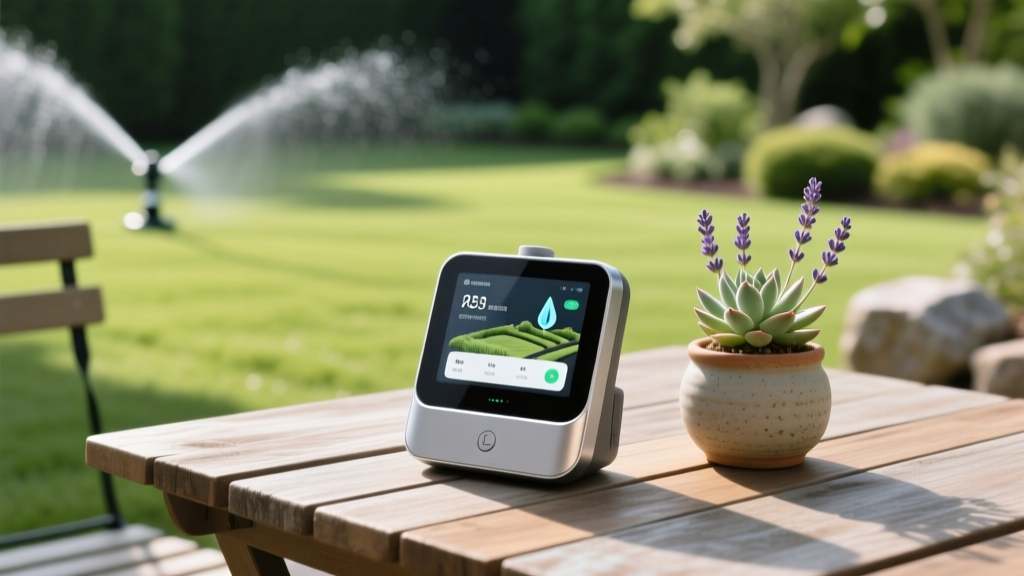
Smart Irrigation Controllers: The Ultimate Buyer Guide
Lisa ThompsonPublished
The Evolution of Lawn Watering
Maintaining a lush, vibrant lawn while conserving water is one of the most significant challenges modern homeowners face. Traditional sprinkler timers operate on rigid schedules, oblivious to the weather, soil conditions, or the specific needs of your landscape. This outdated approach leads to overwatering, wasted resources, and inflated utility bills. Enter the smart irrigation controller—a revolutionary tool that bridges the gap between technology and energy-efficient landscaping. By leveraging real-time data and smart home integration, these devices ensure your garden receives the exact amount of moisture it needs, precisely when it needs it.
According to the Environmental Protection Agency (EPA), a standard home irrigation system can waste up to 25,000 gallons of water annually due to inefficiencies and overwatering. Smart controllers are designed to eliminate this waste, making them an essential upgrade for any eco-conscious homeowner. In this comprehensive buyer’s guide, we will explore the different types of smart irrigation controllers, compare top models on the market, and provide a step-by-step installation manual to help you transform your outdoor space.
Understanding Smart Irrigation Technology
Unlike traditional timers that simply turn valves on and off based on a preset clock, smart irrigation controllers use advanced algorithms and environmental data to adjust watering schedules dynamically. They connect to your home’s Wi-Fi network, pulling localized weather data from nearby meteorological stations or using on-site sensors to measure actual soil conditions. This means if a sudden rainstorm hits your neighborhood, the controller automatically skips the scheduled watering cycle, preventing waterlogged roots and runoff.
According to research published by the University of Florida IFAS Extension, smart controllers can reduce outdoor water use by up to 70% compared to traditional time clocks when properly programmed and maintained. This massive reduction in water usage not only preserves local aquifers but also significantly lowers your monthly utility expenses.
Weather-Based vs. Soil Moisture Controllers
When shopping for a smart controller, you will generally encounter two primary categories: Weather-Based (Evapotranspiration or ET) controllers and Soil Moisture Sensor controllers.
Weather-Based (ET) Controllers
These are the most common type of smart controllers on the market. They calculate the evapotranspiration rate—the amount of water lost from the soil through evaporation and plant transpiration. By analyzing local temperature, humidity, solar radiation, and wind speed, ET controllers determine exactly how much water your lawn has lost and replaces only that specific amount. They are ideal for homeowners who want a 'set it and forget it' solution that relies on robust local weather data networks.
Soil Moisture Controllers
These systems bypass weather forecasts entirely and measure the actual moisture content in your lawn's root zone using buried probes. When the soil moisture drops below a predefined threshold, the system triggers an irrigation cycle. This method is highly accurate and particularly beneficial for microclimates, heavily shaded areas, or regions where local weather station data might not perfectly reflect your specific yard's conditions.
Top Smart Irrigation Controllers Compared
Choosing the right hardware depends on your budget, the size of your yard, and your desired level of smart home integration. Below is a comparison of three industry-leading models.
| Feature | Rachio 3 | Orbit B-hyve | Rain Bird ST8I-2.0 |
|---|---|---|---|
| Available Zones | 8 or 16 | 6 or 12 | 8 |
| Wi-Fi Connectivity | Yes (Dual-band) | Yes (2.4 GHz) | Yes (2.4 GHz) |
| EPA WaterSense Certified | Yes | Yes | No |
| Weather Skip Logic | Advanced (Hyperlocal) | Basic (Local) | Basic (Local) |
| Smart Home Integration | Alexa, Google, Apple | Alexa, Google | Limited |
| Estimated Price Range | $150 - $230 | $100 - $150 | $130 - $160 |
Essential Features to Look For
EPA WaterSense Certification: Always look for the WaterSense label. The EPA WaterSense program rigorously tests irrigation controllers to ensure they meet strict water-efficiency criteria without sacrificing landscape health.
Smart Home Integration: For the modern connected home, compatibility with platforms like Amazon Alexa, Google Assistant, and Apple HomeKit is crucial. This allows you to integrate your irrigation system with other smart devices, such as triggering your sprinklers to turn off if your smart home hub detects an open window or a freeze warning.
Customizable Zone Settings: A high-quality controller allows you to input specific data for each zone, including soil type (e.g., clay, loam, sand), plant type (e.g., turf, shrubs, garden beds), sun exposure, and sprinkler head type (e.g., rotor, drip, spray). This granular data ensures that a shaded fern bed receives a completely different watering regimen than a sun-baked Bermuda grass lawn.
Integrating Drip Irrigation Zones
One of the most powerful features of modern smart controllers is the ability to manage mixed irrigation zones. While traditional rotors and spray heads are designed for turfgrass, garden beds and shrub borders benefit immensely from drip irrigation. Smart controllers allow you to set specific zone types to 'Drip' or 'Bubbler', which alters the watering logic. Because drip systems deliver water directly to the root zone at a slow rate, they require longer run times but fewer days per week. The controller automatically adjusts the cycle and soak times to prevent runoff while ensuring deep soil penetration. Furthermore, integrating a soil moisture sensor specifically into your drip zones can protect sensitive plantings from root rot, a common issue when drip lines are accidentally left running on standard timer schedules.
Step-by-Step Installation Guide
Upgrading to a smart controller is a highly manageable DIY project that typically takes under an hour. Here is how to safely swap out your old timer for a new smart hub.
- Step 1: Cut the Power. Locate your circuit breaker and turn off the power to your irrigation system. Use a non-contact voltage tester to confirm the wires are completely dead before touching them.
- Step 2: Document the Existing Wiring. Open your old controller and take a clear, well-lit photograph of the wiring. Each wire corresponds to a specific valve zone, and having a visual reference is invaluable.
- Step 3: Label and Disconnect. Use the provided wire labels or masking tape to mark each wire according to its zone number. Loosen the terminal screws and carefully remove the wires, including the common (COM) wire.
- Step 4: Mount the New Controller. Most smart controllers come with a mounting bracket and drywall anchors. Ensure the new unit is placed in a location with a strong Wi-Fi signal, as a weak connection will hinder weather data syncing.
- Step 5: Reconnect the Wires. Following your photograph and labels, insert the wires into the corresponding terminals on the new smart controller. Tighten the screws securely to prevent intermittent connection issues.
- Step 6: Power On and Configure. Restore power at the breaker. Download the manufacturer’s app on your smartphone, create an account, and follow the on-screen prompts to connect the device to your home Wi-Fi network. Note that most smart home devices require a 2.4 GHz network, so ensure you select the correct band during setup.
Financial and Environmental ROI
The upfront cost of a smart irrigation controller typically ranges from $100 to $300, depending on the number of zones and premium features. However, the return on investment is substantial. The U.S. Department of Energy notes that water-efficient landscaping and smart irrigation practices can reduce outdoor water use by 20% to 50%. For an average household, this translates to thousands of gallons saved annually, significantly lowering municipal water and sewer bills. Furthermore, many local water districts and municipalities offer rebates for installing EPA WaterSense-certified controllers, sometimes covering the entire cost of the hardware.
Pro Tips for Maximizing Efficiency
To get the absolute most out of your new equipment, conduct a seasonal audit of your sprinkler heads. Ensure there are no misaligned heads spraying onto driveways or sidewalks. Additionally, consider pairing your smart controller with a flow meter. A flow meter monitors the exact volume of water passing through your mainline and can instantly shut down the system and send an alert to your phone if it detects a catastrophic pipe leak or a broken sprinkler head, saving your landscape from erosion and your wallet from massive water bills.
Finally, remember that smart controllers manage water delivery, but they cannot fix poor soil health. Incorporating organic compost and mulching your garden beds will improve soil water retention, allowing your smart system to operate on even shorter, more efficient cycles. By combining biological soil improvements with cutting-edge irrigation technology, you create a resilient, drought-tolerant landscape that thrives in any season while contributing to a healthier, more sustainable environment.
