Home & Garden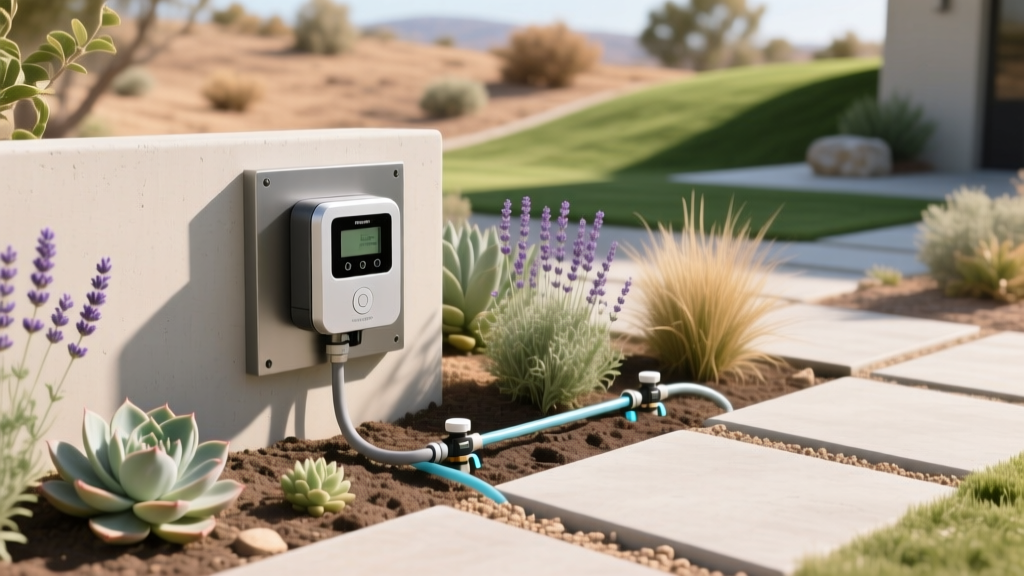
Best Smart Irrigation Controllers for Drought-Prone Yards
Sarah ChenPublished
The Hidden Cost of Traditional Sprinkler Systems
For homeowners in drought-prone regions, maintaining a lush landscape often feels like a battle against both nature and the local water utility. According to the EPA WaterSense program, outdoor water use accounts for nearly 30% of total household water consumption, a figure that can spike to 60% in arid climates during the peak summer months. The primary culprit for this massive water footprint is not the plants themselves, but the outdated technology used to water them.
Traditional sprinkler timers operate on a 'set it and forget it' mentality. They blindly execute pre-programmed schedules regardless of recent rainfall, humidity levels, or seasonal shifts. This leads to massive water waste, runoff, and shallow root systems that make your lawn even more susceptible to drought stress. Upgrading to a smart irrigation controller is one of the most impactful, cost-effective home improvement projects you can undertake to bridge the gap between a beautiful yard and responsible water stewardship.
How Weather-Based Irrigation Controllers (WBICs) Work
Smart irrigation controllers replace the guesswork of manual scheduling with real-time environmental data. Weather-Based Irrigation Controllers (WBICs) connect to your home Wi-Fi network and pull localized meteorological data to calculate the exact amount of water your landscape needs. They use a metric called Evapotranspiration (ET), which measures the water lost from the soil through evaporation and plant transpiration.
When a smart controller detects that a rainstorm is approaching, or that the ambient humidity has drastically reduced the ET rate, it automatically skips or shortens the scheduled watering cycle. This ensures your plants receive deep, infrequent watering—which encourages deep root growth and drought resilience—without wasting a single drop on already saturated soil.
Top Smart Controllers for Drought-Prone Landscapes
Choosing the right hardware depends on your yard's size, your existing sprinkler wiring, and your budget. Here is a breakdown of the top-performing smart controllers on the market for water-wise landscaping.
1. Rachio 3 Smart Sprinkler Controller
The Rachio 3 is widely considered the gold standard for residential smart irrigation. Priced at approximately $229 for the 8-zone model, it features 'Weather Intelligence Plus,' which incorporates hyper-local weather data, freeze skips, wind skips, and seasonal shifts. The app interface is incredibly intuitive, allowing you to input specific soil types, plant types, and sun exposure for every individual zone. This granular data allows the Rachio 3 to customize watering durations down to the minute, maximizing water efficiency in diverse landscapes.
2. Orbit B-hyve XR
Retailing around $299 for the 16-zone model, the Orbit B-hyve XR is a powerhouse for larger properties. Unlike many competitors that are strictly rated for indoor garage installation, the B-hyve XR comes in a weather-resistant outdoor enclosure, saving you the cost and hassle of buying a separate waterproof housing. It utilizes Orbit's 'WeatherSense' technology to adjust schedules based on local weather and provides detailed water usage reports, helping you track your conservation efforts and utility savings over time.
3. Rain Bird ST8I-2.0S
For those on a tighter budget or those who prefer a more traditional interface, the Rain Bird ST8I-2.0S (8-zone) costs about $149. While it lacks some of the advanced hyper-local weather algorithms of the Rachio, it still offers reliable Wi-Fi connectivity, automatic seasonal adjustments, and rain delay features. It is an excellent entry-level smart controller that easily replaces older Rain Bird mechanical timers without requiring a complete rewiring of your irrigation valves.
Feature Comparison Chart
Use the table below to compare the core specifications and drought-saving features of these leading smart controllers.
| Feature | Rachio 3 (8-Zone) | Orbit B-hyve XR (16-Zone) | Rain Bird ST8I-2.0S (8-Zone) |
|---|---|---|---|
| Average Cost | $229 | $299 | $149 |
| Weather Data Source | Hyper-local (Weather Intel+) | Local NOAA / WeatherSense | Basic Local Forecast |
| Indoor/Outdoor Rated | Indoor (Enclosure sold sep.) | Outdoor (Included) | Indoor Only |
| Soil & Plant Customization | Advanced (Per-zone) | Moderate (Per-zone) | Basic (Global settings) |
| Smart Home Integration | Alexa, Google, Apple, IFTTT | Alexa, Google | App Only |
| EPA WaterSense Certified | Yes | Yes | No |
Step-by-Step Installation and Zone Mapping
Installing a smart controller is a highly accessible DIY project that typically takes under an hour. Here is an actionable guide to ensure a smooth setup:
- Step 1: Document Your Existing Wiring. Before disconnecting a single wire from your old timer, take a high-resolution photo of the terminal board. Alternatively, use the labeling stickers provided in your new smart controller's box to tag each wire according to its zone number.
- Step 2: Power Down and Mount. Turn off the power to the irrigation system at the breaker. Remove the old unit and mount the new smart controller's backplate using the included drywall anchors and screws.
- Step 3: Reconnect the Wires. Insert each labeled wire into the corresponding numbered terminal on the new controller. Ensure the common wire (usually white or black, labeled 'C' or 'COM') is securely fastened, as this completes the circuit for all valves.
- Step 4: Map Your Zones in the App. Power the unit on and connect it to your 2.4GHz Wi-Fi network. Walk your yard and trigger each zone manually from the app. Take notes on what each zone covers (e.g., 'Zone 1: Front lawn, full sun, clay soil'; 'Zone 2: Side yard, shade, drip irrigation for shrubs'). Input these specific parameters into the app so the algorithm can calculate accurate runtimes.
Maximizing Savings with Soil Moisture Sensors
While weather-based data is highly effective, it measures what is happening in the atmosphere, not necessarily what is happening in your soil. For the ultimate drought-defense strategy, pair your smart controller with a wireless soil moisture sensor. Products like the Toro Precision Soil Sensor (approx. $120) or the Rain Bird SMRT-Y (approx. $130) bury directly in the root zone of your most water-demanding plants.
These sensors measure the actual volumetric water content in the soil. If a sudden heatwave causes the smart controller to schedule an extra watering cycle, but the soil sensor detects that the root zone is still adequately moist, the sensor will override the controller and suspend the watering. This dual-layer approach prevents overwatering in heavy clay soils, which retain moisture long after the surface appears dry.
Rebates, ROI, and Hydrozoning
The financial barrier to upgrading your irrigation system is often mitigated by local utility rebates. Because EPA WaterSense labeled controllers can reduce outdoor water use by up to 15%, many municipal water districts offer rebates ranging from $50 to 100% of the purchase price. You can check the EPA WaterSense Irrigation Controllers page or your local water provider's website for active rebate programs. In most drought-prone areas, a smart controller pays for itself in utility savings within one to two watering seasons.
To further enhance your water-wise strategy, implement 'hydrozoning.' As recommended by the University of California Drought Management resources, hydrozoning involves grouping plants with similar water, sun, and soil requirements onto the same irrigation valves. By separating your drought-tolerant native succulents from your thirstier turfgrass or vegetable garden, your smart controller can apply precise, targeted watering schedules to each distinct microclimate in your yard, eliminating the waste of overwatering established native plants just to keep adjacent grass alive.
Final Thoughts on Drought-Resistant Landscaping
Transitioning to a water-wise landscape does not mean sacrificing curb appeal or the joy of outdoor living. By integrating smart irrigation technology, utilizing soil moisture data, and practicing strategic hydrozoning, you can cultivate a vibrant, resilient garden that thrives even in the harshest drought conditions. Upgrading your sprinkler controller is the foundational step toward a smarter, more sustainable home ecosystem that respects both your local environment and your household budget.
